تعتبر سبائك الألومنيوم عنصرًا أساسيًا في الهندسة الحديثة نظرًا لوزنها الخفيف, المقاومة للتآكل, وقابلية المعالجة واسعة النطاق. فيما بينها, 6061 يبرز الألومنيوم باعتباره واحدًا من السبائك الهيكلية الأكثر استخدامًا على نطاق واسع في مختلف الصناعات. لكن, عندما يتعلق الأمر بالصب يموت, 6061 ليس الخيار الأول - وفهم السبب يتطلب نظرة أعمق في كل من خصائصه الجوهرية وسياق التصنيع.
في هذه المقالة, نحن نسير من خلال خصائص المواد, حالات المزاج, سلوك الآلات, و كاليفورنيابدائل اللدغة, مع إرشادات حول متى تختار 6061 مقابل السبائك المصبوبة مثل A380 وADC12. نحن أيضًا نربط هذا الأمر بممارسات الصناعة الحقيقية وقيمة الشراكة مع شركة تصنيع قوالب الألومنيوم الشاملة في الصين.
ما هو 6061 سبائك الألومنيوم
6061 الألومنيوم عبارة عن سبيكة مقوية بالترسيب من 6000 مسلسل (المغ سي) عائلة. مزيج من القوة, المقاومة للتآكل, قابلية اللحام, وقد جعلتها إمكانية التصنيع مادة أساسية للمكونات الهيكلية, إطارات, تجميعات السيارات, وأجزاء الدقة. كثيرا ما يشير المهندسون إلى 6061 خصائص الألومنيوم t6 عند تحديد المواد للتطبيقات الحاملة, بفضل أدائه المتوازن بعد المعالجة الحرارية.
ولكن على الرغم من تنوعها, 6061 ليست مناسبة بطبيعتها لصب الألومنيوم, لأن سلوك التصلب للسبائك والعمليات الحرارية المطلوبة لا تتوافق مع متطلبات الصب بالقالب عالي الضغط. بدلاً من, 6061 يتم إنتاج الأجزاء عادةً عن طريق البثق متبوعًا بالتصنيع باستخدام الحاسب الآلي والمعالجة الحرارية.
أقل, نحن نكسر ما يجعل 6061 الألومنيوم متميز من حيث التركيب, حِدّة, والأداء.
التركيب الكيميائي
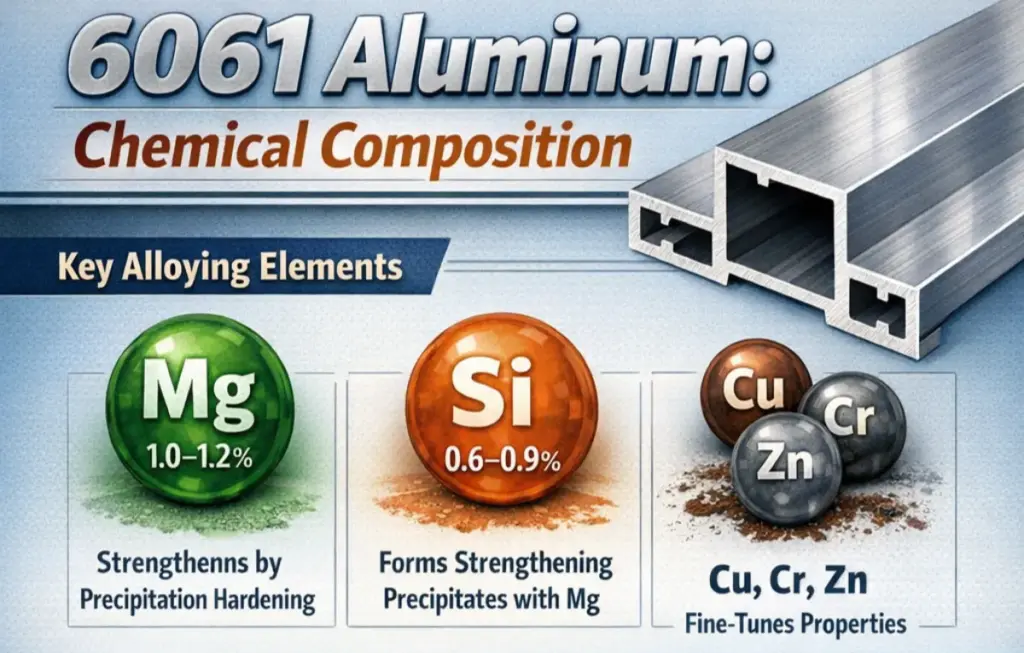
عناصر صناعة السبائك في 6061 تحديد الكثير من سلوكها الميكانيكي والمعالجة. يتضمن التكوين النموذجي:
- المغنيسيوم (ملغ): 1.0–1.2% – يحسن القوة من خلال تصلب الأمطار
- السيليكون (و): 0.6–0.9% – يعمل مع الماغنيسيوم على تكوين رواسب مقوية
- نحاس (النحاس), الكروم (كر), الزنك (الزنك) – موجود بكميات أقل لضبط الخصائص
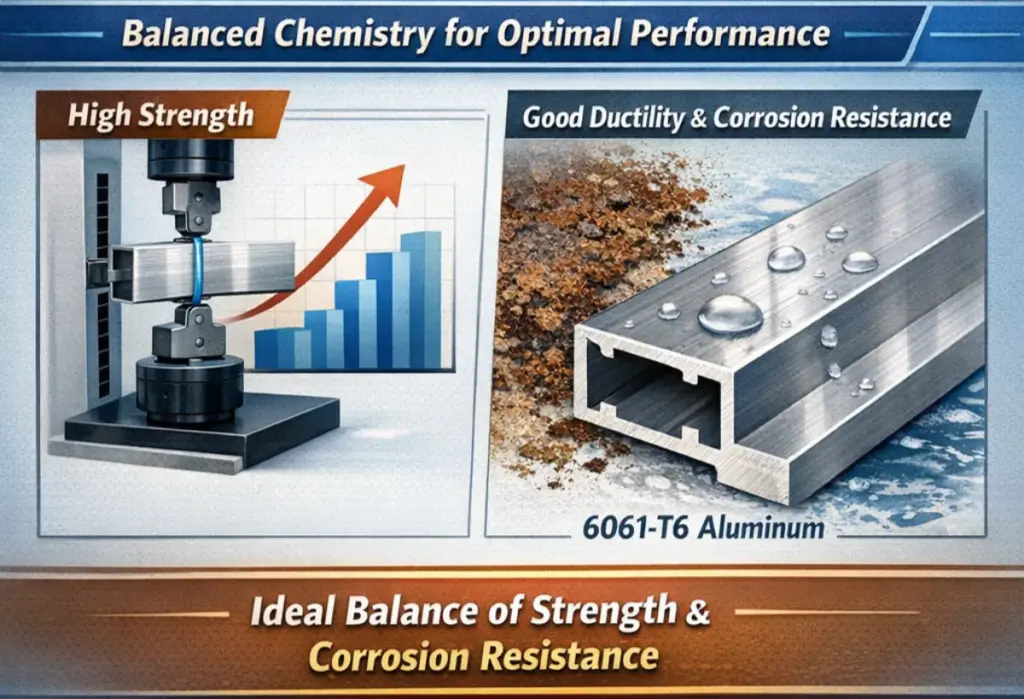
تتيح هذه الكيمياء المتوازنة قوة جيدة مع الحفاظ على الليونة ومقاومة التآكل - وهي ميزة أساسية عند النظر إلى خصائص مادة الألومنيوم 6061-T6.
الحالات المزاجية والمعالجة الحرارية
أداء 6061 يختلف الألومنيوم بشكل كبير مع الحرارة والمعالجة الحرارية:
- T6 (الحل معالج بالحرارة ومعتق بشكل مصطنع) - الحالة الأكثر شيوعا وعالية القوة
- T4 (الحل معالج بالحرارة ومعتق بشكل طبيعي) – قوة متوسطة مع قابلية تشكيل جيدة
- يا (صلب) - أنعم, الحالة الأكثر عملية
في حالة T6, تحقق السبيكة أعلى خصائصها الميكانيكية, مما يجعلها مناسبة للأجزاء الهيكلية والحاملة. يعد فهم كيفية تأثير هذه الحالات على التصنيع وتصميم الأجزاء أمرًا بالغ الأهمية للحصول على مواصفات دقيقة.
الخواص الميكانيكية والفيزيائية
يوجد أدناه تفصيل موجز لمقاييس الأداء الرئيسية التي غالبًا ما يتم الرجوع إليها في المستندات الهندسية وأدوات التصميم:
| ملكية | 6061-قيمة T6 |
|---|---|
| قوة الشد | ~310 ميجا باسكال |
| قوة العائد | ~270 ميجا باسكال |
| صلابة (برينل) | 95–107 حصان |
| كثافة | 2.70 ز/سم |
| نطاق الذوبان | 580-650 درجة مئوية |
| الموصلية الحرارية | 167 ث/م · ك |
توفر هذه الأرقام لمحة سريعة عن السبب 6061 لا تزال قادرة على المنافسة في العديد من التطبيقات الهيكلية والدقيقة - خاصة عندما يكون التوازن بين الوزن والقوة مطلوبًا.
اعتبارات التصنيع والتصنيع
6061إن قابلية تشغيلها تميزها في العديد من عمليات التشغيل الآلي:
- قابلية اللحام: ممتاز - يمكن أن يكون ملحومًا بـ MIG أو TIG بأقل قدر من التشقق
- القابلية للتشكيل: جيد, خاصة في الحالات المخففة مثل O أو T4
- بالقطع: قابلة للغاية للطحن باستخدام الحاسب الآلي, تحول, حفر, والتنصت
- العلاجات الحرارية: المعالجة الحرارية بعد التصنيع (مثل T6) يمكن أن تعزز القوة بشكل كبير
لكن, تفترض هذه العمليات وجود مادة خام صلبة أو مخزون مقذوف, لا يموت الصب. يعد هذا التمييز أمرًا أساسيًا عندما تقرر الفرق الهندسية طرق التصنيع.
6061 الألومنيوم مقابل سبائك الصب المشتركة
على الرغم من تنوعا, 6061 الألومنيوم بشكل عام غير مناسب لصب القوالب. السبب الأساسي يكمن في كيفية عمل الصب بالقالب - حيث يتم حقن المعدن المنصهر تحت ضغط عالٍ في قوالب الصلب في دورات عالية. يجب أن تتصلب سبائك الصب الفعالة بسرعة, تتدفق بسهولة, ومقاومة المسامية.
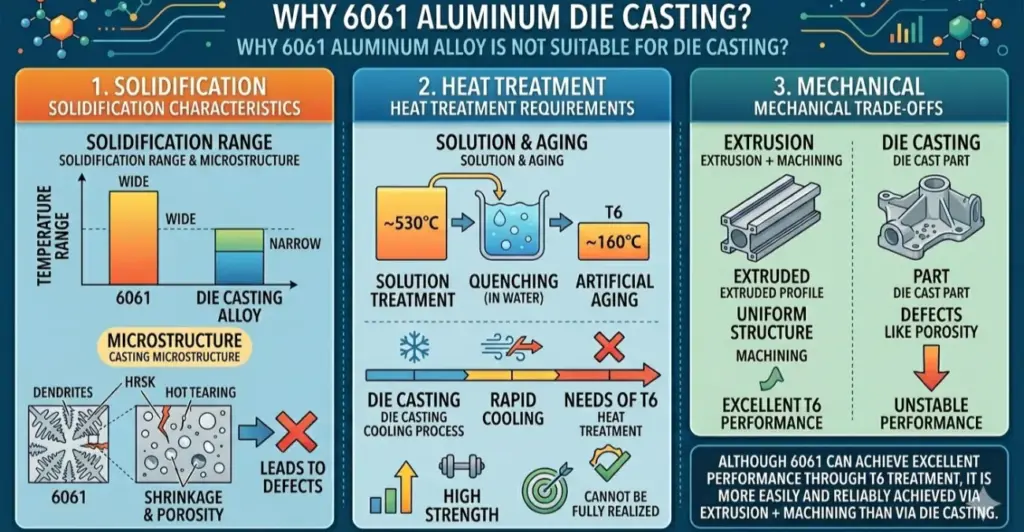
لماذا 6061 ليست مثالية للصب يموت
- خصائص التصلب: 6061نطاق التصلب والبنية المجهرية يجعلها عرضة للانكماش والمسامية في ظل ظروف الصب بالقالب.
- متطلبات المعالجة الحرارية: قوة عالية في 6061 يعتمد على الشيخوخة الحرارية بعد التصلب, والتي تتعارض مع أنظمة التبريد المصبوبة.
- المقايضات الميكانيكية: بينما 6061 يمكن أن يحقق أداء ميكانيكي ممتاز من خلال العلاج T6, ويتم تحقيق ذلك بشكل أكثر موثوقية عن طريق البثق + بالقطع من الصب.
سبائك الصب المفضلة: A380 وADC12
لصب القوالب بكميات كبيرة, تهيمن السبائك مثل A380 وADC12:
- A380 (سبائك الألومنيوم): ملء تجويف ممتاز, خصائص ميكانيكية جيدة, استخدام واسع النطاق في السيارات, العلب الكهربائية, والمكونات الصناعية
- أدك12 (سبائك الصب القياسية JIS): تشبه إلى حد كبير طائرة A380, تستخدم على نطاق واسع في جميع أنحاء آسيا والتصنيع العالمي
كلا السبائك توفر تعبئة أفضل للقالب, انخفاض الانكماش, وهياكل مجهرية أكثر قابلية للتنبؤ بها من 6061. إنها تمثل الخيار العملي للإنتاج شبه الصافي بكميات كبيرة.
أنت أيضا تحب: أدك 10 مقابل. ADC12 الألومنيوم
قالب صب الألمنيوم الشامل مع BIAN
للشركات التي تتطلع إلى الاستفادة من مواد الصب هذه بشكل فعال, تبرز BIAN كشركة مصنعة شاملة لقوالب الألمنيوم في الصين مع مرافق في الصين, المكسيك, وفيتنام, تقدم حلولاً شاملة - بدءًا من تصميم القالب وحتى الصب والتشطيب - مما يضمن إنتاج الأجزاء بكفاءة وتلبية المعايير الدولية. إن تواجدنا في العديد من البلدان يسمح للعملاء العالميين بالاستفادة من الإنتاج المحلي, فترات زمنية أسرع, ومرونة سلسلة التوريد.
من خلال الجمع بين الخبرة المادية وقدرات التصنيع الشاملة, نحن نساعد مصنعي المعدات الأصلية, الموردين الطبقة, والعلامات التجارية الصناعية تقلل من المخاطر, تقصير دورات التنمية, وتحقيق إنتاج موثوق به من القوالب المصبوبة - كل ذلك مع ضمان الجودة العالية والاتساق عبر الطلبات واسعة النطاق.
متى تختار 6061 للقذف + بالقطع
نظرا لملف أدائها, 6061 يكون أكثر فعالية عندما يتم إنتاج المكونات من خلال:
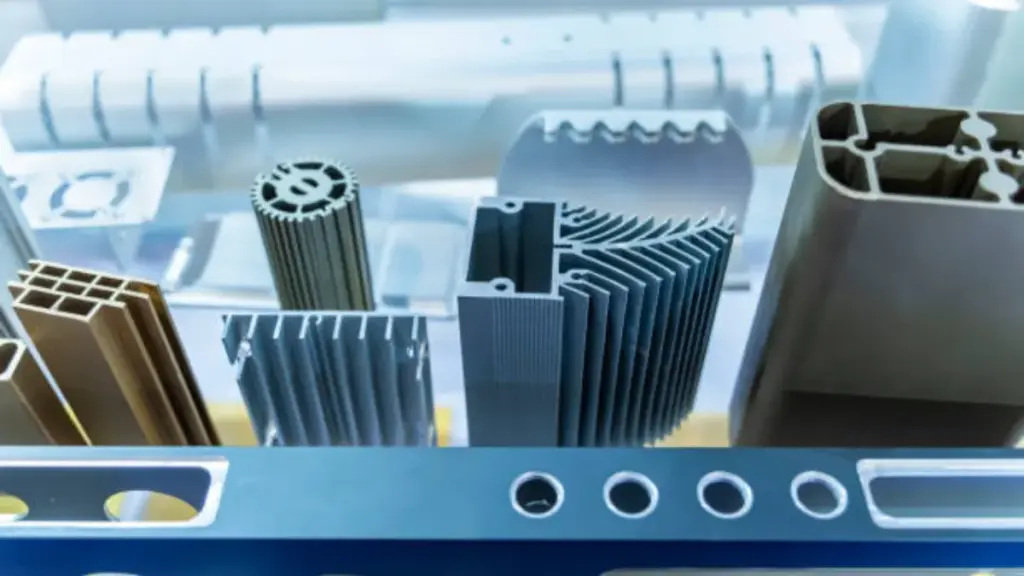
- البثق: إنتاج ملفات تعريف ذات مقاطع عرضية متسقة
- التصنيع باستخدام الحاسب الآلي: تحقيق ميزات الدقة, التحمل الصارم, والتفاصيل الوظيفية
- المعالجة الحرارية (T6): رفع القوة والصلابة عند الاقتضاء
هذا المسار قياسي للإطارات الهيكلية, بين قوسين الفضاء, المكونات البحرية, والأجزاء المصنعة خصيصًا - خاصة عندما يفوق أداء المواد عدد الأجزاء أو حساسية التكلفة.
الأجزاء والصناعات النموذجية التي تستفيد من 6061
- الفضاء والدفاع بين قوسين والتجمعات
- المكونات الهيكلية الدقيقة في الأتمتة الصناعية
- إطارات الدراجات النارية أو الدراجات الهوائية الراقية
- تتطلب التركيبات البحرية مقاومة التآكل والقوة
على الرغم من أنها أكثر تكلفة من الصب بالقالب بالنسبة للحجم المماثل, غالبًا ما تبرر حرية التصميم والأداء القوي استخدام 6061.
التطبيقات النموذجية ل 6061 وسبائك الصب
- 6061 الألومنيوم: الأعضاء الهيكلية, لمحات مقذوف, أجزاء دقيقة تشكيله
- سبائك الصب يموت (A380/ADC12): المساكن الكهربائية, أغطية محركات السيارات, حاويات الإضاءة, قذائف المعدات الصناعية
عند الاختيار بينهما, المبدأ التوجيهي المشترك للصناعة هو:
يختار 6061 للأجزاء المصنعة عالية القوة; اختر A380/ADC12 للأجزاء المصبوبة ذات الحجم الكبير.
وهذا مهم بشكل خاص لمصنعي المعدات الأصلية والطبقة 1/2 المشترين في قطاعات مثل السيارات, الإضاءة الصناعية, والمساكن الإلكترونية.
الأسئلة الشائعة – المواد 6061 الألومنيوم ويموت الصب
1. يستطيع 6061 الألومنيوم يكون مصبوبًا?
في معظم الحالات, 6061 لا يُنصح باستخدامه في عملية الصب بالضغط العالي لأنه لا يتصلب بشكل متوقع تحت ضغط الحقن العالي ويكون عرضة للمسامية. بدلاً من, 6061 من الأفضل معالجتها من خلال البثق والتصنيع اللاحق.
2. ما هي الاختلافات بين 6061 وA380/ADC12?
6061 تم تصميمه من أجل القوة والقدرة على التشغيل الآلي, بينما تم تصميم A380 وADC12 لأداء الصب بالقالب, بما في ذلك ملء القالب الجيد, انخفاض الانكماش, واتساق الأبعاد على نطاق واسع.
3. كيفية الحصول على أجزاء من الألومنيوم عالية القوة إذا 6061 مطلوب?
للاستفادة 6061 خصائص الألومنيوم T6, عادة ما يقوم المصنعون بقذف الملف الشخصي, الميزات الهامة للآلة عبر CNC, وتطبيق المعالجة الحرارية T6 لزيادة القوة والصلابة.
4. ما هي الصناعات الأكثر استخداما 6061 مقابل سبائك الصب?
6061 شائع في الفضاء الجوي, الهندسة الإنشائية, وصناعات الآلات الدقيقة. تُستخدم السبائك المصبوبة مثل A380 وADC12 على نطاق واسع في مكونات أجسام السيارات, مساكن الإضاءة في الهواء الطلق, والمرفقات الإلكترونية الاستهلاكية.