توفر السبائك المختلفة مجموعات فريدة من الأداء الميكانيكي, يكلف, وقابلية التصنيع. من بين الخيارات المختلفة, يعد الزنك Zamak 5 وسبائك الألومنيوم مثل ADC12 وA380 من أكثر المواد شيوعًا في التطبيقات الصناعية.
توفر هذه المقالة نظرة متعمقة, نظرة موضوعية على Zamak 5 خصائص المواد, يقارنها بمواد صب الألومنيوم النموذجية, ويستكشف أين يكون أداء كل سبيكة أفضل.
نظرة عامة على زاماك 5 سبيكة
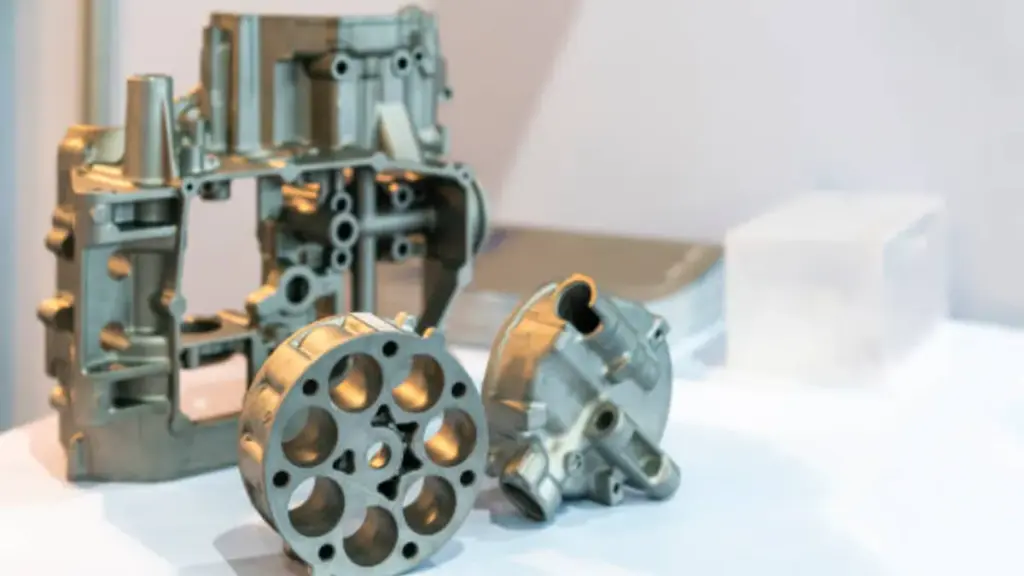
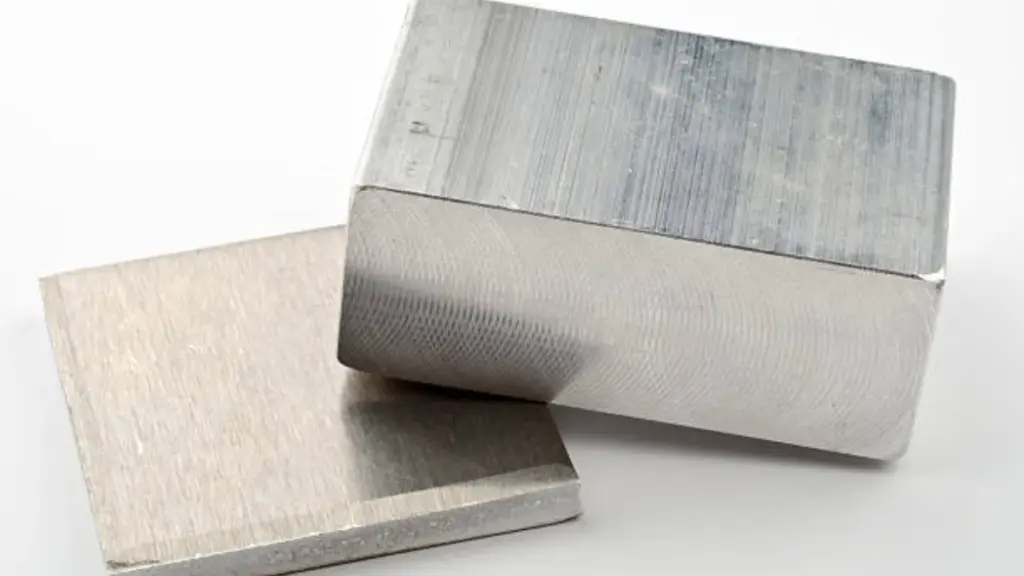
Zamak 5 عبارة عن سبيكة مسبوكة قائمة على الزنك تنتمي إلى عائلة Zamak (اختصار لالزنك, الألومنيوم, المغنيسيوم, والنحاس, أي., نحاس) مواد. ومن المعروف جيدا لمزيج من القوة, صلابة, وسلوك التشطيب السطحي الممتاز, مما يجعلها مثالية للأجزاء الزخرفية والهيكلية التي تتطلب الدقة والمتانة.
التركيب الكيميائي والخصائص
تختلف تركيبة زاماك 5 قليلاً عن درجات زاماك الأخرى بسبب محتواها العالي من النحاس, مما يعزز الصلابة والقوة. يظهر التكوين النموذجي أدناه:
| عنصر | محتوى (%) |
|---|---|
| الزنك (الزنك) | توازن |
| الألومنيوم (آل) | 3.5 - 4.3 |
| نحاس (النحاس) | 0.75 - 1.25 |
| المغنيسيوم (ملغ) | 0.03 - 0.06 |
| حديد (الحديد) | < 0.075 |
| يقود (الرصاص) | < 0.005 |
| الكادميوم (قرص مضغوط) | < 0.004 |
الفرق بين زاماك 3 وزاماك 5 يكمن بشكل رئيسي في نسبة النحاس. بينما زاماك 3 يحتوي على الحد الأدنى من النحاس, الأحمال 5 يشمل تقريبا 1%, مما يزيد بشكل كبير من قوة الشد والصلابة ولكنه يقلل قليلاً من الليونة.
الخواص الميكانيكية والفيزيائية
| ملكية | الأحمال 5 القيمة النموذجية |
|---|---|
| قوة الشد | ~331 ميجا باسكال |
| قوة العائد | ~260 ميجا باسكال |
| استطالة | ~7% |
| صلابة (برينل) | 91 غ.ب |
| كثافة | 6.6 - 6.7 ز/سم |
| نطاق الذوبان | 380 – 386 درجة مئوية |
| الموصلية الحرارية | 109 ث/م · ك |
| الموصلية الكهربائية | 27% IACS |
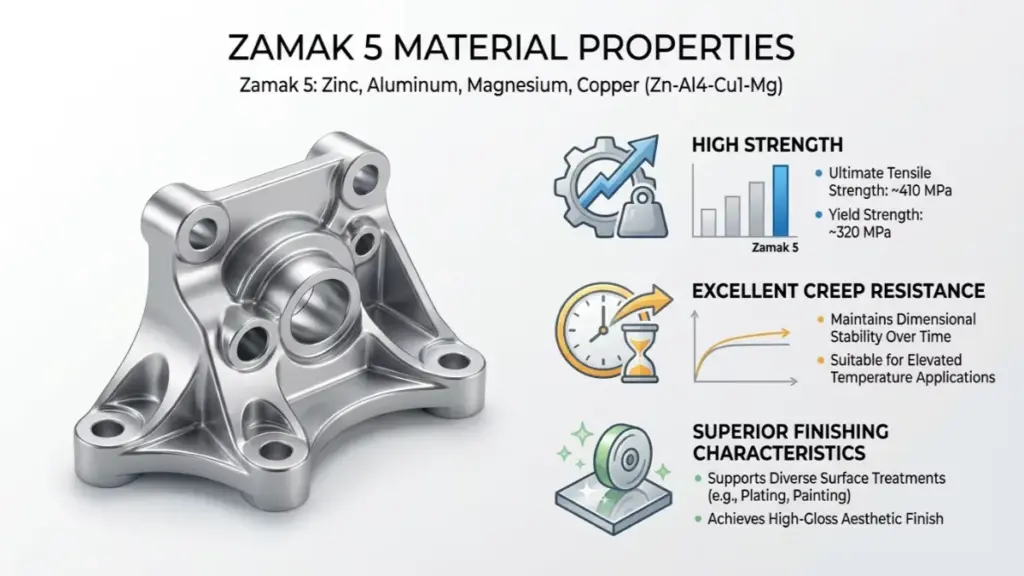
هذه الخصائص تجعل من الزنك Zamak 5 خيارًا مفضلاً للأجزاء الدقيقة الصغيرة والمتوسطة الحجم التي تحتاج إلى ثبات الأبعاد وجودة طلاء ممتازة. تدعم السبيكة أيضًا التفاوتات الصارمة, وهو أمر ذو قيمة لتطبيقات مثل العلب الميكانيكية أو التركيبات الزخرفية.
نظرة عامة على سبائك الألومنيوم يموت الصب (أدك12 / A380)
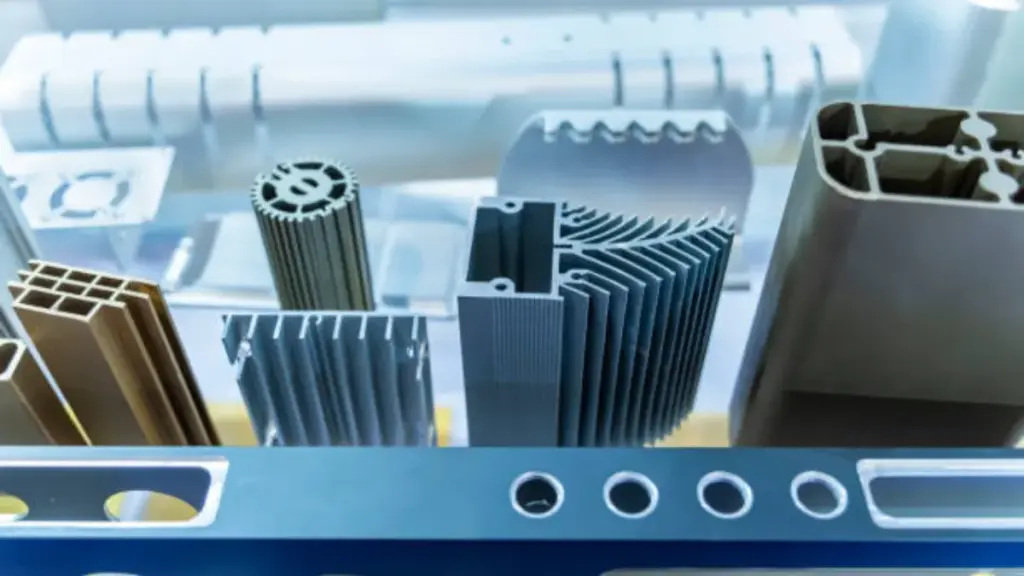
بينما سبائك زاماك تهيمن على الصب القائم على الزنك, سبائك الألومنيوم مثل ADC12(تستخدم في الغالب في آسيا) وA380(شائع في أمريكا الشمالية وأوروبا) تمثل المواد السائدة في صب الألومنيوم. إن أداءها الخفيف والحراري يجعلها مثالية للمكونات الأكبر حجمًا أو المعرضة للحرارة.
التكوين والخصائص النموذجية
| عنصر | أدك12 (%) | A380 (%) |
|---|---|---|
| الألومنيوم (آل) | توازن | توازن |
| السيليكون (و) | 9.6 - 12.0 | 7.5 - 9.5 |
| نحاس (النحاس) | 1.5 - 3.5 | 3.0 - 4.0 |
| المغنيسيوم (ملغ) | ≥ 0.3 | 0.1 |
| حديد (الحديد) | ≥ 1.3 | ≥ 1.3 |
| الزنك (الزنك) | ≥ 1.0 | ≥ 3.0 |
الخواص الميكانيكية والفيزيائية
| ملكية | أدك12 | A380 |
|---|---|---|
| قوة الشد | ~ 320 ميجا باسكال | ~317 ميجا باسكال |
| قوة العائد | ~160 ميجا باسكال | ~180 ميجا باسكال |
| استطالة | ~1 – 2% | ~3.5% |
| صلابة (برينل) | ~85 حصان | ~80 حصان |
| كثافة | 2.7 ز/سم | 2.7 ز/سم |
| الموصلية الحرارية | 96 ث/م · ك | 96 ث/م · ك |
سبائك الألومنيوم توازن القوة والوزن المنخفض, يوفر سيولة استثنائية للأشكال الهندسية المعقدة مع مقاومة التشوه الحراري. تعتبر هذه الميزات ضرورية لصناعات السيارات والإلكترونيات حيث يؤدي تقليل الوزن وإدارة الحرارة إلى اختيار المواد.
الأحمال 5 مقابل. سبائك الألومنيوم – مقارنة الممتلكات
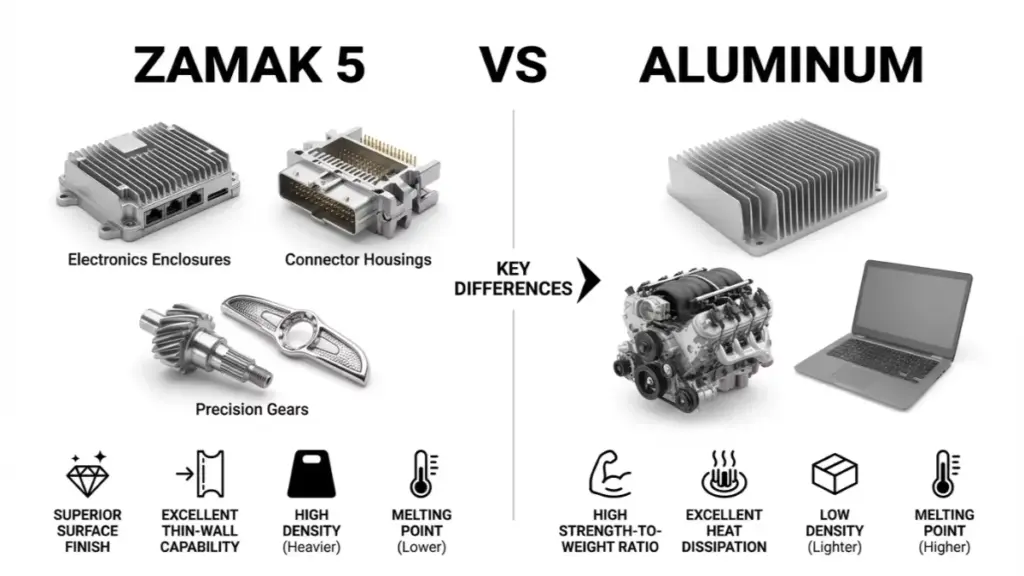
تسلط الأقسام التالية الضوء على الاختلافات الرئيسية بين الزنك Zamak 5 وسبائك صب الألومنيوم عبر الميكانيكية, بدني, وأبعاد الإنتاج.
الأداء الميكانيكي والبدني
| المعلمة | الأحمال 5 | أدك12 / A380 | البصيرة الرئيسية |
|---|---|---|---|
| قوة الشد | ~331 ميجا باسكال | ~ 320 ميجا باسكال | قوة قابلة للمقارنة; الأحمال 5 يوفر صلابة أفضل. |
| صلابة | 91 غ.ب | 80-85 حصان | الأحمال 5 الأجزاء تقاوم التآكل والضغط الميكانيكي بشكل أكثر فعالية. |
| استطالة | ~7% | 1-3% | الألومنيوم أكثر هشاشة; الأحمال 5 يسمح بتشوه طفيف قبل الفشل. |
| كثافة | 6.6-6.7 جم/سم3 | 2.7 ز/سم | أجزاء الألومنيوم على وشك 60% أخف وزنا. |
الأحمال 5 يظهر دقة أبعاد أعلى وصلابة, مما يجعلها مثالية للأجزاء التي تكون فيها الدقة والقوة في الحجم الصغير أمرًا أساسيًا, مثل المزالج أو التروس. الألومنيوم, على الجانب الآخر, يفضل عندما يسود تخفيض الوزن والإدارة الحرارية.
مقاومة التآكل والانتهاء من السطح
يقاوم الزنك التآكل بشكل طبيعي بسبب طبقة الأكسيد المستقرة, إعطاء الزنك زاماك 5 أداءً قويًا في الظروف الرطبة أو المؤكسدة. بالإضافة إلى ذلك, الأحمال 5 يدعم الطلاء الكهربائي بسهولة, تلوين, والكروم.
يوفر الألومنيوم مقاومة جيدة للتآكل ولكنه يتطلب معالجات سطحية مثل الأنودة أو طلاء المسحوق لتعزيز المتانة والمظهر. إنها مناسبة بشكل خاص للمكونات الهيكلية الخارجية.
| وجه | الأحمال 5 | الألومنيوم (أدك12 / A380) |
|---|---|---|
| المقاومة الطبيعية للتآكل | ممتاز | جيد |
| تصفيح / تلوين | أرقى (الانتهاء من المرآة ممكن) | جيد (يفضل أنودة) |
| التطبيقات الجمالية | ممتاز | معتدل |
| المتانة البيئية | عالي | عالي (بعد الطلاء) |
خصائص الصب والإنتاج
هناك تمييز حاسم آخر وهو سلوك الصب. يذوب زنك زاماك 5 عند درجة حرارة أقل (حوالي 385 درجة مئوية مقابل. الألومنيوم ~ 660 درجة مئوية), مما يؤدي إلى انخفاض استهلاك الطاقة, أوقات دورة أقصر, وإطالة عمر العفن.
لكن, تعتبر سبائك الزاماك أكثر كثافة وأقل ملاءمة للأجزاء الكبيرة بسبب الوزن وارتفاع تكلفة المواد لكل حجم.
| المعلمة | الأحمال 5 | الألومنيوم ADC12 / A380 |
|---|---|---|
| درجة حرارة الانصهار | ~385 درجة مئوية | ~660 درجة مئوية |
| وقت الدورة | أقصر | معتدل |
| حياة العفن | أطول | أقصر |
| حجم الجزء المناسب | صغيرة إلى متوسطة | متوسطة إلى كبيرة |
| الاستقرار الأبعاد | ممتاز | جيد |
صب زاماك يدعم الجدران الرقيقة والتحكم الدقيق في التسامح دون الحاجة إلى تصنيع ثانوي, بينما يموت الألومنيوم بشكل أفضل لدعم أكبر, العلب أو الإطارات تبديد الحرارة.
اختيار المادة المناسبة لتطبيقك
الاختيار "الصحيح" بين زاماك 5 والألمنيوم يعتمد كليًا على أهداف التطبيق.
فيما يلي بعض العوامل التوجيهية التي يجب مراعاتها:
- حجم المكون والوزن:
- يُفضل الألومنيوم في الهياكل الأكبر حجمًا أو خفيفة الوزن.
- الأحمال 5 يعمل بشكل أفضل للضغط, مكونات مصممة بدقة.
- متطلبات القوة والحمل:
- كلا السبائك تقدم أداء قويا, لكن زاماك 5 يوفر صلابة فائقة ومقاومة التآكل في الآليات الصغيرة.
- جماليات السطح:
- للمنتجات التي تتطلب تشطيبات تزيينية من الكروم أو الطلاء (على سبيل المثال, مقابض, تركيبات), الأحمال 5 عادة ما يتفوق على الألومنيوم.
- الاحتياجات الحرارية والكهربائية:
- يفوز الألومنيوم عندما تكون الموصلية وتبديد الحرارة مهمًا (على سبيل المثال, المحرك أو العلب الإلكترونية).
- كفاءة الإنتاج والتكلفة:
- توفر سبائك الزنك عمرًا أعلى للأدوات ودورات أسرع.
- غالبًا ما تؤدي كثافة المواد المنخفضة للألمنيوم إلى تقليل تكلفة الجزء لكل قطعة عند الحاجة إلى كميات كبيرة.
في الجوهر, الأحمال 5 يملأ المكانة للحصول على دقة عالية, أجزاء معدنية صغيرة, بينما تظل سبائك الألومنيوم هي المعيار الصناعي للشركات الكبيرة, المسبوكات خفيفة الوزن.
خبرة BIAN في حلول الصب بالقالب
مع سنوات من الخبرة التقنية في صب قوالب الألومنيوم, بيان يوفر دعمًا هندسيًا شاملاً — بدءًا من تصميم القالب واختيار السبائك وحتى المعالجة السطحية والتجميع النهائي.
فريقنا الهندسي بارع في العمل مع مجموعة متنوعة من السبائك, بما في ذلك الزنك Zamak 5 ودرجات الألومنيوم مثل أدك12 وA380, ضمان حصول العملاء على مشورة مادية موضوعية ومحددة بالتطبيق.
خاتمة
تسلط المقارنة بين سبائك Zamak 5 وسبائك الألومنيوم المسبوكة الضوء على أن كلاهما يتمتع بمزايا فريدة:
- يقدم Zamak 5 تشطيبًا فائقًا للسطح, صلابة, والتسامح مع التصاميم المعقدة.
- سبائك الألومنيوم تجلب الخفة, الكفاءة الحرارية, وفعالية التكلفة للمكونات واسعة النطاق.
بدلا من المنافسة المباشرة, هذه السبائك تكمل بعضها البعض عبر الاحتياجات الهندسية المختلفة.
يتمثل دور BIAN في مساعدة العملاء على التنقل بين هذه الاختيارات من خلال الرؤية المستندة إلى البيانات والخبرة الفنية, ضمان أن المنتج النهائي يحقق أفضل توازن بين هدف التصميم, أداء, وكفاءة الإنتاج.