Designing safety-critical automotive components requires materials that withstand shock loads without fracturing. While aluminum suits large structural panels, it often lacks the ductility needed for intricate mechanisms like door latches and seatbelt retractors. Automotive zinc die casting solves this challenge by delivering high tensile strength and allowing manufacturers to cast thin walls down to 0.15 んん, effectively eliminating the need for extensive secondary machining.
This guide examines the engineering advantages of zinc alloys, focusing on material properties, tooling longevity, and plating standards.

The Role of Zinc Alloys in Automotive Safety Systems
亜鉛合金, particularly Zamak 5 (ZP5) and ZA-8, are essential for automotive safety systems due to their high tensile strength (≈330 MPa) and superior impact resistance compared to plastics. These materials ensure that critical components like seatbelt retractors, door latches, and steering column locks maintain structural integrity under crash loads, complying with rigorous EN 12844 とIATF 16949 safety standards.
Mechanical Reliability and Impact Resistance
Engineers prioritize zinc alloys like 負荷 5 (ASTM AC41A / ZP5) for safety-critical components because they offer a mechanical baseline far superior to standard commercial grades. With a tensile strength of approximately 330 MPa and a yield strength near 295 MPa, these alloys withstand the instantaneous shock loads generated during vehicle collisions. Unlike engineered plastics, which may shatter or deform unpredictably under high strain rates, zinc die castings maintain their shape and integrity, preventing catastrophic fractures in housings and brackets that secure passengers.
Reliability in safety systems relies on material consistency. Compliance with で 12844 and SAE 925 standards guarantees the use of 99.995% pure zinc base metal, tightly controlling impurities like lead, cadmium, and tin. This high-purity composition eliminates intergranular corrosion and ensures that the alloy performs predictably during crash testing and long-term service. Manufacturers use these certified alloys to produce components that meet the stringent durability requirements of modern automotive safety protocols.
Precision Applications in Locking and Restraint Systems
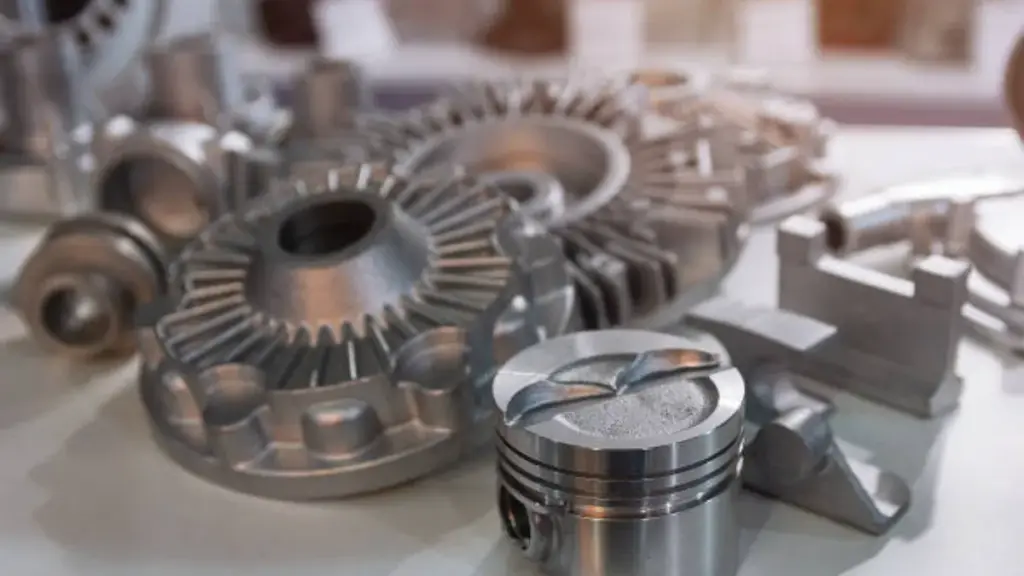
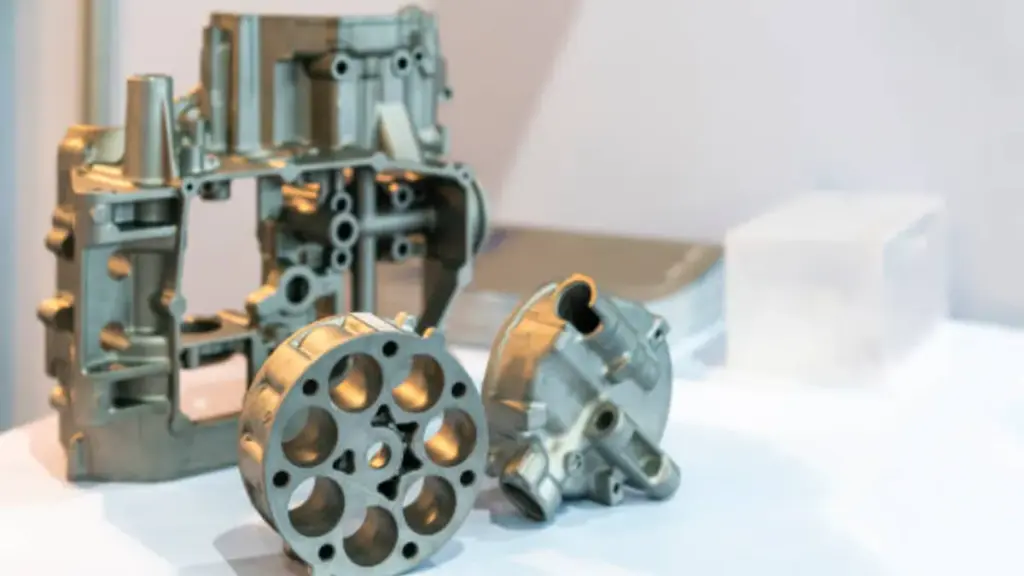
The high fluidity of zinc allows for the production of complex, net-shape components used in seatbelt pretensioner gears and door locking mechanisms. These parts require exceptionally tight dimensional tolerances to prevent jamming during emergency actuation. Zinc die casting achieves these geometries without extensive secondary machining, ensuring that the structural continuity of the part remains intact. This precision is vital for the seamless operation of latches and retractors that must engage instantly during an impact event.
For safety components located near the engine or exhaust, such as under-hood brackets and fasteners, thermal stability is a primary design constraint. Standard zinc alloys may exhibit creep under sustained loads at elevated temperatures. To address this, manufacturers utilize high-creep-resistance alloys like ZA-12 and ACuZinc5. These specialized materials retain clamp load and dimensional stability despite engine heat, ensuring that critical safety joints do not loosen or misalign over the vehicle’s operational lifespan.
Material Selection Guide: 亜鉛 (負荷) 対. アルミニウム vs. プラスチック
While Aluminum (例えば, A380/ADC12) is the standard for large-scale lightweighting, and Engineering Plastics (例えば, PA66 GF) offer cost advantages for non-structural trim, 亜鉛合金 (負荷 5) occupy a critical niche. They bridge the gap between high mechanical strength and complex geometric precision.
The following table compares key engineering metrics to help define the appropriate application scope for each material:
| 特徴 | Zinc Alloy (負荷 5) | アルミニウム (A380) | プラスチック (PA66 30% GF) |
|---|---|---|---|
| 抗張力 | ~330 MPa | ~317 MPa | ~160 MPa |
| 硬度 (ブリネル) | ~91 HB | ~80 HB | N/A (低い) |
| EMI/RFI Shielding | 素晴らしい (Native) | Good (Native) | None (Requires Coating) |
| Min. 壁の厚さ | 0.15 んん | 1.5 – 2.0 んん | 1.0 – 2.0 んん |
| Tooling Life (Cycles) | > 1,000,000 | ~100,000 | > 1,000,000 |
Interpreting the Data for Application Fit
1. 亜鉛合金 (負荷 5 / For-8): 精度 & 耐久性
Zinc is the engineer’s choice forsmall, safety-critical mechanisms (例えば, seatbelt retractors, door lock actuators).
- なぜ: Its high tensile strength (~330 MPa) and superior hardness (~91 HB) allow it to withstand shock loads and wear better than aluminum.
- Advantage: The unique combination of naturalEMI shielding and the ability to cast walls as thin as0.15 んん makes it ideal for modern EV sensor housings where space and signal integrity are paramount.
2. アルミニウム (A380 / ADC12): Structural Lightweighting
Aluminum remains the dominant material forlarge structural components (例えば, トランスミッションのケース, エンジンブロック).
- なぜ: With a density of ~2.7 g/cm³ (対. Zinc’s ~6.6 g/cm³), Aluminum offers an unbeatable strength-to-weight ratio for bulky parts.
- Trade-off: It requires higher processing temperatures, which reduces tooling life to approx. 100k shots and limits the ability to cast intricate, micro-sized features without secondary machining.
3. Engineering Plastics (PA66 / ポリカーボネート): Non-Load Bearing Trim
Reinforced plastics are best suited forinterior covers and non-structural brackets.
- なぜ: They offer the lowest weight and raw material cost.
- Trade-off: They lack the rigidity for safety-critical crash components. さらに, for electronic applications, plastics are transparent to electromagnetic interference, requiring expensive conductive coatings or inserts to achieve theEMI shielding that zinc provides naturally.
Common Applications for Zinc Die Casting
Precision Interior, Safety, and Powertrain Components
| Application Category | Primary Alloys | Typical Components |
|---|---|---|
| インテリア & Cosmetic | 負荷 3 (ZP3) | Door handles, dashboard knobs, decorative trim, window cranks |
| Safety Mechanisms | 負荷 3, 負荷 5 | Lock cylinders, seat belt retractors, latch assemblies |
| Powertrain & Chassis | 負荷 5, For-8, 12 | Valve bodies, steering column brackets, fuel system housings |
| エレクトロニクス | 負荷 3, 負荷 5 | ECU covers, connector shells, センサーハウジング (EMI shielding) |
Zinc alloys such as Zamak 3 and Zamak 5 are widely used in automotive interiors, safety mechanisms, and compact powertrain hardware where cosmetic quality and dimensional stability are equally important. 負荷 3 provides an excellent as-cast surface and consistent substrate for copper–nickel–chrome plating, making it a preferred choice for visible parts like interior door handles, bezels, and dashboard knobs that demand mirror-like finishes with minimal post-processing.
For functional components, the high fluidity and strength of zinc alloys enable thin walls down to around 0.8 mm and tight as-cast tolerances, supporting reliable operation of lock cylinders, latch systems, and small brackets under repeated mechanical loading. Higher-strength grades such as Zamak 5 and ZA-8 add wear resistance and rigidity for steering column brackets, pedal linkages, and transmission-related hardware, allowing compact designs in space-constrained under-hood environments while maintaining structural integrity over the vehicle lifetime.
Zinc Die Casting in Electric Vehicles (EV) & ADAS Systems

Building on these electronic applications, electric vehicles and ADAS architectures place even higher demands on shielding performance and package density, especially around inverters, battery management systems, and perception sensors.
| 特徴 | Zinc Alloy (負荷 5) | アルミニウム (A380) | プラスチック (PA66 30% GF) |
|---|---|---|---|
| 抗張力 | ~330 MPa | ~317 MPa | ~160 MPa |
| 硬度 (ブリネル) | ~91 HB | ~80 HB | N/A (低い) |
| EMI/RFI Shielding | 素晴らしい (Native) | Good (Native) | None (Requires Coating) |
| Min. 壁の厚さ | 0.15 んん | 1.5 – 2.0 んん | 1.0 – 2.0 んん |
| Tooling Life (Cycles) | > 1,000,000 | ~100,000 | > 1,000,000 |
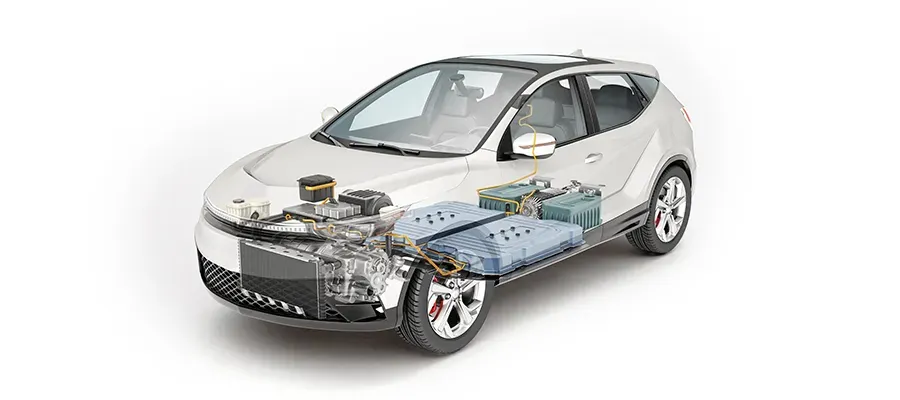
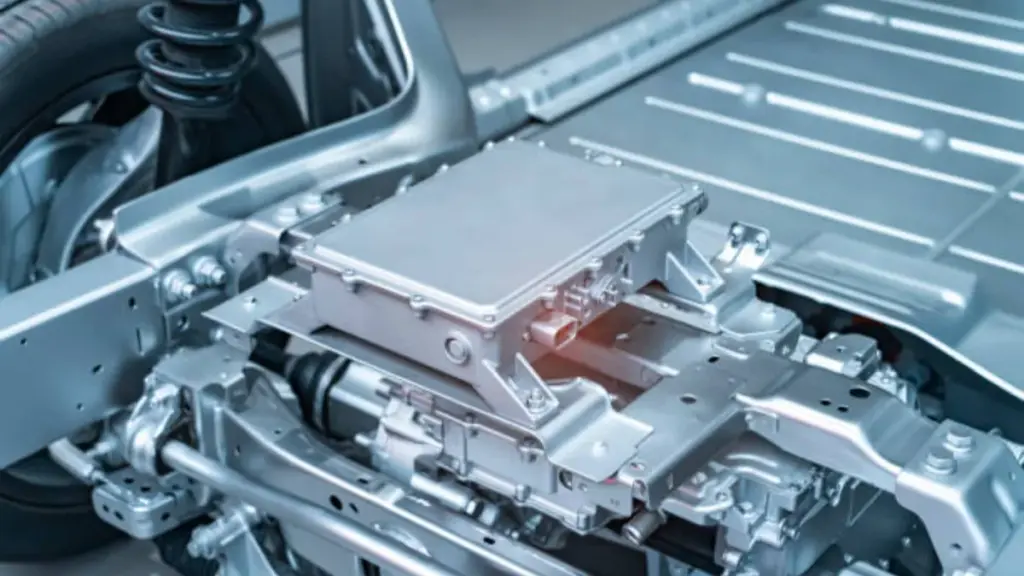
In EV platforms, zinc die castings are widely used for battery connectors, control unit covers, and sensor housings where compact geometry and dimensional stability are critical for sealing and connector alignment. Aluminum housings remain advantageous where large-area heat spreading is required, while engineering plastics are still preferred for low-load cosmetic covers; zinc complements these materials in smaller, safety-relevant or signal-critical components that benefit from a combination of mechanical strength, shielding performance, and thin-wall capability.
Precision Automotive Die Casting Solutions

Optimizing Zinc Thin-Wall Geometries (DFM)
Designing zinc die cast parts for automotive applications requires balancing extreme thin-wall capability with robust process windows for filling, ejection, and long-term durability. Zinc alloys can routinely achieve wall sections around 0.5 んん, with specialized tooling and gating strategies pushing feasible thicknesses toward 0.15 mm in localized features. By comparison, aluminum die castings typically operate comfortably in the 1.5–2.0 mm range for similar part envelopes, so zinc offers more freedom when packaging constraints or fine details dominate the design.
For most automotive components, engineers obtain reliable performance by keeping primary walls in the 0.5–2.0 mm range and maintaining uniform thickness wherever possible to reduce thermal gradients and shrinkage-related porosity. When higher stiffness is required, adding ribs and coring to redistribute material is usually more effective than simply increasing wall thickness, because ribs strengthen the section while improving metal flow and helping the casting solidify more uniformly.
Zinc’s high fluidity also allows for reduced draft angles compared with many other die casting alloys. External walls commonly use draft angles near 0.5° as a starting point, with the possibility of approaching near-zero draft in selected areas when tooling, 表面仕上げ, and ejection conditions are carefully controlled. Internal features, deep ribs, or heavily textured surfaces may require additional draft to support consistent release and minimize die wear, so collaborating with the die caster early in the design phase is essential to align functional requirements with manufacturability.
A Guide to Plating and Decorative Finishes
Automotive zinc die casting plating follows a strict four-stage process: cyanide copper flash, acid copper, nickel barrier, and chromium topcoat.
| Plating Stage | 一次機能 | Technical Specification |
|---|---|---|
| Cyanide Copper Flash | Protects reactive zinc from acidic baths | Initial strike layer for adhesion |
| Acid Copper | Levels surface and enhances conductivity | Foundation for mirror finishes |
| Nickel Layers | Provides main corrosion barrier | Typical thickness 5–25 μm |
| Chromium Topcoat | Delivers hardness and tarnish resistance | ~0.2–0.3 μm decorative flash |
The Multi-Layer Electrochemical Plating Process
Achieving automotive-grade decorative finishes on zinc alloys requires a specific electrochemical stack to counteract the metal’s high reactivity. The process begins with a cyanide copper flash, which serves as a protective barrier preventing the subsequent acidic baths from chemically attacking the zinc substrate. Once protected, the part undergoes acid copper plating to improve surface leveling and electrical conductivity. This layer creates the smooth, uniform base necessary for the high-gloss appearance demanded in interior trim and exterior handles.
Durability and aesthetics rely heavily on the subsequent nickel and chromium layers. Multiple layers of nickel provide the primary defense against corrosion, acting as a dense shield that determines the part’s longevity in salt-spray tests (ASTM B117). For premium applications, manufacturers employ a “Copper Buff” process, where a heavy copper deposit is mechanically buffed to remove microscopic imperfections before the final nickel-chrome application. The final chromium topcoat, often just 0.2–0.3 microns thick, provides the characteristic blue-white brilliance and sufficient hardness to resist scratching and wear.
Design Guidelines for Optimal Adhesion
Successful plating starts at the design phase, as specific geometric features directly influence electrodeposition quality. Sharp edges attract excessive current density, leading to rough “beading” または “treeing” of the plating metal. To prevent this, engineers must apply a minimum radius of 0.4 mm to all edges, と 0.8 mm being the preferred standard for uniform coating distribution. さらに, recessed areas and threaded holes require careful consideration; standard plating baths struggle to throw metal into deep cavities. Blind holes should maintain a minimum diameter of 5.6 mm to ensure solution flow and adequate plating thickness.
Surface topology also affects the final visual quality. Large, flat surfaces tend to highlight minor substrate defects or flow marks after plating. Incorporating a slight crown or convexity—recommended at a minimum of 0.015 mm per mm—helps the leveling copper layers hide these imperfections, resulting in a glass-like finish. Texturing or crowning surfaces not only improves aesthetics but also aids in solution drainage between plating baths, reducing the risk of chemical carryover and contamination.

The Advantage of Zinc Die Casting Tooling Life
Zinc die casting tooling offers a clear longevity advantage for high-volume automotive programs by combining lower operating temperatures with a hot‑chamber process that is gentle on the die. Zinc alloys such as Zamak 3 and Zamak 5 melt around 419–440°C, significantly below typical aluminum die casting temperatures near 660°C, which reduces thermal shock to H13 tool steel and delays fatigue phenomena like heat checking on the die surface.
Because the zinc process generally uses hot‑chamber equipment and lower injection pressures, gates and runners experience less mechanical erosion and are less prone to soldering, helping the mold retain its original surface finish and dimensional accuracy over prolonged production. 実際に, well‑maintained zinc dies often exceed 1,000,000 ショット, compared with roughly 100,000–300,000 cycles for many aluminum tools, allowing critical features to hold tolerances on the order of ±0.025 mm for a longer portion of the tool’s life and enabling tooling investment to be amortized over a much larger part volume.
Mechanical Properties of Zamak 5 合金
負荷 5 (ZnAl4Cu1) is a high-strength zinc alloy defined by its 1% copper addition, which boosts Ultimate Tensile Strength to 328 MPa and Hardness to ~91 Brinell. While it offers superior creep resistance and rigidity compared to Zamak 3, it trades slight ductility for these mechanical gains, making it the preferred choice for structural automotive components and complex brackets.
| Mechanical Property | Metric Value (ASTM B240) | Engineering Significance |
|---|---|---|
| Ultimate Tensile Strength | 328 MPa (min) | Exceeds Zamak 3 (~283 MPa) for higher load-bearing capacity. |
| 降伏強さ (0.2% Offset) | 228 MPa | Ensures structural stability and resistance to permanent deformation. |
| 硬度 (ブリネル) | ~91 HB | Improved wear resistance for threaded features and sliding contact. |
| Modulus of Elasticity | 96 GPa | Provides high rigidity for thin-wall housings and brackets. |
Alloy Composition and Strength Characteristics
The defining characteristic of Zamak 5 (designated as ASTM AC41A or ZnAl4Cu1) is its copper content, which constitutes approximately 1% of the alloy composition alongside 4% アルミニウム. This specific addition fundamentally alters the microstructure compared to the copper-free Zamak 3, resulting in a material that is harder, stronger, and more resistant to creep. The increased surface hardness, measuring approximately 91 ブリネル, makes this alloy particularly effective for components that undergo secondary operations like tapping or those exposed to moderate friction and wear.
Engineers select Zamak 5 when the application demands higher mechanical performance than standard zinc die casting alloys can provide, but this strength comes with a reduction in ductility. While Zamak 3 offers high elongation for clinching and riveting operations, 負荷 5 exhibits lower elongation (around 7%). Consequently, designers must account for this reduced formability when developing parts that require extensive post-casting deformation, ensuring the alloy’s rigidity is utilized for structural stability rather than flexible assembly features.
Key Mechanical Data and Performance Limits
負荷 5 delivers robust engineering values derived directly from ASTM B240 standards, positioning it as a structural workhorse in the zinc family. The alloy achieves an Ultimate Tensile Strength (UTS) of 328–331 MPa, significantly surpassing the 280 MPa range typical of Zamak 3. This strength profile is supported by a Yield Strength of 228 MPa (0.2% offset), which ensures that components maintain their geometry under substantial static loads, a critical requirement for automotive brackets and housing assemblies.
Beyond tensile performance, 負荷 5 demonstrates impressive resistance to shear and impact forces. With a Shear Strength of 262 MPa and Impact Strength ranging between 52–56 J, the material withstands shock loading effectively, making it suitable for automotive safety housings. さらに, its Modulus of Elasticity stands at 96 GPa, providing the necessary stiffness to support rigid, thin-wall designs that resist deflection under operational stress.
Bian’s Precision Hot Chamber Die Casting
Bian utilizes three specialized hot-chamber die casting machines with clamping forces ranging from 88 に 168 トン. This setup is specifically engineered for zinc alloys, allowing for rapid cycle times and the production of high-precision, thin-wall automotive components like connector bodies and sensor housings.
ビアンダイキャスト is a specialized zinc die caster that focuses on combining thin‑wall geometry, tight tolerances, and automotive‑grade surface finishes for small to medium components such as brackets, connector housings, and safety‑critical mechanisms. The company operates dedicated hot‑chamber zinc lines with clamping forces from 88 に 168 トン, supported by in‑house CNC machining, 掘削, たたく, そして 仕上げ to hold critical dimensions to approximately ±0.02 mm on selected features and around ±0.1 mm across broader envelopes.
A dual‑plant supply chain further strengthens delivery resilience and logistics efficiency, with a primary manufacturing base in Foshan, 中国, and an additional facility in メキシコ that provides localized production for U.S.‑Mexico customers, shorter transport routes, and reduced tariff exposure. Quality and environmental management systems aligned with ISO 9001 およびISO 14001 help automotive programs meet stringent customer and regulatory expectations throughout the full production lifecycle.
結論
Zinc alloys offer a unique combination of density, 強さ, and fluidity that standard aluminum grades cannot replicate for small, 複雑な部品. Engineers select these materials when a component must endure high impact loads while maintaining the exacting dimensions required for safety mechanisms like lock cylinders and retractors. The ability to cast extremely thin walls with zero draft enables the creation of lightweight, space-efficient designs without compromising the structural integrity essential for passenger protection.
Selecting the right casting method involves weighing the initial tooling investment against long-term production value. Zinc’s lower melting point preserves die life far beyond that of alternative metals, stabilizing unit costs over millions of cycles. For automotive suppliers, this process efficiency—paired with superior plating receptivity—ensures that functional hardware and decorative trim meet strict industry standards for durability and finish quality throughout the vehicle’s lifespan.
よくある質問
What specific automotive components are best suited for zinc die casting?
Zinc is the material of choice for small, high-precision safety and decorative parts. Common applications include exterior door handles, lock cylinders, window crank mechanisms, seatbelt retractors, and carburetor housings. Its ability to cast thin walls (まで 0.5 んん) makes it ideal for complex electronic enclosures and sensor housings.
How does the strength of zinc die casting compare to aluminum?
While aluminum offers a better strength-to-weight ratio for large structural parts, zinc alloys (like Zamak 5) provide superior hardness and impact strength. Zinc is significantly tougher under shock loads and offers better ductility (elongation), making it less prone to brittle failure than standard aluminum die castings in small, stressed components.
What is the typical life expectancy of a zinc die casting mold?
Zinc casting operates at much lower temperatures (approx. 420℃) アルミニウムより, which dramatically reduces thermal shock on the tool. A properly designed zinc mold typically lasts between 200,000 そして 1,000,000 ショット, offering a significantly lower tooling cost per unit over the project lifecycle compared to aluminum or magnesium molds.
Can zinc die cast parts be chrome plated for exterior automotive trim?
はい, zinc is the standard substrate for high-quality chrome plating. By applying a Copper-Nickel-Chrome plating stack, manufacturers achieve a mirror-like decorative finish that meets rigorous automotive corrosion standards, such as passing 500+ hour ASTM B117 salt-spray tests.
What tolerances can be achieved with precision zinc die casting?
Zinc alloys offer the tightest tolerances of any metal casting process, often eliminating the need for secondary machining. Standard linear tolerances are typically held to ±0.05 mm, but high-precision automotive components can achieve tolerances as tight as ±0.02 mm (±0.001 in) on critical features.