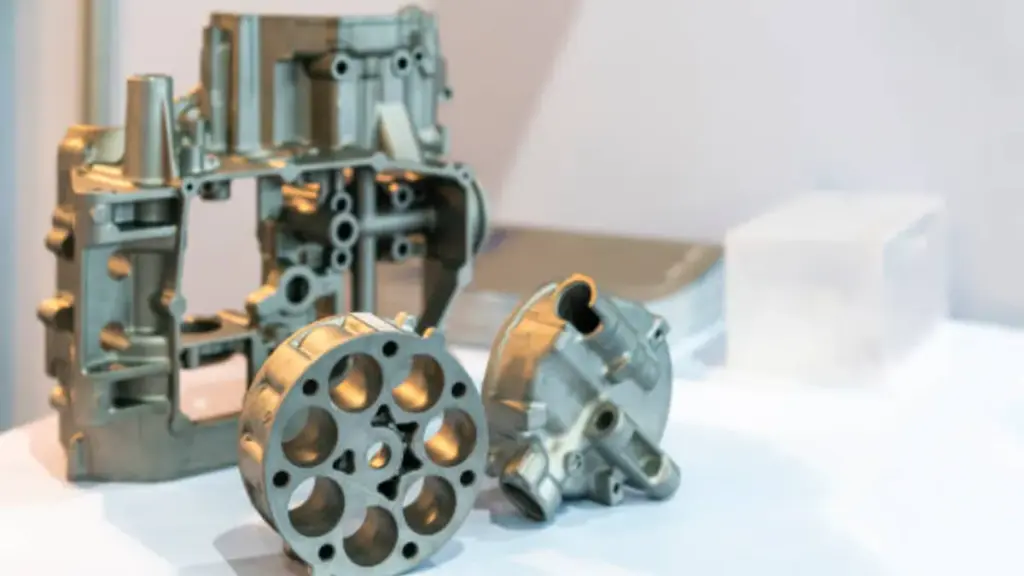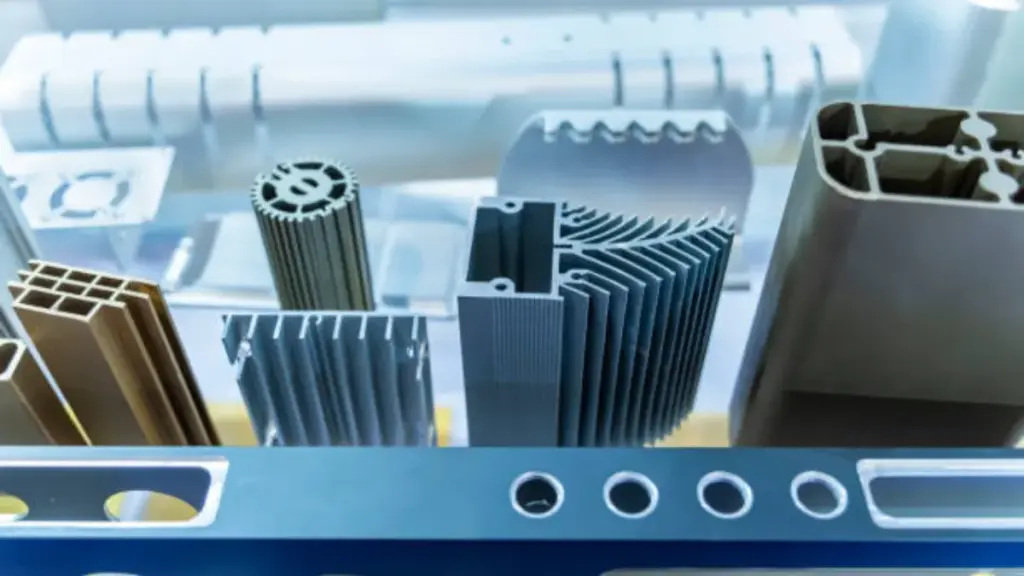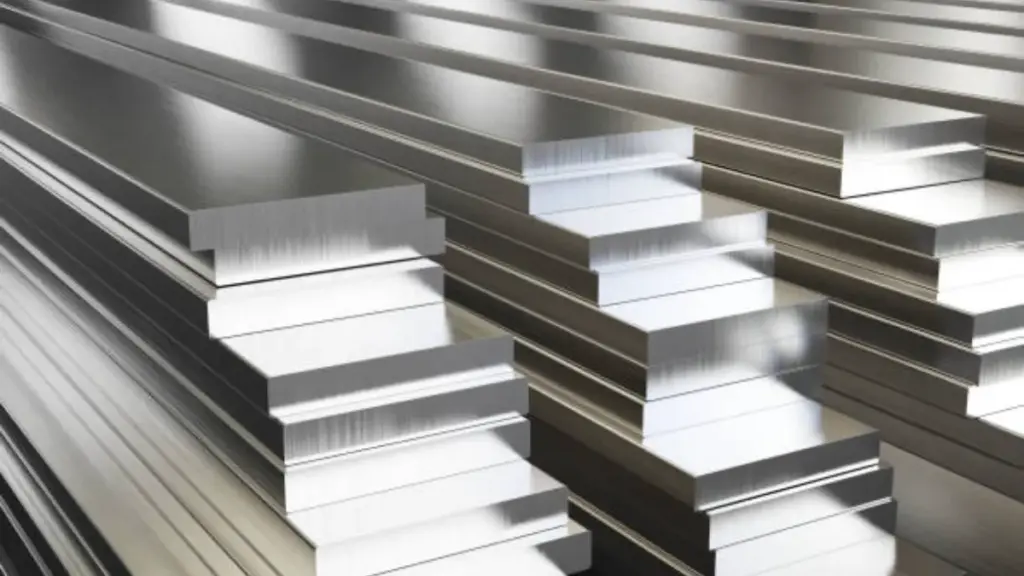
Различные сплавы обеспечивают уникальное сочетание механических характеристик., расходы, и технологичность. Среди различных вариантов, цинк Zamak 5 и алюминиевые сплавы, такие как ADC12 и A380, являются двумя наиболее распространенными материалами в промышленности..
В этой статье содержится углубленное, объективный обзор Замака 5 Свойства материала, сравнивает его с типичными алюминиевыми материалами для литья под давлением, и исследует, где каждый сплав работает лучше всего.
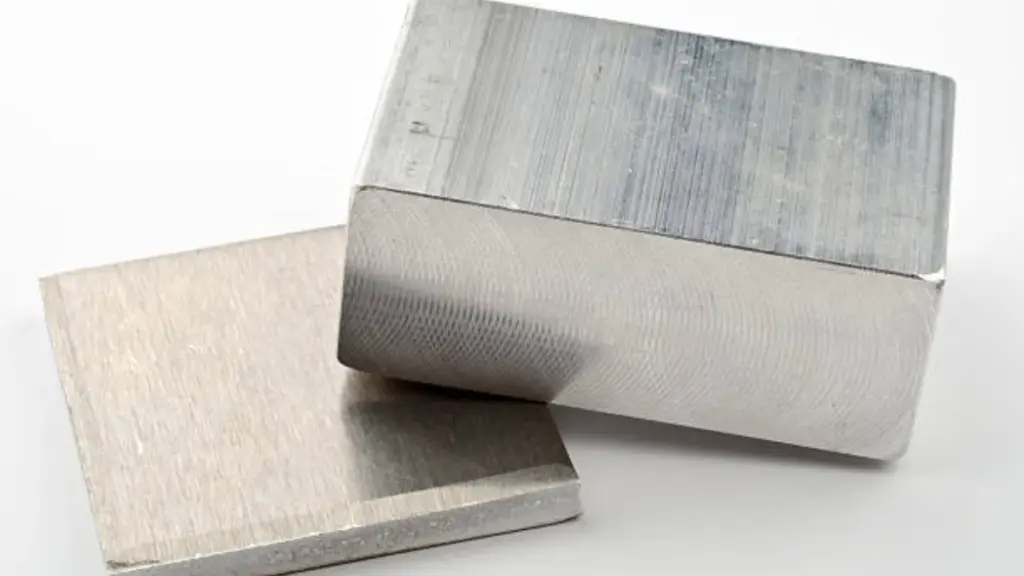
Обзор Замака 5 Сплав
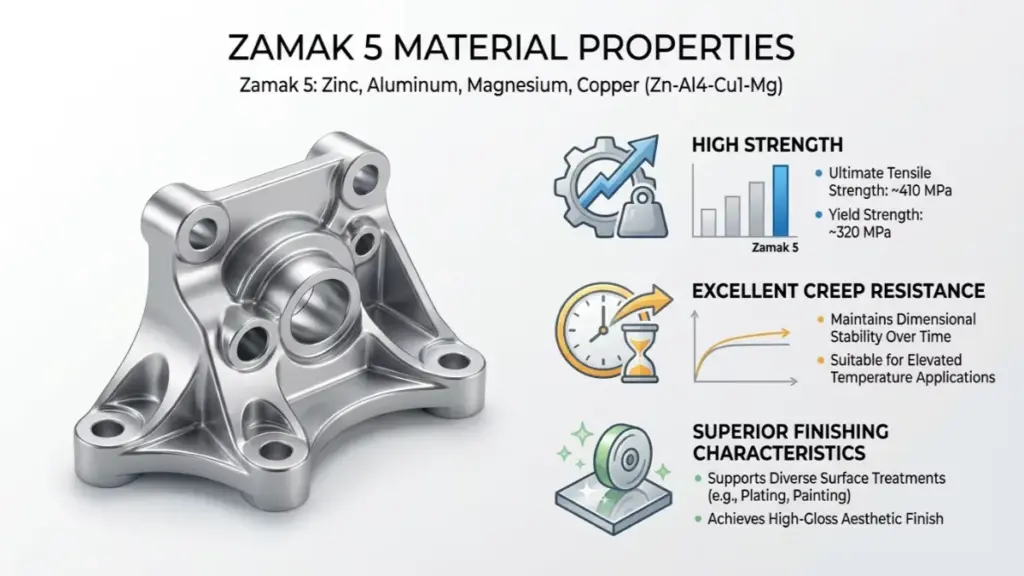
Zamak 5 — сплав для литья под давлением на основе цинка, принадлежащий к семейству Zamak. (аббревиатура отЦинк, Алюминий, Магний, и медь, то есть, медь) материалы. Он хорошо известен своим сочетанием силы, твердость, и превосходное качество отделки поверхности, что делает его идеальным для декоративных и структурных деталей, требующих точности и долговечности..
Химический состав и свойства
Рецептура Zamak 5 немного отличается от других марок Zamak из-за более высокого содержания меди., что повышает твердость и прочность. Типичный состав показан ниже.:
| Элемент | Содержание (%) |
|---|---|
| Цинк (Зн) | Баланс |
| Алюминий (Ал) | 3.5 – 4.3 |
| Медь (Cu) | 0.75 – 1.25 |
| Магний (мг) | 0.03 – 0.06 |
| Железо (Фе) | < 0.075 |
| Вести (Pb) | < 0.005 |
| Кадмий (компакт-диск) | < 0.004 |
Разница между Замаком 3 а Замак 5 в основном заключается в процентном содержании меди. В то время как Замак 3 содержит минимум меди, бремя 5 включает почти 1%, что значительно увеличивает прочность на разрыв и твердость, но несколько снижает пластичность.
Механические и физические свойства
| Свойство | бремя 5 Типичное значение |
|---|---|
| Предел прочности | ~331 МПа |
| Предел текучести | ~260 МПа |
| Удлинение | ~7% |
| Твердость (Бринелл) | 91 полупансион |
| Плотность | 6.6 – 6.7 G/CM³ |
| Диапазон плавления | 380 – 386°С |
| Теплопроводность | 109 W/m · k |
| Электрическая проводимость | 27% МАКО |
Эти характеристики делают цинк Zamak 5 предпочтительным выбором для прецизионных деталей малого и среднего размера, которым необходима стабильность размеров и превосходное качество покрытия.. Сплав также поддерживает жесткие допуски., что ценно для таких применений, как механические корпуса или декоративная фурнитура..
Обзор алюминиевых сплавов для литья под давлением (АЦП12 / А380)
Пока Замак сплавы доминировать в литье на основе цинка, алюминиевые сплавы, такие как ADC12(используется в основном в Азии) и А380(распространен в Северной Америке и Европе) представляют основные материалы для литья алюминия под давлением. Их легкий вес и тепловые характеристики делают их идеальными для более крупных или подвергающихся нагреву компонентов..
Типичный состав и характеристики
| Элемент | АЦП12 (%) | А380 (%) |
|---|---|---|
| Алюминий (Ал) | Баланс | Баланс |
| Кремний (И) | 9.6 – 12.0 | 7.5 – 9.5 |
| Медь (Cu) | 1.5 – 3.5 | 3.0 – 4.0 |
| Магний (мг) | ≤ 0.3 | 0.1 |
| Железо (Фе) | ≤ 1.3 | ≤ 1.3 |
| Цинк (Зн) | ≤ 1.0 | ≤ 3.0 |
Механические и физические свойства
| Свойство | АЦП12 | А380 |
|---|---|---|
| Предел прочности | ~320 МПа | ~317 МПа |
| Предел текучести | ~160 МПа | ~180 МПа |
| Удлинение | ~1 – 2% | ~3,5% |
| Твердость (Бринелл) | ~85 ГБ | ~80 ГБ |
| Плотность | 2.7 G/CM³ | 2.7 G/CM³ |
| Теплопроводность | 96 W/m · k | 96 W/m · k |
Алюминиевые сплавы сочетают в себе прочность и малый вес., обеспечивает исключительную текучесть для сложной геометрии и устойчивость к тепловым искажениям. Эти характеристики имеют решающее значение для автомобильной и электронной промышленности, где снижение веса и управление теплом определяют выбор материалов..
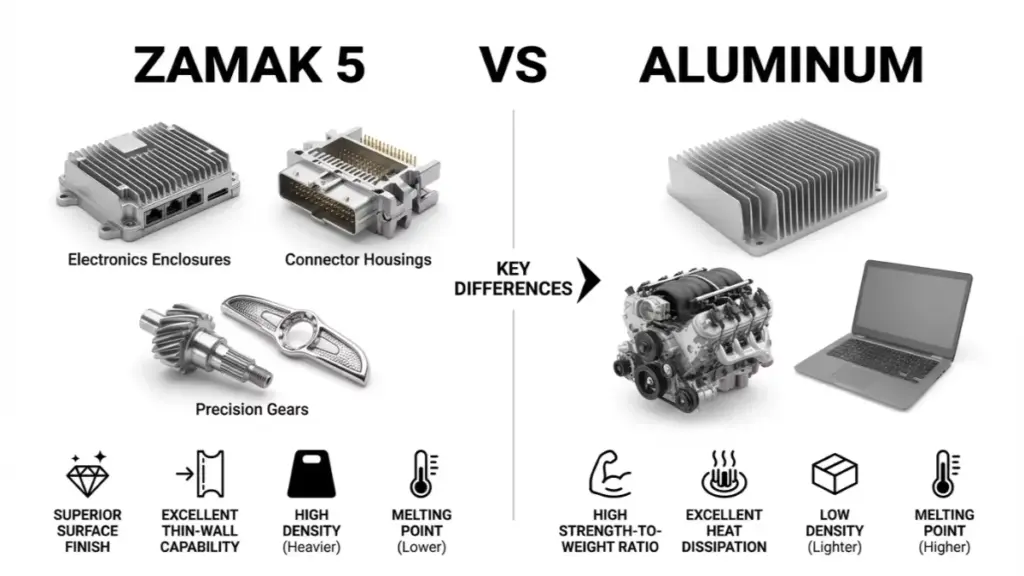
бремя 5 против. Алюминиевые сплавы – сравнение свойств
В следующих разделах освещаются ключевые различия между цинковым сплавом Zamak 5 и алюминиевыми литейными сплавами с точки зрения механических свойств., физический, и производственные размеры.
Механические и физические характеристики
| Параметр | бремя 5 | АЦП12 / А380 | Ключевая информация |
|---|---|---|---|
| Предел прочности | ~331 МПа | ~320 МПа | Сопоставимая сила; бремя 5 обеспечивает лучшую твердость. |
| Твердость | 91 полупансион | 80–85 ГБ | бремя 5 детали более эффективно противостоят износу и механическим нагрузкам. |
| Удлинение | ~7% | 1–3% | Алюминий более хрупкий; бремя 5 допускает небольшую деформацию перед разрушением. |
| Плотность | 6.6–6,7 г/см³ | 2.7 G/CM³ | Алюминиевые детали примерно 60% легче по весу. |
бремя 5 демонстрирует более высокую точность размеров и твердость, что делает его идеальным для деталей, где ключевыми факторами являются точность и прочность при небольшом размере., такие как защелки или шестерни. Алюминий, с другой стороны, предпочтителен там, где преобладают снижение веса и управление температурным режимом.
Коррозионная стойкость и качество поверхности
Цинк естественным образом противостоит коррозии благодаря стабильному оксидному слою., придавая цинку Zamak 5 высокие эксплуатационные характеристики во влажных или окислительных условиях.. Кроме того, бремя 5 легко поддерживает гальванику, рисование, и хроматирование.
Алюминий обеспечивает достойную коррозионную стойкость, но требует обработки поверхности, такой как анодирование или порошковое покрытие, для повышения долговечности и внешнего вида.. Особенно подходит для наружных структурных компонентов..
| Аспект | бремя 5 | Алюминий (АЦП12 / А380) |
|---|---|---|
| Естественная коррозионная стойкость | Отличный | Хороший |
| Покрытие / Рисование | Начальство (возможна зеркальная отделка) | Хороший (анодирование предпочтительно) |
| Эстетические приложения | Отличный | Умеренный |
| Экологическая долговечность | Высокий | Высокий (после покрытия) |
Литейные и производственные характеристики
Еще одним важным отличием является поведение при кастинге. Цинк Zamak 5 плавится при более низкой температуре. (около 385°C по сравнению с. алюминий ~660°C), что приводит к снижению энергопотребления, более короткое время цикла, и увеличенный срок службы формы.
Однако, Сплавы Zamak более плотные и менее подходят для изготовления крупных деталей из-за веса и более высокой стоимости материала на единицу объема..
| Параметр | бремя 5 | Алюминий АЦП12 / А380 |
|---|---|---|
| Температура плавления | ~385°С | ~660°С |
| Время цикла | короче | Умеренный |
| Жизнь пресс-формы | дольше | короче |
| Подходящий размер детали | Малый и средний | От среднего до большого |
| Стабильность размеров | Отличный | Хороший |
Замак, литье под давлением поддерживает тонкие стенки и точный контроль допусков без вторичной обработки, в то время как алюминиевые штампы лучше поддерживают более крупные, теплорассеивающие корпуса или рамы.
Выбор подходящего материала для вашего применения
«Правильный» выбор между Замаком 5 и алюминия полностью зависит от целей применения.
Вот некоторые руководящие факторы, которые следует учитывать:
- Размер и вес компонента:
- Алюминий предпочтителен для более крупных или легких конструкций..
- бремя 5 лучше всего работает для компактных, прецизионные компоненты.
- Требования к прочности и нагрузке:
- Оба сплава обладают высокими эксплуатационными характеристиками., но Замак 5 обеспечивает превосходную твердость и износостойкость в небольших механизмах.
- Эстетика поверхности:
- Для изделий, требующих декоративного хромирования или окраски. (например, ручки, светильники), бремя 5 обычно превосходит алюминий.
- Тепловые и электрические потребности:
- Алюминий побеждает там, где важны проводимость и рассеивание тепла (например, двигатель или корпус электроники).
- Эффективность производства и стоимость:
- Цинковые сплавы обеспечивают более длительный срок службы инструмента и более быстрые циклы..
- Более низкая плотность материала алюминия часто снижает стоимость детали за штуку, когда требуются большие объемы..
По сути, бремя 5 заполняет нишу высокоточных, мелкие металлические детали, в то время как алюминиевые сплавы остаются отраслевым стандартом для крупных, легкие отливки.
Опыт BIAN в решениях для литья под давлением
Имея многолетний технический опыт в области литья алюминия под давлением, БИАН обеспечивает комплексную инженерную поддержку — от проектирования пресс-формы и выбора сплава до обработки поверхности и окончательной сборки..
Наша команда инженеров имеет опыт работы с различными сплавами., включая цинк Zamak 5 и такие марки алюминия, как АЦП12 и А380, обеспечение клиентов объективными и специфичными для конкретного применения консультациями по материалам.
Заключение
Сравнение Zamak 5 и алюминиевых сплавов для литья под давлением показывает, что оба имеют уникальные преимущества.:
- Zamak 5 обеспечивает превосходное качество поверхности., твердость, и терпимость к сложным конструкциям.
- Алюминиевые сплавы придают легкость, тепловой КПД, и экономическая эффективность для крупномасштабных компонентов.
Вместо прямой конкуренции, эти сплавы дополняют друг друга в различных инженерных задачах..
Роль BIAN — помогать клиентам ориентироваться в этом выборе с помощью анализа данных и технического опыта., обеспечение того, чтобы конечный продукт достиг наилучшего баланса между дизайнерскими замыслами, производительность, и эффективность производства.