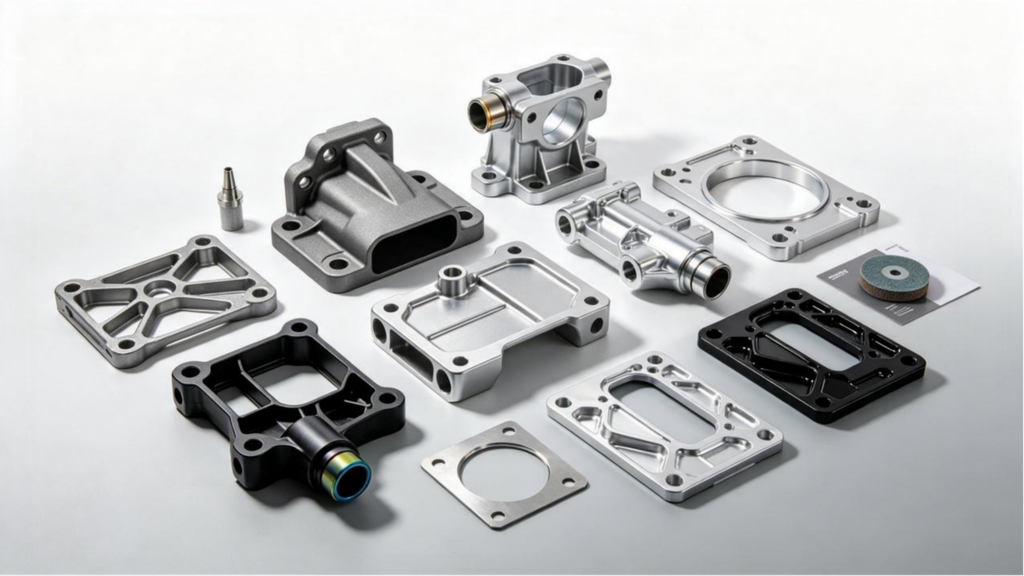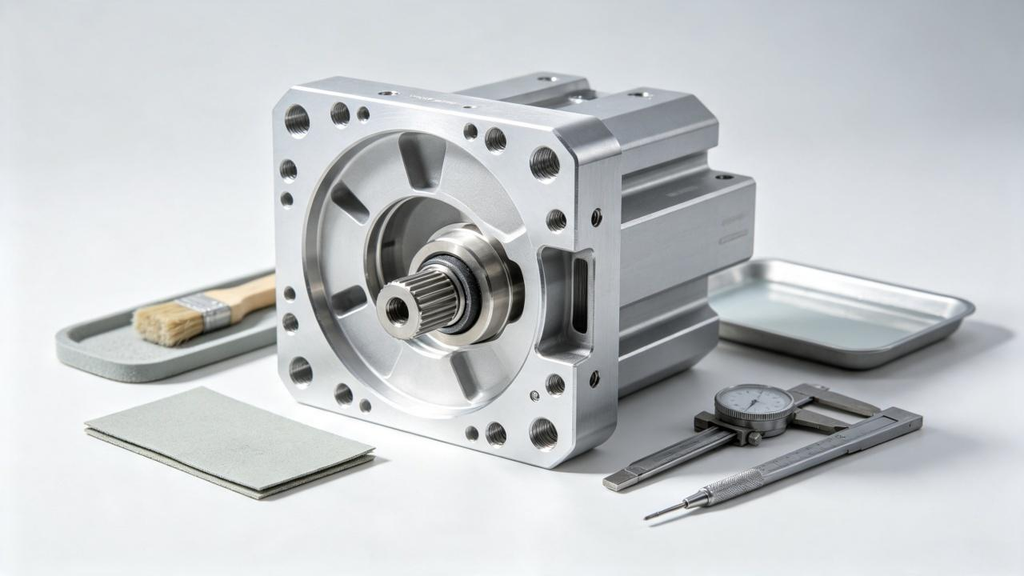
Dans le monde de moulage sous pression en aluminium- en particulier pour les composants automobiles - un seul trou d'épingle peut faire la différence entre une pièce fiable et une panne catastrophique sur le terrain. Blocs de moteur, carters de transmission, boîtiers de batterie, et les composants structurels doivent souvent maintenir la pression ou les fluides sans aucune fuite. C'est pourquoi le test d'étanchéité n'est pas simplement un point de contrôle final; c'est une étape critique dans le processus de fabrication.
Dans notre établissement, nous prenons l'intégrité de l'étanchéité au sérieux. Mais nous comprenons aussi quetous les moulages ne nécessitent pas de tests d'étanchéité— cela dépend entièrement de la fonction du produit et des spécifications du client. C'est pourquoi nous adoptons uneflexible, approche axée sur les exigences: nous évaluons chaque projet individuellement et recommandons des tests d'étanchéité uniquement lorsque l'application l'exige. Pour les pièces qui le nécessitent, nous avons investi massivement dans une infrastructure complète et avancée de détection des fuites—10 détecteurs de fuite d'air et 3 détecteurs de fuites à l'hélium—pour garantir que chaque pièce moulée testée répond aux normes les plus élevées de qualité et de fiabilité.
Voici comment nos capacités de test garantissent le succès de votre produit.
L'importance des tests d'étanchéité dans la fabrication moderne
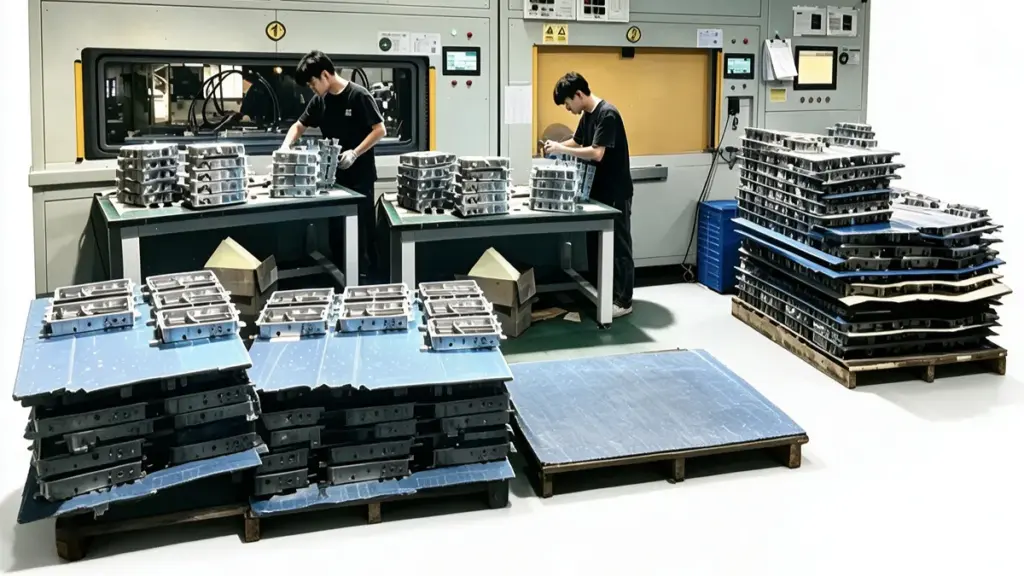
Les pièces moulées sous pression en aluminium pour automobiles sont intrinsèquement sujettes à la microporosité. Défauts tels que la porosité du gaz, cavités de retrait, ou les inclusions peuvent créer des voies cachées pour des fuites qui ne peuvent se manifester que sous pression ou au fil du temps. Alors que l'industrie s'oriente vers des composants structurels plus complexes et des conceptions intégrées, en particulier dans les véhicules électriques, la demande de pièces totalement étanches à la pression n'a jamais été aussi élevée..
Cela dit,tous les composants ne sont pas soumis aux mêmes exigences d’étanchéité. Un boîtier décoratif ou un support non pressurisé, par exemple, peut ne pas nécessiter de test de fuite du tout. Un composant du groupe motopropulseur ou un boîtier de système de refroidissement, d'autre part, l'étanchéité doit absolument être vérifiée. Nous travaillons en étroite collaboration avec nos clients pendant la phase de définition du projet pour déterminer:
- Si un test de fuite est requis
- Quelle méthode de test est la plus appropriée
- Quel devrait être le seuil de taux de fuite acceptable
Cela garantit que nous appliquons le bon niveau de contrôle de qualité :pas de frais inutiles, aucune exigence manquée.
Notre double approche: Fuite d'air & Détection des fuites d'hélium
Quand un test de fuite est requis, nous déployons une stratégie à deux volets qui couvre tout, du contrôle de production à grande vitesse à la détection ultra-précise. Cela nous donne la flexibilité nécessaire pour équilibrer efficacité et précision en fonction des besoins spécifiques de chaque pièce..
1. Détecteurs de fuite d'air (10 Unités): Gros volume, Criblage à grande vitesse
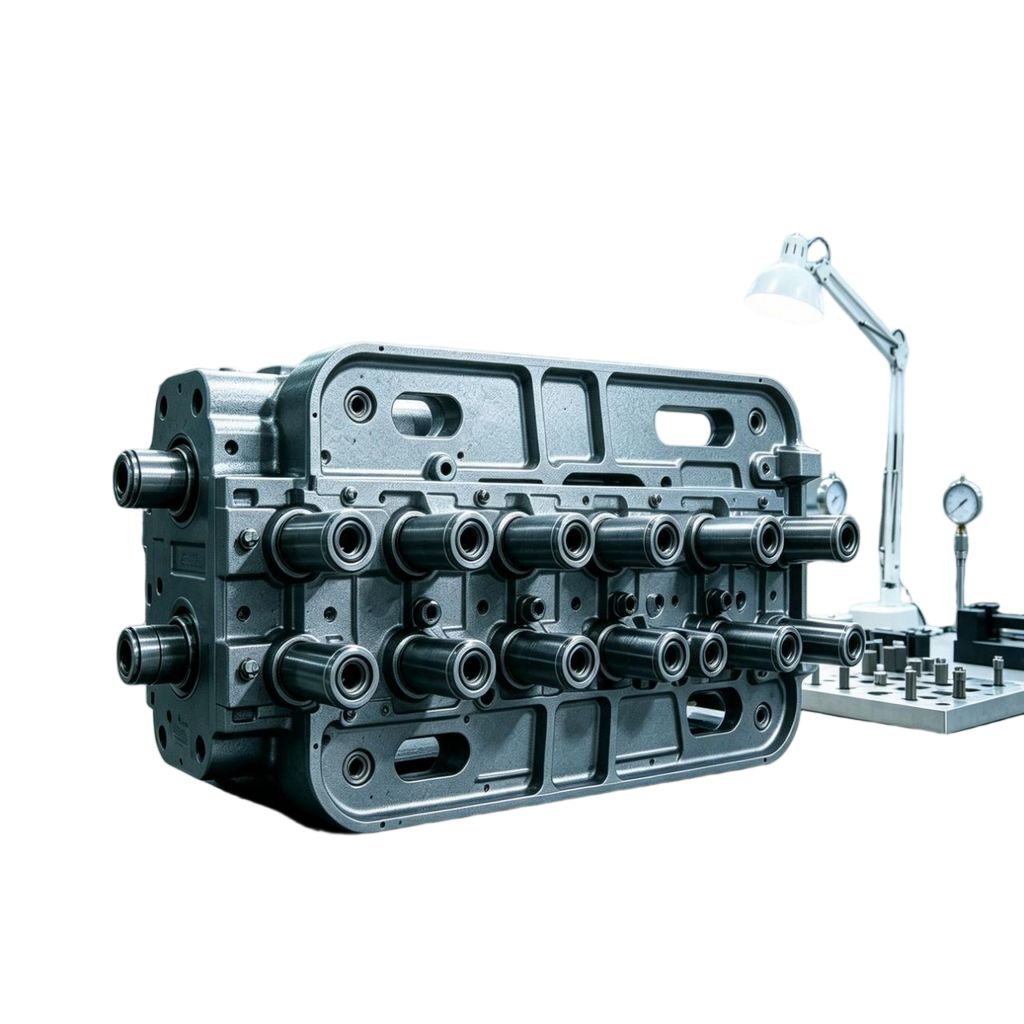
Notre flotte de 10 Les détecteurs de fuite d'air constituent la première ligne de défense pour les pièces soumises à des exigences d'étanchéité standard.. Ces unités sont idéales pour un, tests automatisés directement sur la ligne de production.
- Principe de fonctionnement:Ces détecteurs utilisent couramment la méthode de pression différentielle. La pièce à tester est scellée, et une pression d'air spécifique est appliquée. L'instrument surveille la chute de pression ou le débit pour détecter toute chute qui indiquerait une fuite..
- Avantages clés:
- Haut débit:Conçu pour les environnements de production de masse où chaque pièce doit être vérifiée rapidement.
- Résultats quantitatifs:Ils fournissent un résultat réussite/échec clair basé sur un taux de fuite prédéfini., assurer une prise de décision cohérente.
- Efficacité:Le cycle de test est rapide, éviter les goulots d'étranglement dans la chaîne de production.
- Application:Cette méthode est très efficace pour les séries de production standard et le contrôle qualité de routine pour la plupart des composants automobiles avec des exigences d'étanchéité modérées.
2. Détecteurs de fuites d'hélium (3 Unités): Précision et haute sensibilité
Pour les pièces où même la plus petite fuite pourrait avoir de graves conséquences, comme les applications critiques en matière de sécurité ou à haute pression, nous déployons notre 3 détecteurs avancés de fuites d'hélium. L'hélium est le gaz traceur préféré pour les tests de fuite critiques en raison de sa petite taille atomique et de sa nature inerte..
- Principe de fonctionnement:Le composant est scellé et rempli d'hélium. Un spectromètre de masse à hélium détecte ensuite tout hélium s'échappant, même par les chemins de fuite les plus microscopiques.. Ceci est souvent effectué dans une chambre à vide pour une sensibilité maximale.
- Avantages clés:
- Ultra-haute sensibilité:La détection des fuites d'hélium est nettement plus sensible que les méthodes de pression atmosphérique. Il peut détecter des fuites à des taux aussi bas que 5,0×10⁻¹³ Pa·m³/s.
- Sec et non destructif:Contrairement au traditionnel “test de bulle” (immerger une pièce dans l'eau), Les tests à l'hélium sont complètement secs et ne provoquent pas de corrosion et ne nécessitent pas de séchage après le test..
- Fiable et reproductible:Cette méthode fournit des critères de réussite/échec très fiables, minimiser le risque qu’une pièce défectueuse parvienne au client.
- Application:Cette technologie est essentielle pour les composants du groupe motopropulseur, systèmes de refroidissement, VE boîtiers de batterie, et autres applications exigeant une intégrité d'étanchéité absolue.
Pourquoi c'est important pour votre projet
En combinant des tests de fuite d'air en grand volume avec une détection de fuite d'hélium de haute précision et en les appliquantseulement là où c'est réellement nécessaire-nous livrons:
- Qualité garantie pour les pièces critiques:Chaque composant testé est vérifié individuellement, éliminant le risque qu'une pièce qui fuit atteigne votre chaîne de montage.
- Solutions rentables:Nous n’appliquons pas de tests d’étanchéité aux pièces qui n’en ont pas besoin. Cela évite des coûts inutiles et maintient votre projet compétitif.
- Production optimisée:Notre configuration d’équipement efficace garantit des temps de cycle rapides, nous permettant de respecter des calendriers de production exigeants sans compromettre la qualité.
- Couverture complète:Des pièces moulées à usage général aux composants de sécurité les plus critiques, nous avons la capacité de test (et le jugement) pour répondre à vos besoins spécifiques.
- Prévention précoce des pannes:La détection précoce des fuites évite des reprises coûteuses, retours, et demandes de garantie. C’est une stratégie qui s’amortit en garantissant un rendement au premier passage.
Notre engagement: Tester quand cela compte
Nous croyons encontrôle qualité intelligent-ne pas tester pour le plaisir de tester, mais tester où et quand cela compte vraiment. Notre approche est simple:
- Étape 1:Comprendre la fonction et l'application de votre produit.
- Étape 2:Évaluer si des tests d'étanchéité sont nécessaires en fonction des exigences techniques et des normes de l'industrie.
- Étape 3:Si nécessaire, sélectionner la méthode optimale (air ou hélium) et exécuter avec précision.
Avec notre 10 détecteurs de fuite d'air et 3 détecteurs de fuites à l'hélium, nous avons construit un système d'assurance qualité robuste qui garantit l'intégrité de chaque moulage sous pression en aluminium nécessitant une vérification de l'étanchéité.. C'est notre engagement à vous fournir des pièces fiables, durable, et en sécurité, exactement quand vous en avez besoin.
Devenez partenaire pour votre prochain projet. Nous évaluerons vos besoins en matière d’étanchéité, recommander la bonne approche de test, et fournissez des composants fiables, à chaque fois.