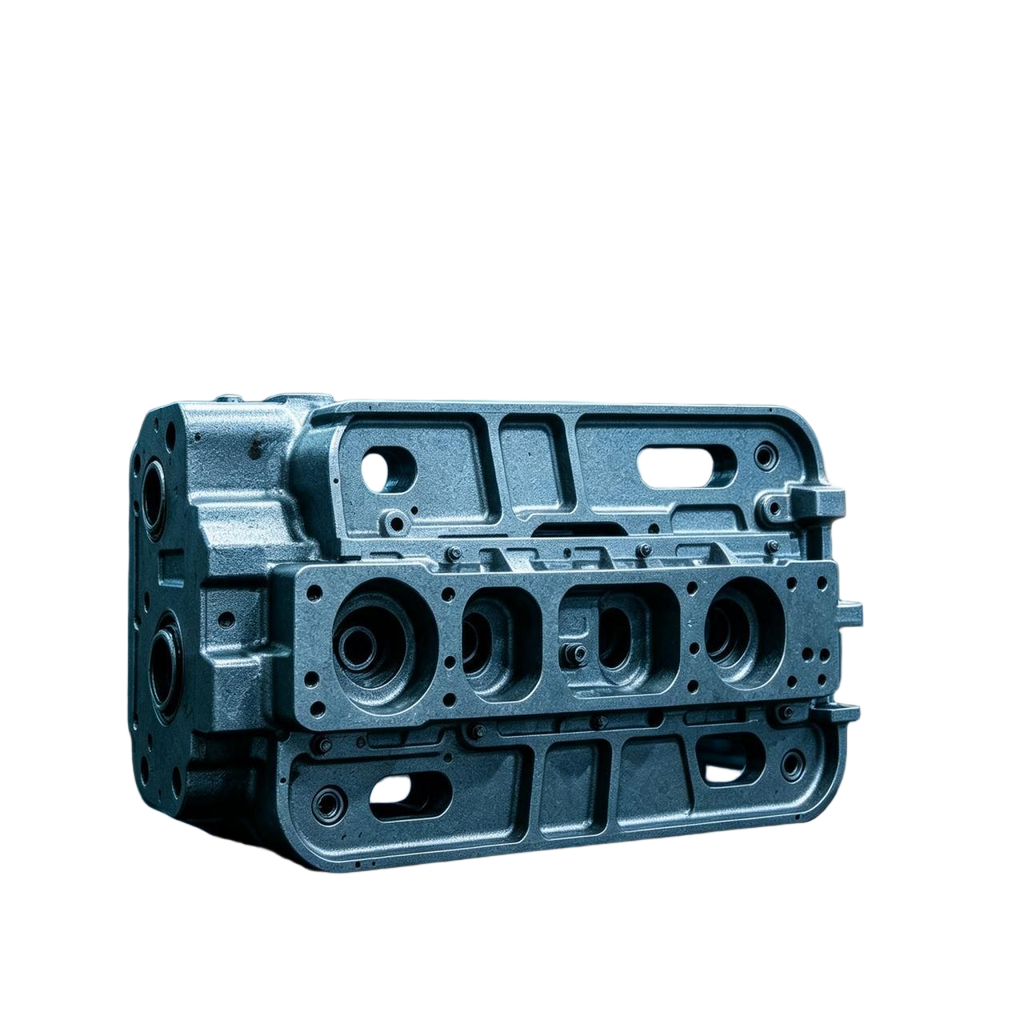
In the world of aluminum die casting—especially for automotive components—a single pinhole can spell the difference between a reliable part and a catastrophic field failure. Engine blocks, transmission housings, battery enclosures, and structural components are frequently required to hold pressure or fluids without any leakage. That’s why leak testing is not merely a final checkpoint; it is a mission-critical step in the manufacturing process.
At our facility, we take sealing integrity seriously. But we also understand that not every casting requires leak testing—it depends entirely on the product’s function and the customer’s specifications. That’s why we adopt a flexible, requirement-driven approach: we evaluate each project individually and recommend leak testing only when the application demands it. For parts that do require it, we have invested heavily in a comprehensive and advanced leak detection infrastructure—10 air-leakage detectors and 3 helium leak detectors—to ensure that every tested casting meets the highest standards of quality and reliability.
Here’s how our testing capabilities ensure your product’s success.
The Importance of Leak Testing in Modern Manufacturing
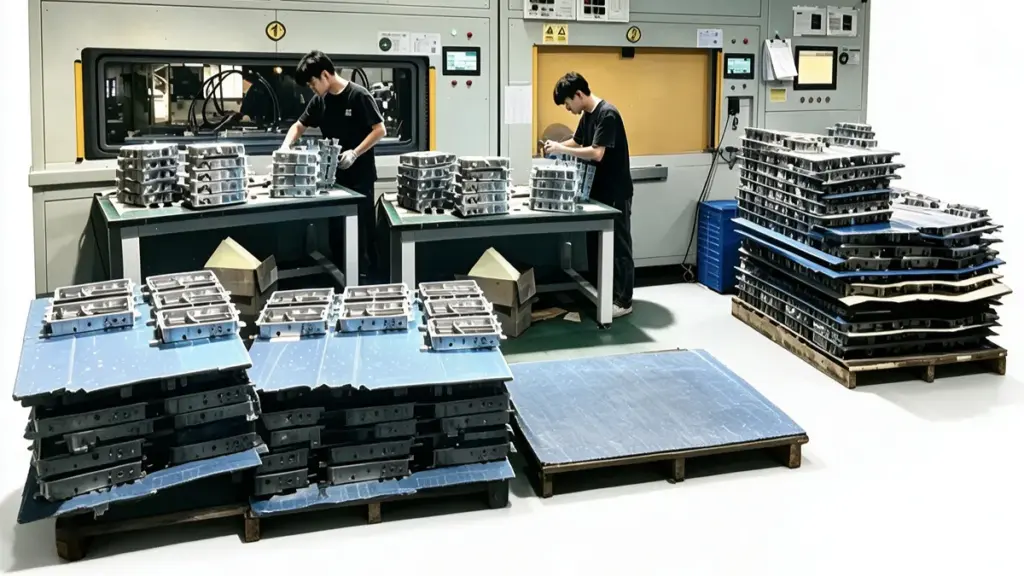
Automotive aluminum die castings are inherently prone to micro-porosity. Defects such as gas porosity, shrinkage cavities, or inclusions can create hidden pathways for leaks that may only manifest under pressure or over time. As the industry shifts toward more complex structural components and integrated designs—especially in electric vehicles—the demand for completely pressure-tight parts has never been higher.
That said,not all components face the same sealing requirements. A decorative housing or a non-pressurized bracket, for instance, may not need any leak testing at all. A powertrain component or a cooling system housing, on the other hand, absolutely must be verified for leak-tightness. We work closely with our customers during the project scoping phase to determine:
- Whether leak testing is required
- Which test method is most appropriate
- What the acceptable leak rate threshold should be
This ensures that we apply the right level of quality control—no unnecessary cost, no missed requirement.
Our Dual Approach: Air-Leakage & Helium Leak Detection
When leak testing is required, we deploy a two-pronged strategy that covers everything from high-speed production screening to ultra-precise detection. This gives us the flexibility to balance efficiency and accuracy based on the specific needs of each part.
1. Air-Leakage Detectors (10 Units): High-Volume, High-Speed Screening
Our fleet of 10 air-leakage detectors serves as the first line of defense for parts with standard sealing requirements. These units are ideal for rapid, automated testing directly on the production line.
- Principle of Operation:These detectors commonly use the differential pressure method. The test part is sealed, and a specific air pressure is applied. The instrument monitors pressure decay or flow for any drop that would indicate a leak.
- Key Advantages:
- High Throughput:Designed for mass production environments where every part needs to be checked quickly.
- Quantitative Results:They provide a clear pass/fail result based on a pre-set leak rate, ensuring consistent decision-making.
- Efficiency:The test cycle is fast, preventing bottlenecks in the production line.
- Application:This method is highly effective for standard production runs and routine quality screening for most automotive components with moderate sealing requirements.
2. Helium Leak Detectors (3 Units): Precision and High Sensitivity
For parts where even the tiniest leak could have severe consequences—such as safety-critical or high-pressure applications—we deploy our 3 advanced helium leak detectors. Helium is the preferred tracer gas for critical leak testing due to its small atomic size and inert nature.
- Principle of Operation:The component is sealed and filled with helium. A helium mass spectrometer then detects any helium escaping through even the most microscopic leak paths. This is often performed within a vacuum chamber for maximum sensitivity.
- Key Advantages:
- Ultra-High Sensitivity:Helium leak detection is significantly more sensitive than air pressure methods. It can detect leaks at rates as low as 5.0×10⁻¹³ Pa·m³/s.
- Dry and Non-Destructive:Unlike the traditional “bubble test” (submerging a part in water), helium testing is completely dry and does not cause corrosion or require post-test drying.
- Reliable and Repeatable:This method provides highly reliable pass/fail criteria, minimizing the risk of a faulty part reaching the customer.
- Application:This technology is essential for powertrain components, cooling systems, EV battery housings, and other applications demanding absolute sealing integrity.
Why This Matters for Your Project
By combining high-volume air-leakage testing with high-precision helium leak detection—and applying themonly where actually needed—we deliver:
- Guaranteed Quality for Critical Parts:Every tested component is individually verified, eliminating the risk of a leaking part reaching your assembly line.
- Cost-Effective Solutions:We don’t apply leak testing to parts that don’t need it. This avoids unnecessary costs and keeps your project competitive.
- Optimized Production:Our efficient equipment setup ensures fast cycle times, allowing us to meet demanding production schedules without compromising quality.
- Comprehensive Coverage:From general-purpose castings to the most critical safety components, we have the testing capability—and the judgment—to match your specific requirements.
- Early Failure Prevention:Detecting leaks early prevents expensive rework, returns, and warranty claims. It’s a strategy that pays for itself by ensuring first-pass yield.
Our Commitment: Testing When It Matters
We believe in smart quality control—not testing for the sake of testing, but testing where and when it truly matters. Our approach is simple:
- Step 1:Understand your product’s function and application.
- Step 2:Evaluate whether leak testing is necessary based on engineering requirements and industry standards.
- Step 3:If required, select the optimal method (air or helium) and execute with precision.
With our 10 air-leakage detectors and 3 helium leak detectors, we have built a robust quality assurance system that guarantees the integrity of every aluminum die casting that requires sealing verification. This is our commitment to providing you with parts that are reliable, durable, and safe—exactly when you need them to be.
Partner with us for your next project. We’ll evaluate your sealing requirements, recommend the right testing approach, and deliver components you can trust—every time.