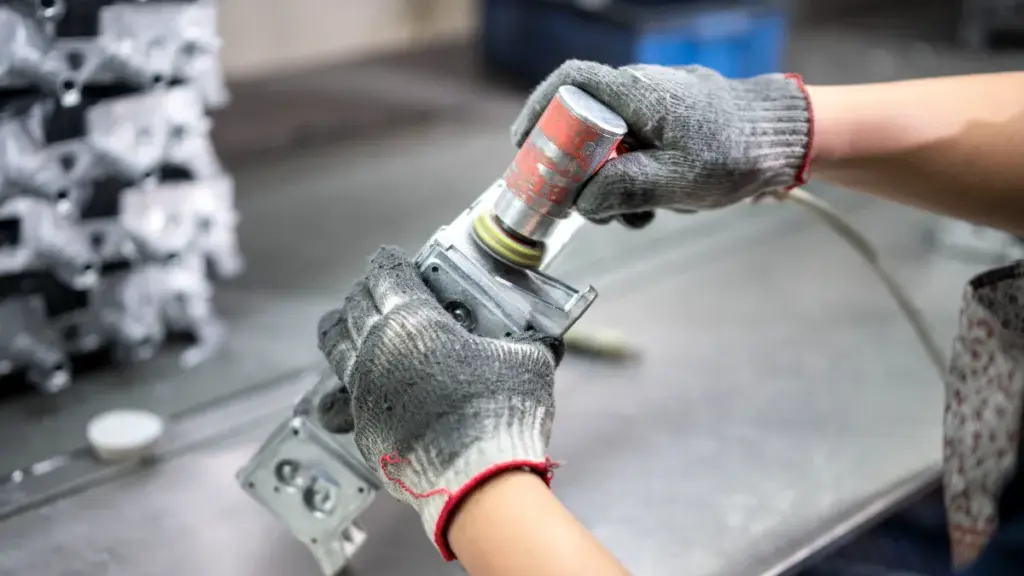
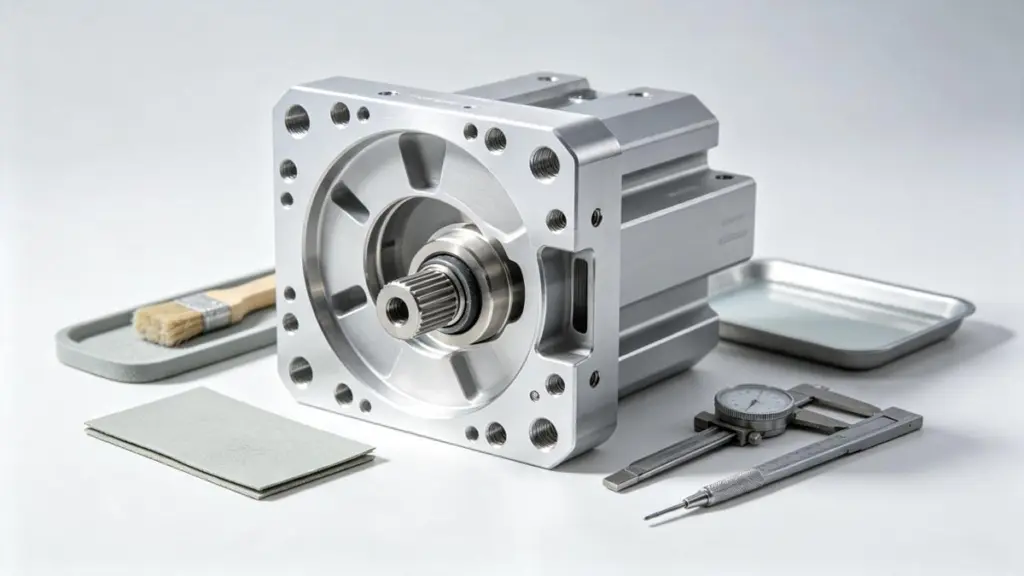
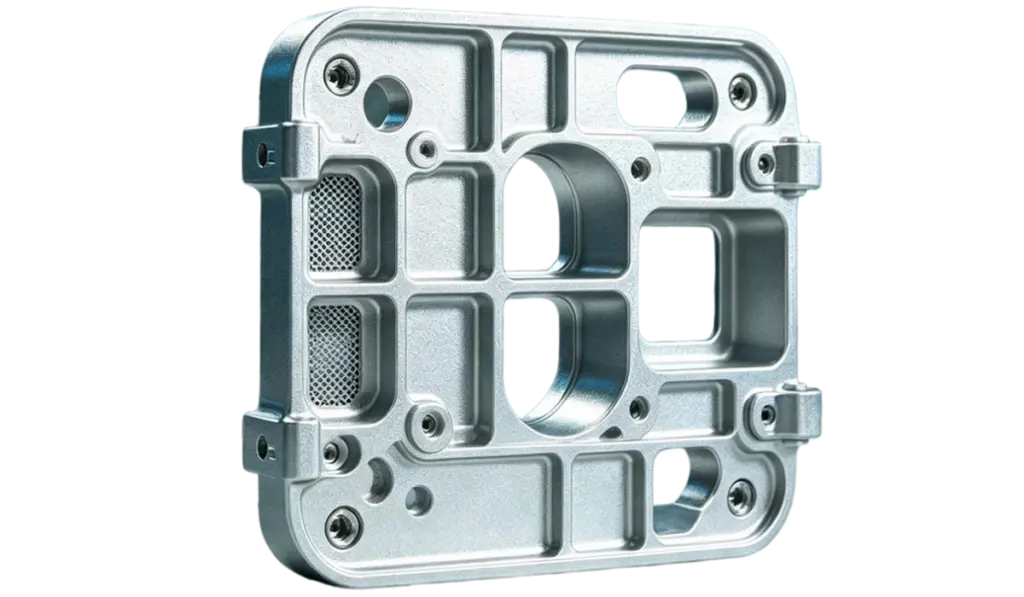
Polishing is the stage where a die casting stops being as-cast and becomes a finished surface. It smooths the skin, breaks the sharp edges the die leaves behind, and decides whether a part is ready for a coating or shown in bare metal. Buyers under-specify this step more than any other. They ask for polished the way they might ask for black, naming a look instead of a method. Metal polishing is really three different processes: vibratory mass finishing, mechanical buffing, and electropolishing. Each removes material a different way, suits a different geometry, and costs a different amount per piece.
What Metal Polishing Actually Changes
Every metal polishing method does the same physical job. It lowers surface roughness, measured as Ra, by taking material off the high points of the surface. That happens by abrasion or by controlled dissolution. The reason a team asks for it changes the process they should choose.
Deburring removes the flash and sharp edges left by casting and machining. Smoothing creates a uniform surface that powder coat, colore, or plating can grip cleanly. Cosmetic polishing brings a bright or mirror bare-metal look to parts that stay uncoated. Functional polishing lowers friction, improves cleanability, or reduces the sites where corrosion starts. Each goal points at a different method, and a method picked for the wrong goal either wastes money or misses the target.
The roughness number you ask for is a specification, not a mood. The site’s guide to specifying a cast surface finish covers how to state it so a shop can hit it.
Deburring in particular is its own step, E how a shop deburrs and polishes die cast parts sets the ceiling on what the final polish can reach.
As a reference frame, an as-cast or machined surface usually sits in the low to mid micrometre Ra range. Vibratory and mechanical finishing drive that number down step by step. Fine buffing can reach a fraction of a micrometre. The exact result depends on the starting surface, the alloy, and how much stock each method is allowed to remove.
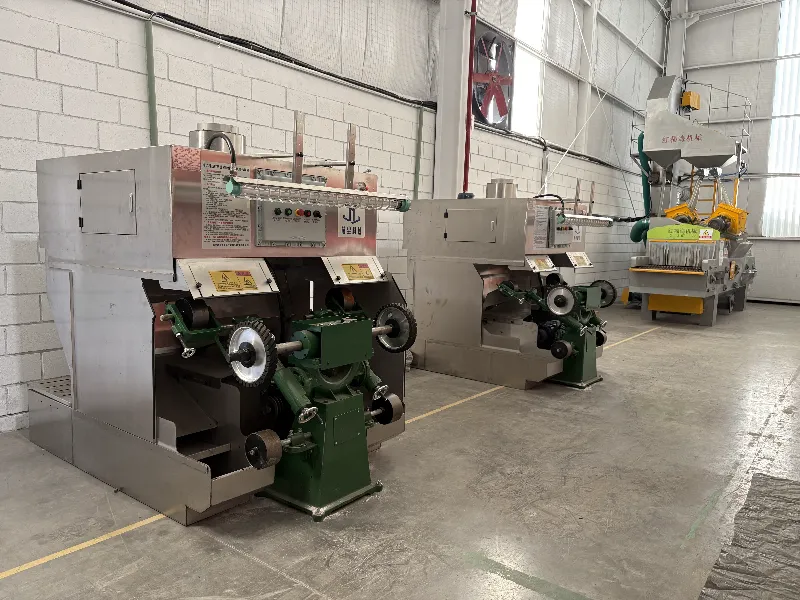
Comparing the Three Metal Polishing Methods
The table contrasts the three approaches on the dimensions a buyer weighs: mechanism, best-fit geometry, result, and limit. The finishing options a shop groups these under are listed on this site’s finishing service page.
| Metodo | How it works | Meglio per | Risultato | Limits |
|---|---|---|---|---|
| Vibratory mass finishing | Parti, media, and compound agitated in a vibrating bowl or tub | High-volume small and medium parts, deburr and uniform smooth | Even edge break, consistent matte to satin surface | Batch cycle time, limited selective or mirror control |
| Mechanical buffing | Rotating wheel or belt with progressively finer abrasive compound | Selective areas, bare-metal luster, cosmetic parts | High luster to mirror finish on accessible faces | Skill dependent, per-piece cost, edge rounding risk |
| Electropolishing | Anodic dissolution of micro peaks in electrolyte under DC current | Stainless and conductive parts, smooth plus corrosion boost | Uniform non-contact smoothing, better corrosion behavior | Needs a conductive workpiece, weak on high-silicon alloys |
Vibratory Mass Finishing for Uniform Lots
Vibratory finishing is a batch process. Parts load into a bowl, tub, or centrifugal barrel with loose media and a liquid compound. The media are shaped ceramic, plastica, or porcelain pieces. The compound lubricates, cuts lightly, and keeps debris from smearing the parts. Machine vibration keeps the mass moving, so the media sweep across every surface they can reach.
The strength is uniformity across hundreds or thousands of small parts with little labor. Every surface the media touch gets the same treatment, including faces an operator could not reach one by one. The limits are just as steady. Deep blind bores, narrow passages, and inside undercuts may not get even contact. Delicate or interlocking shapes can nest and mar. A fine surface can take hours of cycle time, and stock removal is gradual.
So vibratory finishing is a deburr and smooth workhorse rather than a route to a precise mirror on one face. When the goal is a consistent satin surface or a clean pre-coat finish across a high-volume lot, it is usually the most economical answer.
Media shape and compound do much of the tuning. A sharper media cuts edges faster, while a rounded media polishes and burnishes. The compound carries swarf away and can add corrosion inhibitors so steel parts do not flash rust between steps. Parts are usually rinsed and dried after the run, because trapped wet compound in a blind hole becomes a stain later. A centrifugal barrel runs the same chemistry under higher load and reaches a finer surface in less time, at a higher cost per batch.
Mechanical Buffing for Control and Luster
Mechanical buffing puts an abrasive in a hand, a robot’s or an operator’s. Parts are presented to rotating wheels, cinture, or brushes charged with compounds that get finer in stages. Cutting abrasives come first, then coloring compounds bring up brightness. Because material leaves only where the tool touches, the process is selective. One visible face can be brought to a bright or near-mirror finish while neighbors stay untouched.
This is the method of choice when bare-metal appearance matters, when a single face drives the requirement, or when a part is blended before a clear lacquer. The trade-offs are cost and consistency. Buffing is slow and skill-dependent per piece, results vary with pressure and operator, and over-polishing rounds crisp edges. On a functional mating surface that edge rounding is a real risk.
It also makes abrasive-loaded waste that must be managed. Where the polish sits on top of tight machined features, the tolerance and finish work is covered in this site’s precision finishing pages.
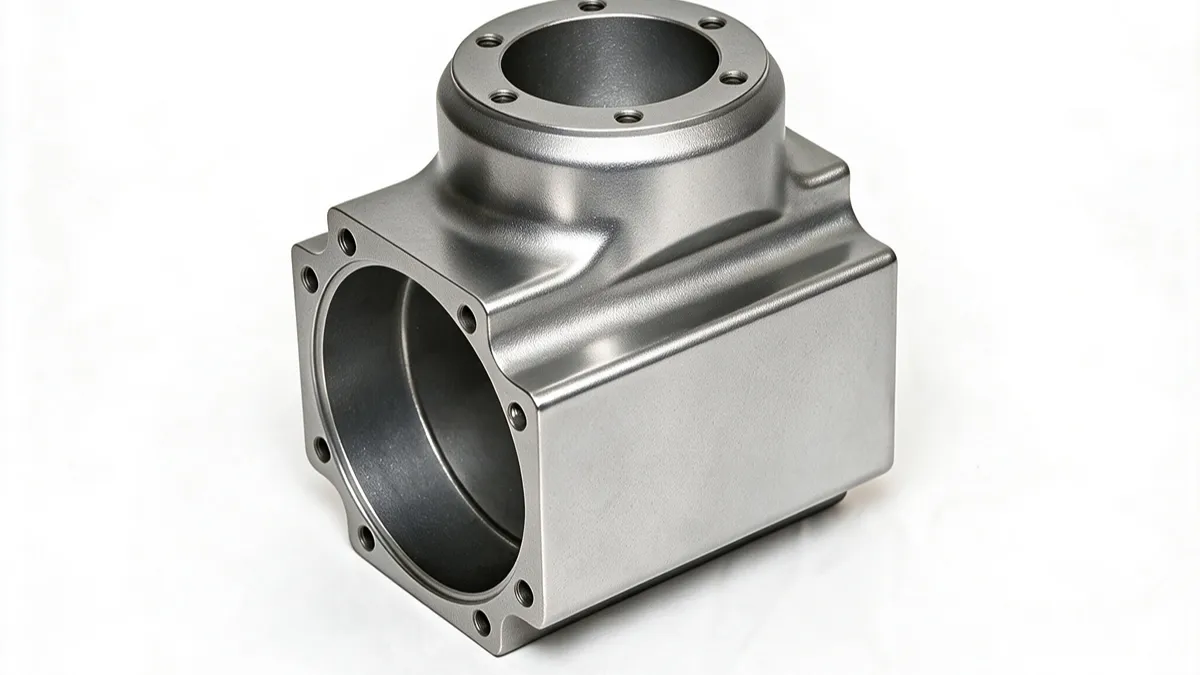
Electropolishing Dissolves Peaks Instead of Cutting
Electropolishing works by chemistry and electricity rather than cutting. The part becomes the anode in an acid electrolyte and current is applied. Metal dissolves fastest from the microscopic peaks of the surface. Roughness drops, light burrs disappear, and the finish comes out cleaner, slightly brighter, and more corrosion resistant. Because nothing touches the part, complex shapes polish evenly, including areas media and wheels cannot reach.
Its fit for die castings is narrower, and that is worth stating plainly. Electropolishing is an established non-contact electrochemical finishing process, well documented in the metal-finishing literature. That work is centered on corrosion-resistant and stainless steels, where the process cleans, passivates and levels the surface by controlled anodic dissolution. High-silicon aluminum and many cast alloys do not respond the way stainless does, and it can pit or attack them unevenly.
So electropolishing is not a blanket substitute for mechanical finishing on cast parts. Where an electrochemical finish or plating is genuinely required, it is handled with material compatibility verified first, often through specialist partners rather than assumed from stainless practice.
Done on a compatible alloy, the process does more than smooth. It levels the surface at a microscopic scale, removes embedded tool steel and free iron that a wheel can leave behind, and leaves a passive, pulito, easy to sanitize skin. That is why it is favored on food, medico, and corrosion duty stainless parts. It is a finishing step, not a straightening step. It will not lift a deep scratch, a dent, or a warp, so those are corrected by grinding or polishing before the part goes into the tank.
Preparation Sets the Limit of the Finish
Polishing quality is largely set before the first wheel spins. A casting with flash, gate witnesses, or near-surface porosity will show those defects no matter how long it is buffed. Porosity in particular can trap media, compound, or electrolyte and bleed out later. Blast cleaning is the common upstream step that strips scale, release residue, and light flash. It gives the polish a uniform starting surface, come il sandblasting guide explains.
For the peening and hardness effect that comes with a heavier blast, IL shot-blasting guide covers the difference. Specifying a polish without naming the prep is how a first article looks worse than expected.
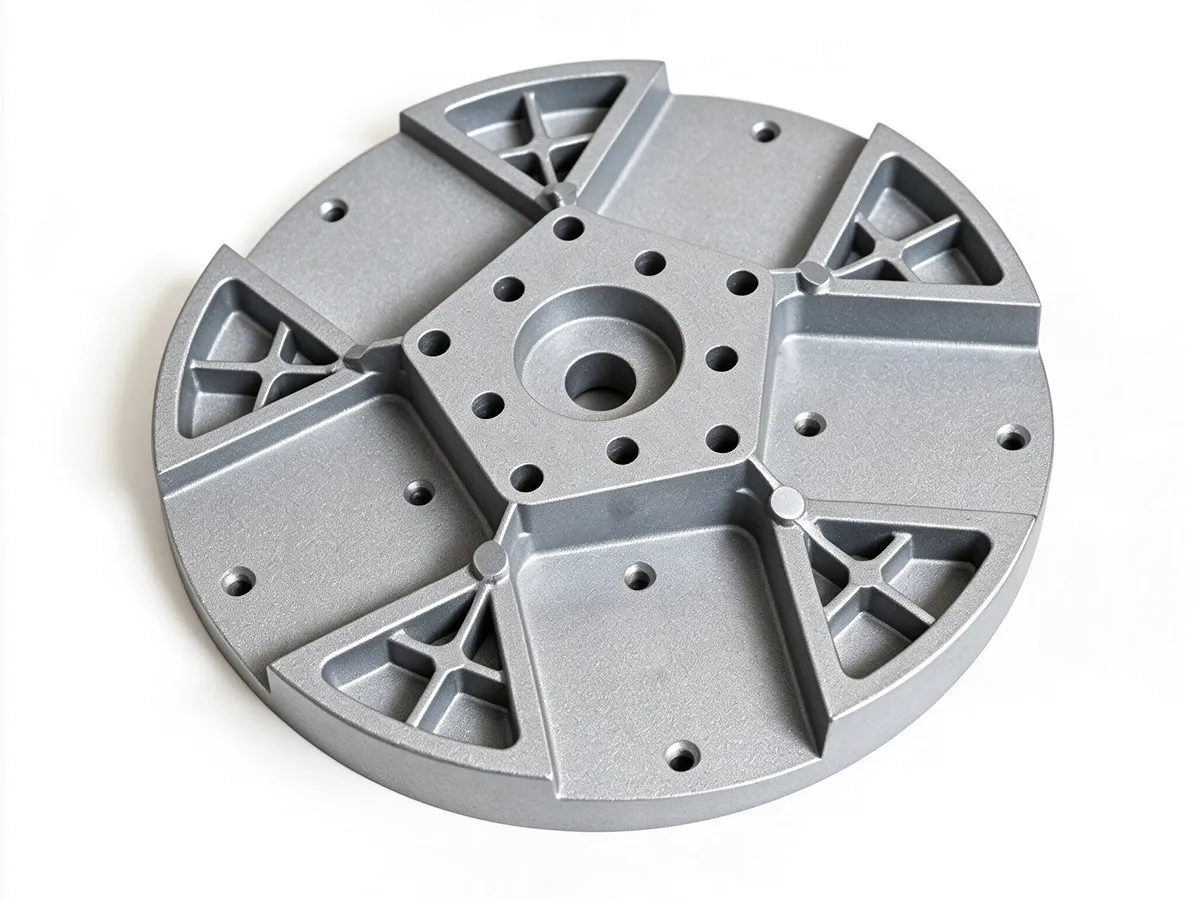
What Drives the Cost of Each Method
Cost falls out of the same three inputs for every method. The first is how much labor a part needs. The second is how long it spends in process. The third is how much of the surface is worth finishing. A part held and waved across a wheel by hand costs more than the same part tumbled in a bowl with hundreds of others. Cycle time is the second lever. A long vibratory run to reach a fine satin adds machine hours, while a quick buff on one face adds operator minutes.
The third lever is selectivity. Finishing every face is cheaper per part in bulk than polishing one visible face and masking the rest. Geometry adds to all three. Internal bores, deep pockets, and threads need extra steps or are left out of the polish entirely. Masking a bore or a datum face to keep it as machined is its own labor and its own cost line. A soft metal loads compounds fast and needs frequent wheel changes, while heavy scale before blasting lengthens the prep.
A useful habit is to ask what each method is being paid to do on this part. Deburr, smooth for coat, and brighten a face are three different scopes. Pricing the scope you actually need avoids paying for a mirror you will paint over. State the finish by zone rather than across the whole part, and the quote usually drops.
How to Specify the Right Method
Work the decision in order. What is the goal: deburr, smooth for coating, cosmetic bare metal, or a functional corrosion surface? How complex is the geometry, and which surfaces must the process physically reach? What is the volume and lot size, since vibratory is economical at volume and buffing is per piece? What is the alloy compatibility, especially before electropolishing is even considered?
A cosmetic trim piece and a batch of LED housings headed for powder coat land on opposite methods. The earlier that choice is settled, the fewer revision rounds follow. A practical rule is to name the goal and the target surface, not the machine. Let the finishing route follow from the part, the alloy, and the volume.
Two quick examples make the order concrete. A zinc interior trim clip that will be plated wants a clean deburr and a smooth base. Vibratory plus prep carries it, and only the cosmetic edge is touched up. An exposed aluminum bezel that stays bare wants a bright face, so it is buffed on that one side and left matte underneath. Same shop, same alloy family, opposite routes, because the drawing asked for different jobs.
The surface treatment services this site lists include polishing, rivestimento in polvere, rivestimento laccato, and sand or shot blasting. That combination lets a buyer hand one shop the prep, the deburr, and the finish together instead of splitting them across separate vendors.
Questions About Metal Polishing Methods
What is the difference between vibratory and mechanical polishing?
Vibratory finishing is a batch process. Parts tumble with media and compound and reach a uniform deburred, satin surface across a whole lot with little labor. Mechanical buffing is selective and per piece. It uses wheels and finer compounds to bring specific faces to a bright or mirror luster, at higher skill and cost.
Can die cast aluminum be electropolished?
Electropolishing works best on conductive alloys such as stainless steel. High-silicon die-cast aluminum and many cast alloys do not respond evenly and can pit or be attacked in standard electrolytes. It is not a default route for die castings, and it needs verified material compatibility before any use.
Why does polishing need a preparation step?
Flash, gate witnesses, release residue, and near-surface porosity show through the final finish if they are not removed first. Blast cleaning strips scale and light flash and evens the starting surface. The polish then removes roughness instead of exposing the casting defects underneath it.
Which metal polishing method is most cost-effective?
For deburring and a uniform pre-coat surface across high-volume lots, vibratory mass finishing is the economical default. Mechanical buffing costs more per piece but earns it where one face needs bright or mirror luster. Most programs combine blast prep, vibratory deburr, and selective buffing.
Considerazioni finali
Metal polishing is three different answers to one question about how a surface should look and behave. Choose by goal, geometria, volume, and alloy, then name the method and the target surface on the drawing. Send the part model with the roughness or appearance you want, the coating plan if any, and the lot size through the pagina dei contatti. The reply should propose the polishing and prep route together, so the finished surface is defined before the tool is cut rather than found afterward.