Aluminiumlegierungen sind aufgrund ihres geringen Gewichts von zentraler Bedeutung für die moderne Technik, Korrosionsbeständigkeit, und breite Verarbeitbarkeit. Darunter, 6061 Aluminium gilt branchenübergreifend als eine der am häufigsten verwendeten Strukturlegierungen. Jedoch, wenn es um Druckguss geht, 6061 ist nicht die erste Wahl – und um zu verstehen, warum, ist ein tieferer Blick auf seine intrinsischen Eigenschaften und den Herstellungskontext erforderlich.
In diesem Artikel, Wir gehen die Materialeigenschaften durch, Temperamentzustände, Bearbeitungsverhalten, Und caStachel-Alternativen, mit Anleitung zur Auswahl 6061 im Vergleich zu Druckgusslegierungen wie A380 und ADC12. Wir verknüpfen dies auch mit realen Branchenpraktiken und dem Wert einer Partnerschaft mit einem Kompletthersteller für Aluminiumdruckguss in China.
Was ist 6061 Aluminiumlegierung
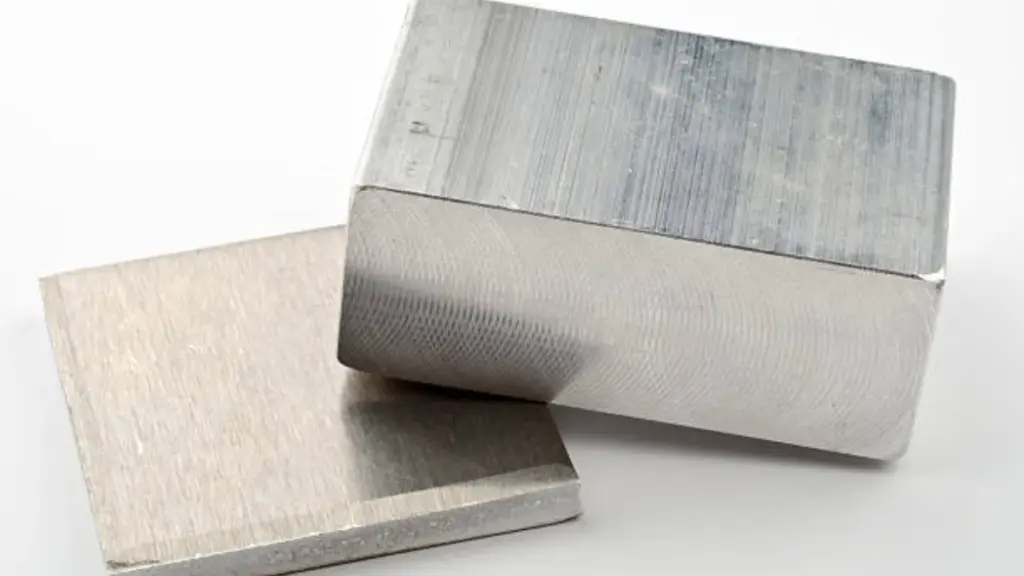
6061 Aluminium ist eine ausscheidungsgehärtete Legierung aus dem 6000 Serie (Al-Mg-Si) Familie. Seine Kombination von Stärke, Korrosionsbeständigkeit, Schweißbarkeit, und die Bearbeitbarkeit haben es zu einem bevorzugten Material für Strukturbauteile gemacht, Rahmen, Automobilbaugruppen, und Präzisionsteile. Ingenieure beziehen sich oft auf 6061 T6-Aluminiumeigenschaften bei der Spezifikation von Materialien für tragende Anwendungen, dank seiner ausgewogenen Leistung nach der Wärmebehandlung.
Aber trotz seiner Vielseitigkeit, 6061 ist grundsätzlich nicht für den Aluminiumdruckguss geeignet, weil das Erstarrungsverhalten der Legierung und die erforderlichen thermischen Prozesse nicht den Anforderungen des Hochdruck-Druckgusses entsprechen. Stattdessen, 6061 Teile werden typischerweise durch Extrusion hergestellt, gefolgt von CNC-Bearbeitung und Wärmebehandlung.
Unten, Wir zerlegen, was ausmacht 6061 Aluminium unterscheidet sich in seiner Zusammensetzung, Temperament, und Leistung.
Chemische Zusammensetzung
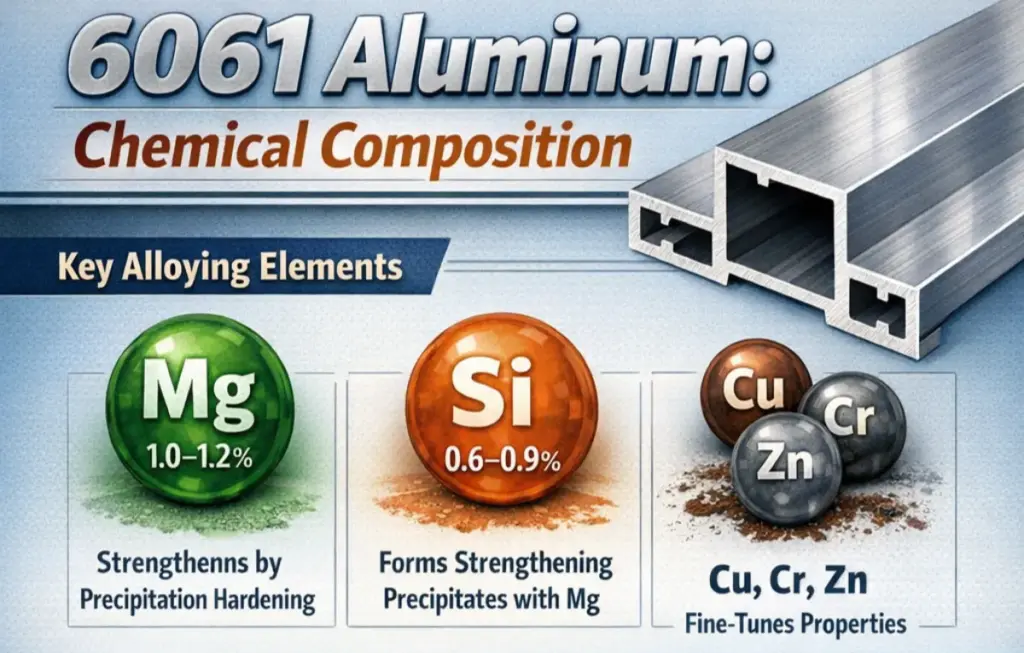
Die Legierungselemente in 6061 bestimmen einen Großteil seines mechanischen und Verarbeitungsverhaltens. Typische Zusammensetzung umfasst:
- Magnesium (Mg): 1.0–1,2 % – verbessert die Festigkeit durch Ausscheidungshärtung
- Silizium (Und): 0.6–0,9 % – arbeitet mit Mg zusammen, um stärkende Niederschläge zu bilden
- Kupfer (Cu), Chrom (Cr), Zink (Zn) – Zur Feinabstimmung der Eigenschaften in kleineren Mengen vorhanden
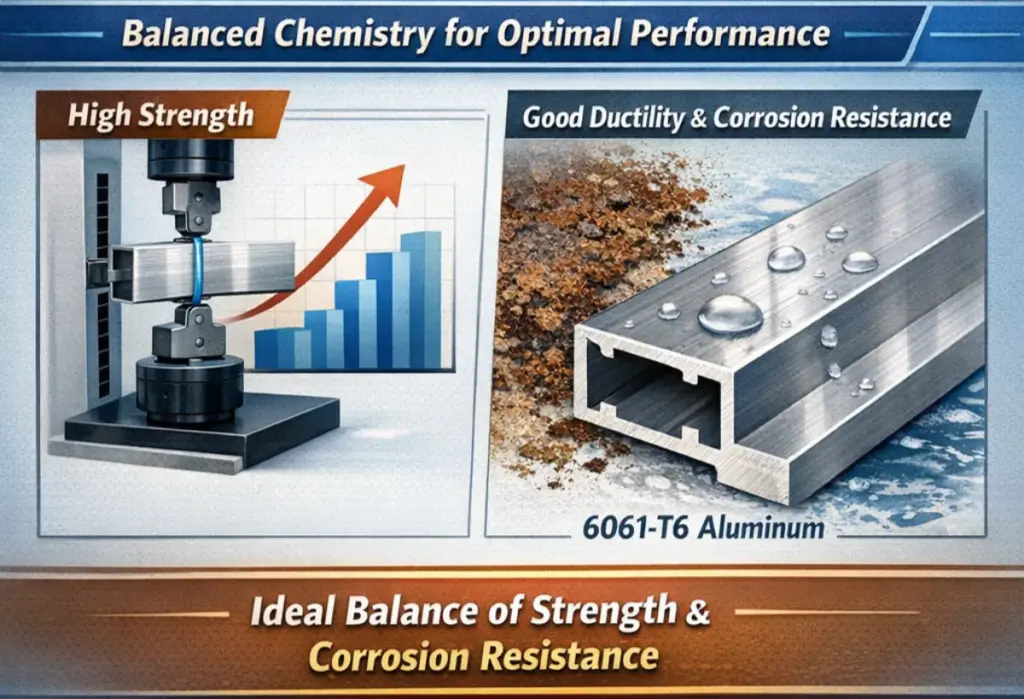
Diese ausgewogene Chemie ermöglicht eine gute Festigkeit bei gleichzeitiger Wahrung der Duktilität und Korrosionsbeständigkeit – ein entscheidender Vorteil, wenn man die Materialeigenschaften von 6061-T6-Aluminium betrachtet.
Härtezustände und Wärmebehandlung
Die Leistung von 6061 Aluminium variiert erheblich je nach Härte und Wärmebehandlung:
- T6 (Lösungswärmebehandelt und künstlich gealtert) – die häufigste und schwerwiegendste Erkrankung
- T4 (Lösungswärmebehandelt und natürlich gealtert) – mittlere Festigkeit mit guter Formbarkeit
- O (Geglüht) – am weichsten, praktikabelster Zustand
Im T6-Zustand, die Legierung erreicht ihre höchsten mechanischen Eigenschaften, Dadurch eignet es sich für strukturelle und tragende Teile. Für eine genaue Spezifikation ist es von entscheidender Bedeutung, zu verstehen, wie diese Zustände die Bearbeitung und das Teiledesign beeinflussen.
Mechanische und physikalische Eigenschaften
Nachfolgend finden Sie eine kurze Aufschlüsselung der wichtigsten Leistungskennzahlen, auf die häufig in technischen Dokumenten und Designtools verwiesen wird:
| Eigentum | 6061‑T6-Wert |
|---|---|
| Zugfestigkeit | ~310 MPa |
| Streckgrenze | ~270 MPa |
| Härte (Brinell) | 95–107 HB |
| Dichte | 2.70 g/cm³ |
| Schmelzbereich | 580–650°C |
| Wärmeleitfähigkeit | 167 W/m · k |
Diese Zahlen geben einen Überblick darüber, warum 6061 bleibt in vielen Struktur- und Präzisionsanwendungen wettbewerbsfähig – insbesondere dort, wo ein Gleichgewicht zwischen Gewicht und Festigkeit erforderlich ist.
Überlegungen zur Herstellung und Bearbeitung
6061Seine Verarbeitbarkeit zeichnet es in vielen Bearbeitungsprozessen aus:
- Schweißbarkeit: Hervorragend – es kann mit minimaler Rissbildung MIG- oder WIG-geschweißt werden
- Formbarkeit: Gut, insbesondere in erweichten Zuständen wie O oder T4
- Bearbeitung: Sehr gut geeignet für CNC-Fräsen, drehen, Bohren, und klopfen
- Wärmebehandlungen: Wärmebehandlung nach der Bearbeitung (wie T6) kann die Kraft erheblich steigern
Jedoch, Bei diesen Verfahren wird ein massiver Knüppel oder extrudierter Rohling vorausgesetzt, kein Druckguss. Diese Unterscheidung ist von zentraler Bedeutung, wenn Ingenieurteams über Fertigungswege entscheiden.
6061 Aluminium im Vergleich zu herkömmlichen Druckgusslegierungen
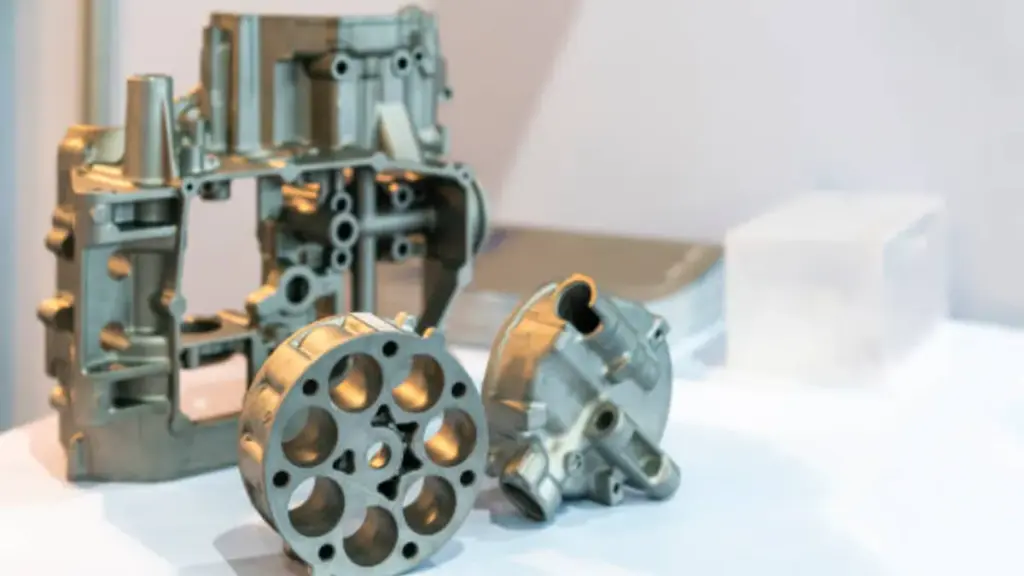
Obwohl vielseitig, 6061 Aluminium ist grundsätzlich nicht für den Druckguss geeignet. Der Hauptgrund liegt in der Funktionsweise des Druckgusses – geschmolzenes Metall wird unter hohem Druck in hohen Zyklen in Stahlformen eingespritzt. Effektive Druckgusslegierungen müssen schnell erstarren, leicht fließen, und widerstehen Porosität.
Warum 6061 ist nicht ideal für Druckguss
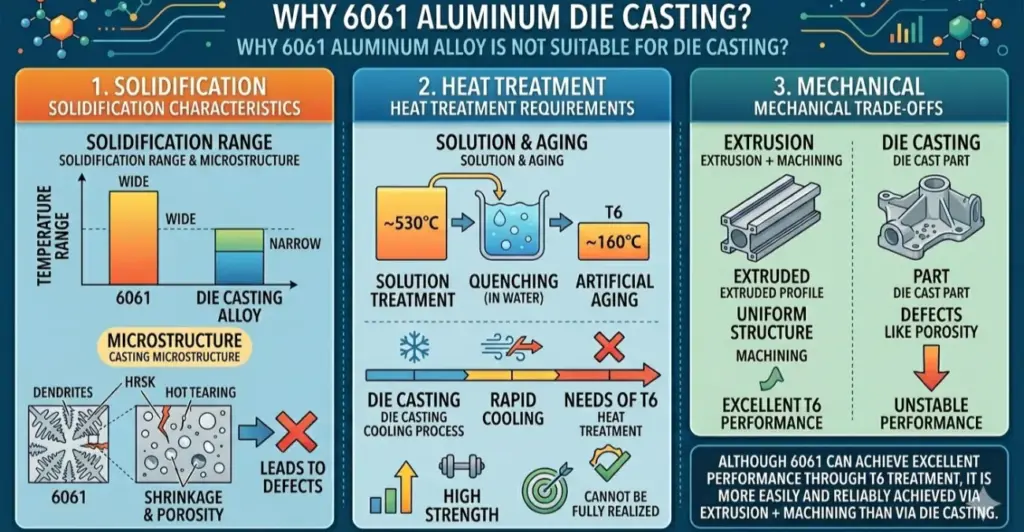
- Erstarrungseigenschaften: 6061Aufgrund seines Erstarrungsbereichs und seiner Mikrostruktur ist es unter Druckgussbedingungen anfällig für Schrumpfung und Porosität.
- Anforderungen an die Wärmebehandlung: Hohe Festigkeit 6061 beruht auf der thermischen Alterung nach der Erstarrung, was im Widerspruch zu den Druckguss-Kühlsystemen steht.
- Mechanische Kompromisse: Während 6061 kann durch T6-Behandlung eine hervorragende mechanische Leistung erzielen, Dies gelingt zuverlässiger durch Extrusion + Bearbeitung als Guss.
Bevorzugte Druckgusslegierungen: A380 und ADC12
Für Großserien-Druckguss, Legierungen wie A380 und ADC12 dominieren:
- A380 (Aluminiumlegierung): Hervorragende Hohlraumfüllung, gute mechanische Eigenschaften, weitverbreiteter Einsatz im Automobilbereich, Elektrogehäuse, und Industriekomponenten
- ADC12 (JIS-Standard-Druckgusslegierung): Sehr ähnlich zum A380, weit verbreitet in Asien und in der globalen Fertigung
Beide Legierungen bieten eine bessere Formfüllung, reduzierte Schrumpfung, und vorhersehbarere Gussmikrostrukturen als 6061. Sie stellen die praktische Wahl für die endkonturnahe Produktion in großen Stückzahlen dar.
Dir gefällt auch: ADC10 vs. ADC12 Aluminium
Aluminium-Druckguss aus einer Hand mit BIAN
Für Unternehmen, die diese Druckgussmaterialien effektiv nutzen möchten, BIAN zeichnet sich als One-Stop-Hersteller von Aluminium-Druckguss in China mit Einrichtungen in China aus, Mexiko, und Vietnam, bietet End-to-End-Lösungen – von der Formkonstruktion bis zum Guss und der Endbearbeitung – und stellt sicher, dass Teile effizient hergestellt werden und internationalen Standards entsprechen. Unsere länderübergreifende Präsenz ermöglicht es globalen Kunden, von der lokalen Produktion zu profitieren, schnellere Vorlaufzeiten, und Flexibilität der Lieferkette.
Durch die Kombination von Materialkompetenz mit umfassenden Fertigungskapazitäten, Wir helfen OEMs, Tierlieferanten, und Industriemarken reduzieren das Risiko, Entwicklungszyklen verkürzen, und eine zuverlässige Druckgussproduktion zu erreichen – und das bei gleichzeitiger Sicherstellung hoher Qualität und Konsistenz bei Großaufträgen.
Wann Sie wählen sollten 6061 für Extrusion + Bearbeitung
Angesichts seines Leistungsprofils, 6061 ist am effektivsten, wenn Komponenten durch produziert werden:
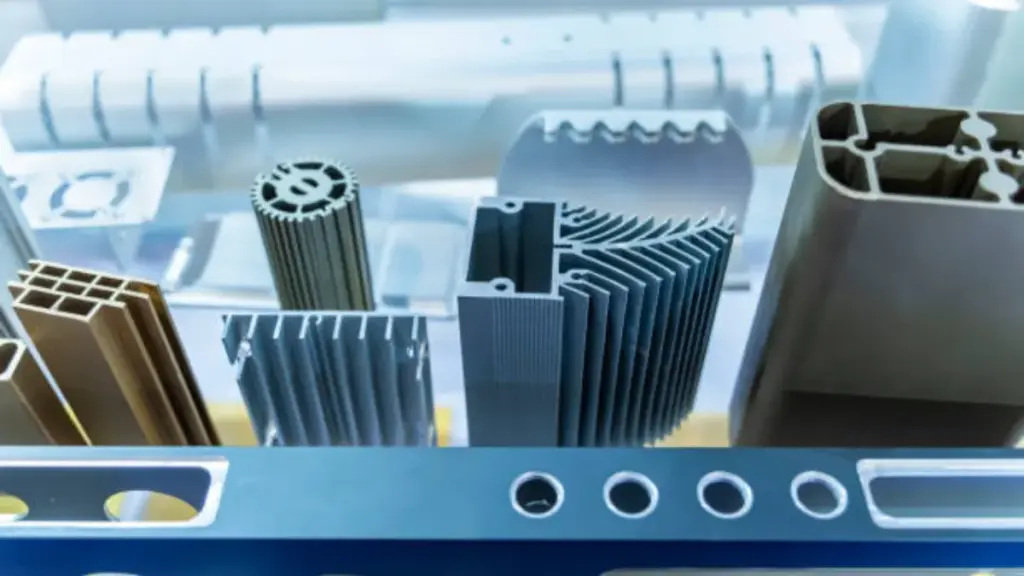
- Extrusion: Herstellung von Profilen mit konsistenten Querschnitten
- CNC-Bearbeitung: Präzisionsmerkmale erreichen, enge Toleranzen, und funktionale Details
- Wärmebehandlung (T6): Erhöhung der Festigkeit und Härte bei Bedarf
Dieser Pfad ist Standard für Strukturrahmen, Halterungen für die Luft- und Raumfahrt, Marinekomponenten, und kundenspezifisch bearbeitete Teile – insbesondere wenn die Materialleistung wichtiger ist als die Anzahl der Teile oder die Kostensensibilität.
Typische Teile und Branchen, die davon profitieren 6061
- Halterungen und Baugruppen für Luft- und Raumfahrt und Verteidigung
- Präzisionsbauteile in der industriellen Automatisierung
- Hochwertige Motorrad- oder Fahrradrahmen
- Schiffsarmaturen, die Korrosionsbeständigkeit und Festigkeit erfordern
Allerdings teurer als Druckguss bei vergleichbarem Volumen, Die Designfreiheit und die Festigkeitsleistung rechtfertigen häufig den Einsatz von 6061.
Typische Anwendungen von 6061 und Druckgusslegierungen
- 6061 Aluminium: Strukturelemente, extrudierte Profile, bearbeitete Präzisionsteile
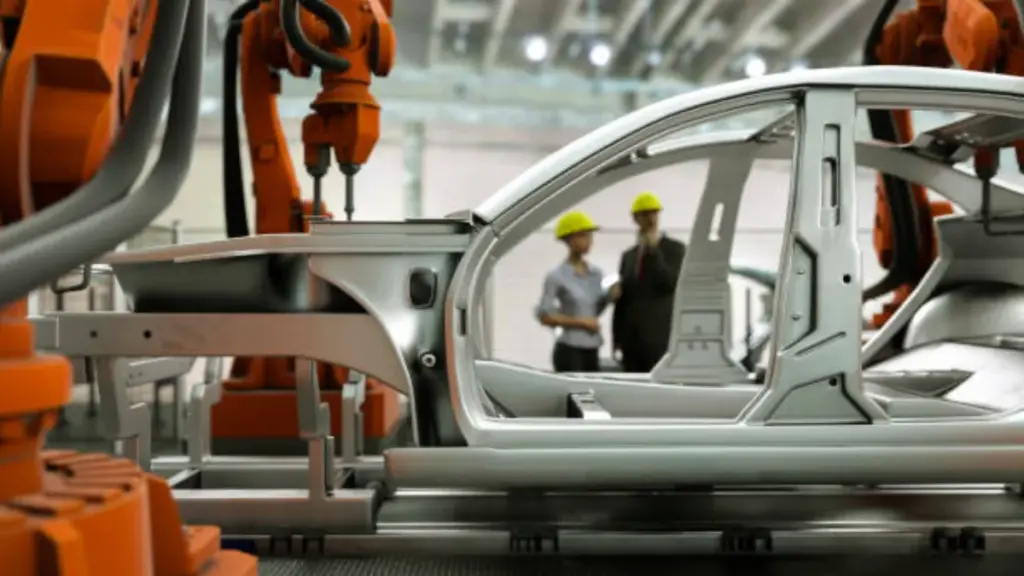
- Druckgusslegierungen (A380/ADC12): Elektrogehäuse, Motorabdeckungen für Kraftfahrzeuge, Beleuchtungsgehäuse, Gehäuse für Industrieanlagen
Bei der Entscheidung zwischen ihnen, Eine gängige Branchenrichtlinie lautet:
Wählen 6061 für hochfeste bearbeitete Teile; Wählen Sie A380/ADC12 für großvolumige Druckgussteile.
Dies ist besonders wichtig für OEMs und Tier 1/2 Käufer in Branchen wie der Automobilindustrie, Industriebeleuchtung, und Elektronikgehäuse.
FAQ – Material 6061 Aluminium und Druckguss
1. Kann 6061 Aluminium muss aus Druckguss sein?
In den meisten Fällen, 6061 wird für Hochdruck-Druckguss nicht empfohlen, da es unter hohem Einspritzdruck nicht vorhersehbar erstarrt und zur Porosität neigt. Stattdessen, 6061 lässt sich am besten durch Strangpressen und anschließende Bearbeitung verarbeiten.
2. Was sind die Unterschiede zwischen 6061 und A380/ADC12?
6061 ist auf Festigkeit und Bearbeitbarkeit ausgelegt, während A380 und ADC12 für Druckgussleistung ausgelegt sind, einschließlich guter Formfüllung, reduzierte Schrumpfung, und Dimensionskonsistenz im Maßstab.
3. Wie erreicht man hochfeste Aluminiumteile? 6061 ist erforderlich?
Zur Hebelwirkung 6061 Eigenschaften von T6-Aluminium, Hersteller extrudieren das Profil normalerweise, maschinenkritische Funktionen über CNC, und wenden Sie eine T6-Wärmebehandlung an, um Festigkeit und Härte zu maximieren.
4. Welche Branchen werden am häufigsten verwendet? 6061 im Vergleich zu Druckgusslegierungen?
6061 ist in der Luft- und Raumfahrt üblich, Bauingenieurwesen, und Präzisionsbearbeitungsindustrien. Druckgusslegierungen wie A380 und ADC12 werden häufig in Karosseriekomponenten für Kraftfahrzeuge verwendet, Außenbeleuchtungsgehäuse, und Gehäuse für Unterhaltungselektronik.