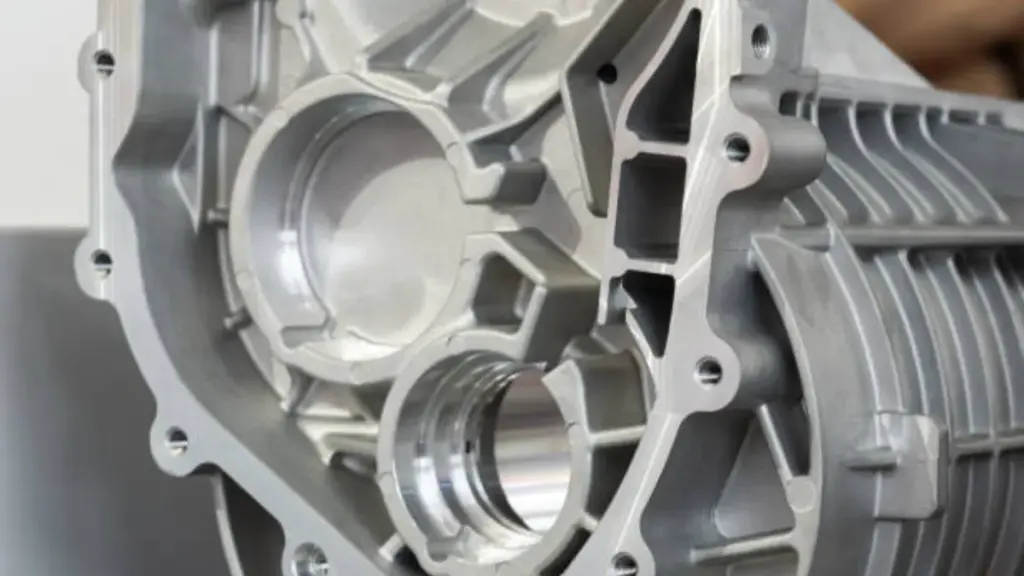
Lightweighting starts on a scale and ends with a load question. Magnesium alloys are the lightest structural metal you can die-cast, and they pair real tensile strength with strong vibration damping. They give up stiffness per unit volume, creep resistance at heat, and corrosion margin.
That is why a magnesium alloy properties comparison has to put magnesium, aluminum, and steel on one measured footing. The ratios only mean something next to the trade-offs. This guide covers the numbers, the mechanics behind them, and the short list of checks that decide the alloy for a given duty.
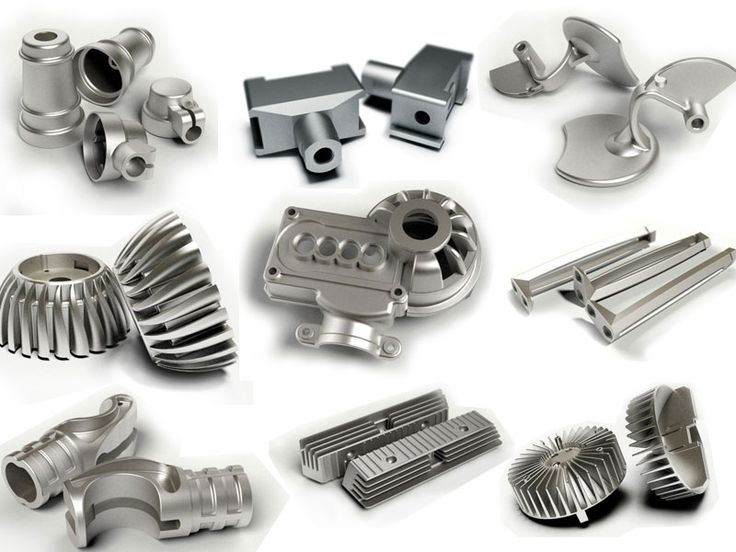
What Lightest Structural Metal Really Means
Magnesium has a density near 1.74 g/cm³ in pure form and about 1.8 g/cm³ once alloyed and die-cast. Aluminum is around 2.7 g/cm³ and structural steel about 7.85 g/cm³. By volume, a magnesium part is roughly 33 percent lighter than the same aluminum part and about 77 percent lighter than the same steel part.
That headline is real, and it is only half the story. Strength and stiffness do not scale down with density at the same rate. The honest framing is specific properties, meaning strength or modulus divided by density. Magnesium leads on strength-to-weight, and it is essentially level with aluminum and steel on stiffness-to-weight. See how the metal earns that role in our overview of magnesium as the lightest structural metal.
The practical consequence is direct. You save mass with magnesium, but you cannot make a thinner, equally rigid wall just because the alloy is lighter. Stiffness in a thin wall still needs section depth or ribs, not a lighter metal.
Magnesium vs Aluminum vs Steel Compared
The table uses representative die-cast and mill values for the alloys a buyer actually quotes: AZ91D magnesium, A380 aluminum, and a generic carbon steel. Ranges reflect as-cast and common temper conditions. Your supplier’s certified datasheet governs any part that carries a load.
| Property | Magnesium AZ91D | Aluminum A380 | Carbon Steel |
|---|---|---|---|
| Density (g/cm³) | ~1.81 | ~2.70 | ~7.85 |
| Tensile strength (MPa) | 230–280 | 250–330 | 400–550 |
| Yield strength (MPa) | ~160 | 160–180 | 250–350 |
| Elastic modulus (GPa) | ~45 | ~71 | ~205 |
| Strength-to-weight index (steel = 1) | ~2.4 | ~1.9 | 1.0 |
| Max continuous service temp (°C) | ~120–150 | ~200 | well above 300 |
Read the index row, not just the strength row. A380 has a higher absolute tensile number than AZ91D, yet once you divide by density, magnesium delivers more strength per kilogram. That is the whole reason a transmission cover, a laptop shell, or a power-tool housing moves to magnesium alloy properties on a mass budget.
Tensile Strength and Shock Absorption
Magnesium carries tensile load while absorbing compressive shock and vibration better than the aluminum it often replaces. Its hexagonal close-packed crystal structure has fewer active slip systems than the face-centered-cubic lattice of aluminum. That changes how the metal deforms and how it dissipates energy.
The result is high damping capacity. Magnesium dissipates vibrational and impact energy far more effectively than aluminum alloys, and more than steel. For a design engineer, damping is the reason magnesium housings quiet gear whine in power tools. It is why they suit brackets and frames that see repeated shock.
When the duty is to carry a load and shrug off vibration, that combination is the advantage being bought. When the duty is purely to be stiff and thin, aluminum or a steel section can be the more efficient answer. Magnesium does not win on stiffness-to-weight.
Where Magnesium Gives Up on Properties
No magnesium alloy belongs in a design that runs hot and carries sustained load. AZ-series alloys creep, meaning they deform slowly under constant stress, as service temperature climbs toward 120 to 150°C. That rules them out of near-exhaust and sustained-high-temperature duty. Aluminum keeps many under-hood structural roles for this reason.
Grade choice moves that ceiling. AS-series alloys trade some aluminum for silicon to push creep resistance higher, and the grade logic is set out in our AZ91D vs AM60B comparison. The same duty-first framework drives the aluminum alloy selection guide.

Machining and joining also differ. Magnesium machines fast with good chip control, which suits thin-wall housings that still need bosses and threads. Its galvanic nobility, oxide handling, and melt and swarf safety make it less forgiving in a mixed-metal supply chain. Handling molten magnesium is a safety subject of its own, covered in the magnesium die-casting fire-risk guide.
Corrosion, Finishing, and Design Rules
Strength-to-weight claims only pay off if the part survives its environment, and magnesium is the most electrochemically active of the three common structural metals. Bare magnesium corrodes quickly with moisture and chlorides. It becomes the anode in any galvanic pair with aluminum, steel, or copper fasteners, and that coupling accelerates magnesium loss.
So the grade decision rarely stands alone. It is completed by a protection system of conversion coating plus organic topcoat, by drainage and crevice design, and by electrically isolating fasteners. Get those right and the weight advantage survives to end-of-life. Skip them and a light part fails early.

When Magnesium Is the Right Buy
Reduce the choice to duties, in order. Mass is the binding constraint and the part sees vibration or impact rather than sustained heat. That is where magnesium alloy properties and damping are exactly what the program is paying for. The browse options in the magnesium die casting category reflect those duties.
If the goal is maximum stiffness in the thinnest wall at moderate mass, or a sustained temperature above roughly 150°C, aluminum or steel wins. Specifying magnesium there shows up later as deflection or creep. Where the part goes to work in a vehicle or a tool, the magnesium die casting applications guide maps the common use cases.

Questions About Magnesium Alloy Properties
Is magnesium stronger than aluminum by weight?
On absolute tensile strength, die-cast A380 aluminum (roughly 250 to 330 MPa) usually edges out AZ91D magnesium (roughly 230 to 280 MPa). But magnesium is about a third lighter. On strength-to-weight, magnesium carries more load per kilogram, which is the metric that matters for a mass-constrained part.
Is magnesium stiffer than aluminum?
Not per unit weight. Magnesium’s elastic modulus is about 45 GPa against aluminum’s roughly 71 GPa. Because magnesium is proportionally lighter, its stiffness-to-weight is close to aluminum and steel. You save mass, but you cannot make a thinner, equally rigid wall purely because it is lighter.
Why does magnesium absorb shock and vibration well?
Its hexagonal close-packed structure gives magnesium high damping capacity, so it dissipates vibrational and impact energy more readily than aluminum. This is why it is specified for gear housings, power-tool bodies, and brackets that carry tensile load while absorbing repeated compressive shock.
When should I not choose a magnesium alloy?
Avoid AZ-series magnesium when the part runs hot and carries sustained load, since creep limits continuous service to roughly 120 to 150°C. Avoid it when the goal is maximum stiffness in the thinnest wall at moderate mass. Any corrosion-exposed magnesium part needs a validated coating system first.
Final Thoughts
Magnesium wins the mass argument and shares the stiffness argument. The decision turns on which duty binds: grams and vibration, or thin-wall rigidity and heat. Name the duty, set the protection system, and confirm the numbers against a certified datasheet and a measured first article.
For a deeper look at the trade-off against a coating or a heavier section, the applications guide covers where each metal pays. To turn these magnesium alloy properties into a quoted process, send the model and lot size through the contact page.