A buyer specifies “anodize per MIL-A-8625,” the parts come back gray and slightly mottled, and the argument starts. Three parties read the same print and picture three different finishes: one cosmetic, one protective, one built to take abrasion. The disagreement was not about color. It was about a number nobody wrote down, Type II or Type III.
How MIL-A-8625 Sorts Anodizing Types
MIL-A-8625 is the drawing callout most anodizing work hangs on. ASTM B580 is its design-guide companion, e ISO 7599 does similar work in metric markets.
The spec sorts anodic coatings by chemistry and purpose. Type I is chromic acid, thin and aerospace-oriented. Type II is the conventional sulfuric acid anodize. Type III is hardcoat, also sulfuric acid but pushed much harder.
Types II and III are where buyer conversations live, so this article compares type ii vs type iii anodizing on the axes that decide cost, ajustar, and acceptance. Those axes are film thickness, dureza, process window, dimensional growth, dyeability, and behavior on die-cast aluminum.
Both types convert the surface into aluminum oxide grown from the substrate itself, so neither peels the way an applied coating can. Both are porous as-grown and need sealing. The process and its film types are summarized in the ScienceDirect overview of anodizing.
Warm Bath Versus Chilled Hardcoat Bath
Type II baths run warm by anodizing standards, aproximadamente 18 para 22 °C, at moderate voltage. The film grows at a manageable pace, with time for dye molecules to flood the pores before sealing.
This is the workhorse finish. Clear or colored, five to 25 mícrons, it gives good corrosion resistance once sealed. It is forgiving enough that most racks of parts come back looking like the sample.
Type III flips nearly every process variable. The electrolyte is chilled to near freezing, and current density and voltage go up. Growth becomes violent enough that the solution must be agitated hard to avoid burning. The result is a thicker, denser, harder film, but one with far fewer dye sites. That is why hardcoat parts are usually specified Class 1, undyed, or in restrained dark tones.
One dimension matters more than hardness, and it is how the film grows. Roughly one-third of a Type II film builds outward from the original surface, with the rest penetrating inward. On Type III the split is close to fifty-fifty. The same nominal thickness gives twice the outside build. That is precisely why bearing surfaces and press fits react badly to hardcoat.
Type II vs Type III Side by Side
| Attribute | Type II (Conventional) | Type III (Hardcoat) |
|---|---|---|
| Film thickness | Sobre 5-25 µm (Class 1 ~5, Class 2 ~8, Class 3 above 25 µm) | Sobre 25-100 µm, 0.002 em (~51 µm) nominal per spec |
| Coating hardness | Soft; sobre 300 HV worst-case, far below hardcoat | Tipicamente 500-700 HV on wrought 6061-class alloys |
| Outward growth | Roughly one-third of thickness | Roughly one-half of thickness |
| Color | Dyeable to broad palettes before sealing | Mostly undyed or dark; limited dye uptake |
| Primary job | Corrosion protection plus appearance | Wear, abrasion, galling resistance |
| Cost driver | Rack density, dye step | Chilled bath, slow growth, low rack density |
Read the hardness row with the alloy in mind, not the finish. A ceramic-hard film on a soft, silicon-full substrate is a hard shell over a cushion. Wear performance collapses when the coating is supported by nothing. That is metallurgy, not marketing, and it gets its own section below.
Serve, Tópicos, and the Growth Everyone Forgets
Coatings consume tolerance quietly. A 20-micron Type II film on a bore shrinks the diameter by roughly 13 microns end to end. That is two surfaces, each growing one-third outward. The same bore hardcoated at 50 microns loses about 50 microns of diameter. The interference is nearly four times larger from a film only 2.5 times thicker.
Three rules keep inspections boring. Primeiro, state on the print whether dimensions apply before or after finishing. The default differs by region, e “after anodizing” is the one machine shops can hold. Segundo, put critical bores, pilot diameters, and threads on a masked list. Plugs and tape cost pennies next to a rejected lot. Terceiro, if a fit is genuinely close, ask which type you are specifying before the PO. Type III may need a re-cut bore rather than a tolerance concession.
When Type II Is the Right Answer
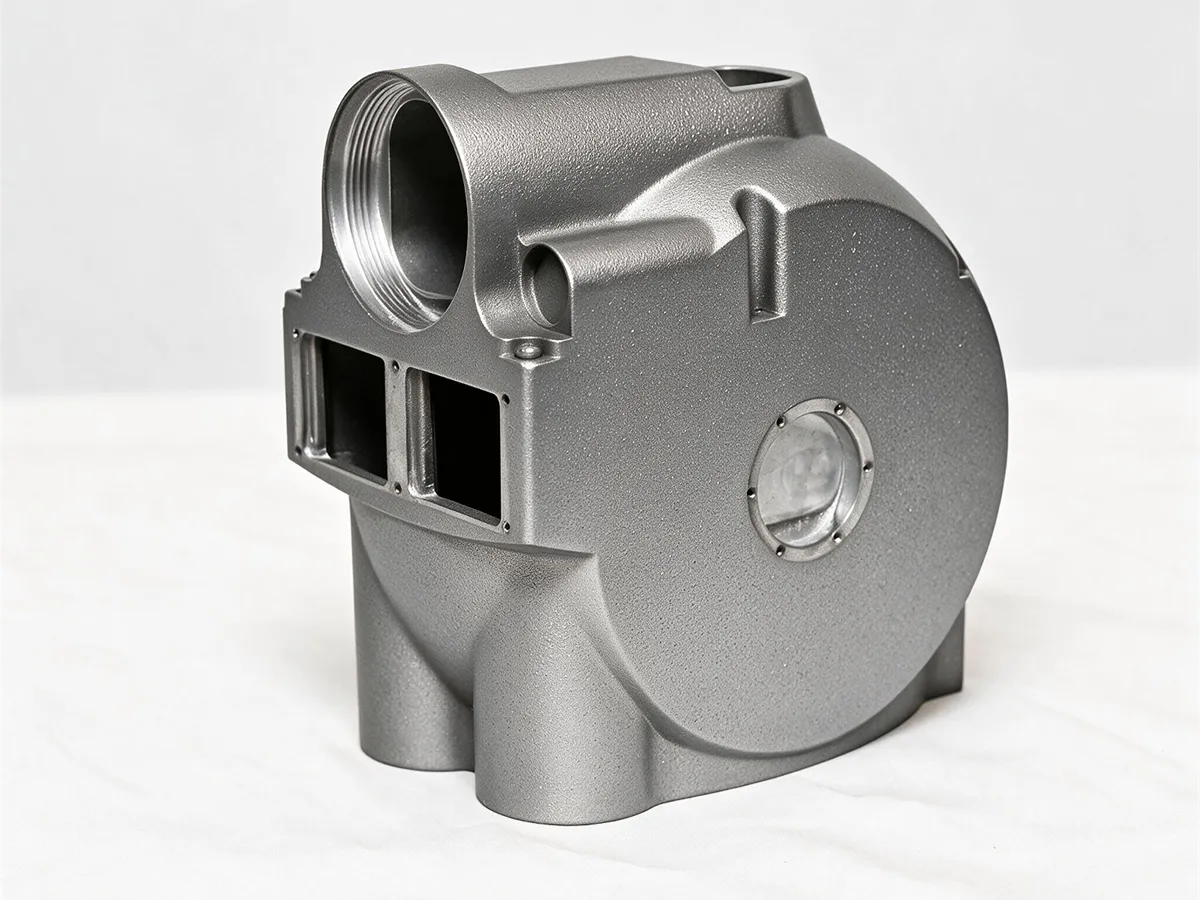
Type II wins when the enemy is corrosion and appearance, not abrasion. Outdoor brackets, caixas de iluminação, gabinetes, and decorative trim are its territory. The film is thick enough to anchor dye and thin enough that dimensional trouble stays minor. It is also cheap enough per rack that volume economics work.
A Class 2 clear or black anodize on a sealed housing shrugs off years of UV and coastal salt fog. The finish can also be color-matched against samples. For the wider family of finishes compared here, see the guide to anodized aluminum die castings.
It is also the honest choice on most cast aluminum. Where the substrate’s silicon content already produces a mottled, muted surface, paying for a hardcoat the substrate cannot support is buying a lab-report number, not a wear layer.
When Hardcoat Earns Its Keep
Specify Type III when parts abrade, gall, or see repeated assembly cycles. Slip rings, guide rails, pistons and cylinders, bearing bosses, molds and tooling, and military ground-equipment hardware are its common home. The film pairs hardness with lubricity retained in its pores, since oil-impregnated seals exist for exactly this. That combination handles sliding wear that would polish a Type II surface into a scratch map within weeks.
Hardcoat also survives where paint cannot. It will not chip at edges the way an organic film does, because there is no interface to chip from. The oxide is the metal, converted. An engineer choosing between a 50-micron hardcoat and a 60-micron powder on a wear surface is choosing between something bonded to nothing and something that is part of the part.
The Die-Casting Reality for Hardcoat
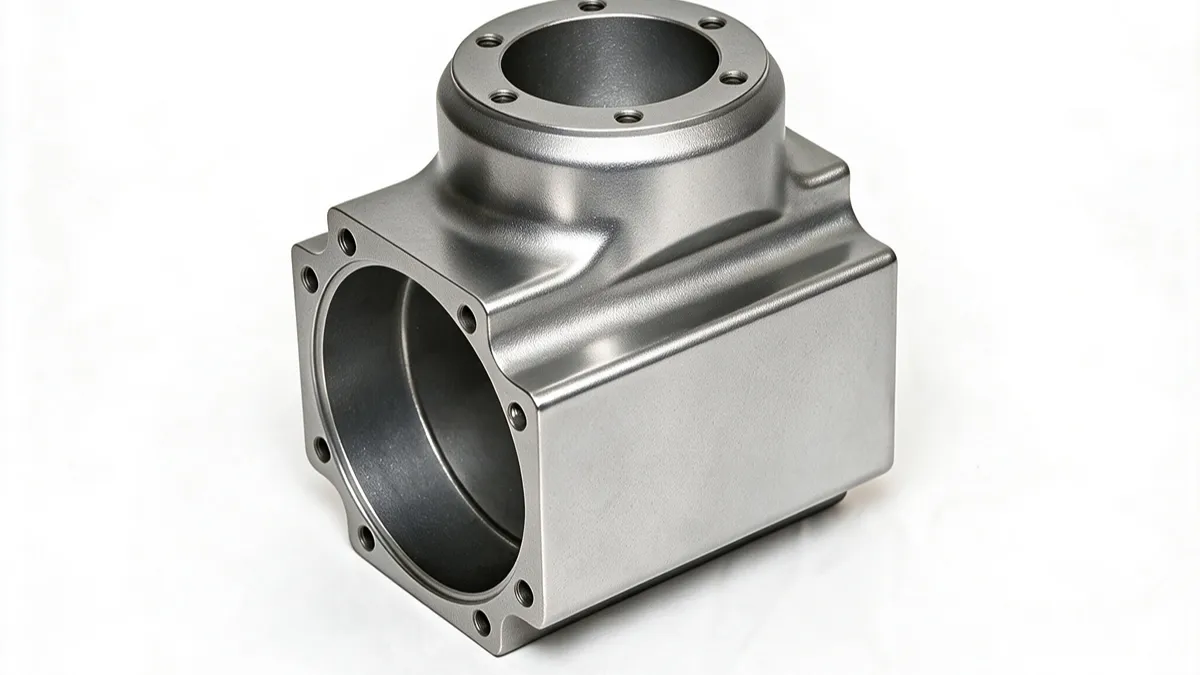
Here the alloy makes a type ii vs type iii anodizing decision for you. Common die-casting grades carry serious silicon. ADC12 runs 9.6 para 12.0 por cento, A380 runs 7.5 para 9.5 por cento, and silicon does not convert to aluminum oxide in any bath at any voltage. The inert silicon sits in the coating like islands, soft, unconverted, and visible as gray mottling.
The consequences arrive in a predictable order. Appearance: both types come back gray and frosted on high-silicon casts, so a color approved off a wrought sample will not match on an ADC12 part. Dureza: hardcoat on such substrates often lands nearer 300 para 400 HV than the 500 para 700 HV quoted for 6061. The soft phases inside the film bracket out and the surface wears to texture. Defects: gas porosity from the shot exposes pits and, pior, acid traps that bleed out after sealing. The composition of these casting alloys is covered in the ScienceDirect overview of aluminum alloys.
The alloy options are real but bounded. Low-silicon cast grades such as 518 anodize far better, and A360 sits in the middle. Post-processing such as fine blast, Deburrendo, and polish can unify Type II appearance on cast skins, as listed in the finishing service category. If a drawing genuinely needs a 500-plus HV wear layer, machined wrought billets or extrusions beat any attempt to force a HPDC casting into hardcoat service.
Write the Spec Like the Anodizer Reads It
“Anodizado, black” is a wish, não é uma especificação. A callout that survives a dispute has four parts. Name the type, the class, the color, and the seal. That reads as “Type II, Class 2, black, selado” ou “Type III, Class 1, ou Classe 2 if dyed, 0.0008 in minimum.” Add the dimension rule, “all dimensions after anodizing unless noted,” and a masking list for pilot diameters and threaded bores.
Class definitions trip people up. On Type II, Class 1 is undyed, Class 2 is dyed, and Class 3 is the heavy film above 25 mícrons. On Type III, Class 1 is undyed and Class 2 is dyed. Same class numbers, opposite thickness meaning. A clear type ii vs type iii anodizing callout removes that ambiguity. “MIL-A-8625 Type III Class 2 no 50 µm” reads the same in Ohio and in Foshan. Add salt-spray hours under ASTM B117 only when corrosion, not appearance, is the requirement.
Five Questions That Decide the Type
1. What is the failure mode? Abrasion or galling points to Type III. Weather, mild handling wear, and looks point to Type II. If both apply, decide which one is on the critical path and spec the other as a coating system.
2. What is the substrate? Wrought 6xxx series lets hardcoat perform as quoted. High-silicon die cast makes hardcoat numbers aspirational, so pull samples on your actual alloy.
3. What must still fit? Tópicos, press fits, and grounding pads call for Type II with a masking list. Type III only after recalculating allowances at half outward growth.
4. Does it need color? A dyed palette means Type II. Near-black functional tones exist in Type III Class 2, but accept batch-to-batch variation on cast material.
5. Who pays for ambiguity? You do, at inspection. Write type, aula, thickness minimum, dimension rule, and mask list into the print before the RFQ goes out.
Considerações Finais
On die-cast aluminum the type ii vs type iii anodizing choice is mostly a substrate decision. Type II is the safe, dyeable, dimensionally kind default for corrosion and looks. Type III earns its cost only where wear is the real failure mode, and only on an alloy that can support it. Write the callout precisely, mask what must not grow, and pull samples before the first lot.
If you are weighing anodize against an applied coating instead, o quality control services page shows how coating thickness and color are verified on every lot. For sample parts on your actual alloy before commitment, send the drawing through the página de contato. The mottling conversation is cheapest before the first lot.
Anodizing Type Questions for Buyers
What is the main difference between Type II and Type III anodizing?
Thickness and hardness. Type II is conventional sulfuric anodize at roughly 5 para 25 microns for corrosion protection and appearance. Type III is hardcoat at roughly 25 para 100 mícrons, 0.002 in nominal under MIL-A-8625, grown in a near-freezing bath for abrasion and wear resistance. That hardness costs dye uptake and dimensional growth.
Can die-cast aluminum be hard anodized?
It can be processed, but the substrate caps the result. ADC12 and A380 carry silicon that does not convert to oxide. Hardcoat on these grades measures closer to 300 para 400 HV than the 500 para 700 HV of wrought 6061. Porosity adds pit and acid-bleed risk. Specify by sample on the actual alloy.
Does anodizing change part dimensions?
Sim, and asymmetrically. Roughly one-third of a Type II film and one-half of a Type III film builds outward. A 50-micron hardcoat on a bore pulls in the diameter by about 50 microns across two surfaces. State “dimensions after anodizing” on the print, then mask or re-machine critical fits.
Which is cheaper, Type II or Type III anodizing?
Type II, usually by a wide margin. Hardcoat costs more through chilled baths, slower growth, longer cycles, and lower rack density. The larger cost lever is choosing the wrong type. Rejecting a lot over mottled dye on cast parts, or shimming assemblies to absorb hardcoat growth, dwarfs the per-part price gap.