Choosing flood light housings only by unit price often leads to hidden performance risks that appear after installation. Weak thermal design, poor sealing, or unstable casting quality can quickly reduce lighting reliability and increase maintenance cost in outdoor projects.
This guide helps buyers and engineers evaluate flood light housings from a system level, focusing on material choice, structural strength, tooling quality, and finishing control. It explains how to avoid common sourcing mistakes and achieve better long-term performance while keeping manufacturing cost under control.
Flood Light Housings Cost and Strength Basics
Flood light housing cost and strength depend on balancing structure, thermal performance, and outdoor durability for reliable long-term operation in real environments.
Why Cost and Strength Must Be Evaluated Together
Cost and strength should always be evaluated as one system, not separate factors. A lower-cost housing may reduce initial spending, but it often introduces hidden risks during long-term operation.
In real applications, most failures come from unstable heat dissipation or weak structural control. For example, insufficient aluminum quality or under-designed wall thickness can cause deformation, sealing failure, or overheating of LED components. These issues increase maintenance frequency and total lifecycle cost.
For this reason, total cost of ownership (TCO) is a more reliable evaluation method than unit price alone.
Key Performance Factors Behind Housing Durability
Several engineering factors determine whether a flood light housing can maintain stable performance in outdoor environments:
- Thermal performance: Maintains LED temperature stability and prevents early lumen degradation
- Sealing performance: Ensures long-term IP protection against dust and water ingress
- Structural stability: Supports wind load, vibration, and mechanical impact resistance
- Surface protection system: Protects against corrosion, UV exposure, and coating failure
These systems are interconnected. Weakness in one area often accelerates failure in others, reducing overall service life.
How Application Environment Changes Design Requirements
Flood light housings must match real installation environments, because outdoor conditions directly affect structural load, corrosion rate, and sealing performance.
- Residential and light commercial environments: Balanced design with moderate structural strength and cost efficiency for stable long-term use
- Industrial and roadway environments: Higher vibration resistance and reinforced structure to handle continuous mechanical stress
- Coastal or marine environments: Enhanced corrosion protection and upgraded coating systems to resist salt and humidity exposure
Matching design strength with application conditions helps prevent both over-design and under-design, improving lifecycle cost efficiency and reliability.
Material Choice and Cost Trade-Offs
Material selection directly affects flood light housing strength, thermal performance, corrosion resistance, and lifecycle cost, making it a key factor in balancing durability with manufacturing efficiency.
Die-Cast Aluminum vs Plastics vs Metal Alternatives
Different materials create different structural, thermal, and cost characteristics. Choosing the right housing material depends on operating environment, performance requirements, and expected service life.
| Material | Key Advantages | Limitations | Typical Applications |
|---|---|---|---|
| Die-Cast Aluminum | Excellent strength, heat dissipation, and cost balance | Higher material cost than plastics | Commercial, industrial, roadway, and sports lighting |
| PC/ABS Plastic | Low cost and lightweight | Limited thermal performance and UV durability | Low-power residential lighting |
| Polycarbonate | High impact resistance and low weight | Less effective heat management at high wattage | Protective housings and specialty outdoor fixtures |
| Stainless Steel / Specialty Metals | Superior corrosion resistance and durability | Higher weight and manufacturing cost | Marine, coastal, and extreme environments |
For most outdoor lighting projects, die-cast aluminum flood light housings provide the best balance of structural strength, thermal management, manufacturing efficiency, and long-term cost control.
Lens and Cover Material Selection Impact
Lens and cover materials play a key role in optical stability and environmental protection, and they directly affect long-term maintenance cost.
- Tempered glass: High optical clarity, strong scratch resistance, and stable UV performance over long service life
- Polycarbonate: High impact resistance, suitable for public or high-risk environments, but may degrade without UV protection
- Acrylic: Cost-efficient option with good transparency, but lower resistance to impact and temperature variation
A mismatch between housing strength and lens durability often leads to early optical degradation, even if the housing structure remains intact.
How Material Choice Shapes Total Lifecycle Cost
Material selection affects not only production cost, but also maintenance frequency, replacement cycles, and system reliability in real outdoor applications.
A low-cost plastic housing may reduce initial investment, but UV exposure and thermal stress can shorten service life and increase maintenance visits. In contrast, die-cast aluminum requires higher upfront cost but reduces long-term operational expense through better stability and durability.
This is why material selection should always follow a lifecycle cost logic instead of focusing only on unit price.
A related topic is Die Casting Materials, which explains how it impacts overall performance.
IATF 16949 Certified One-Stop Die-Casting Solutions
Wall Thickness and Structural Strength
Wall thickness defines how a flood light housing balances structural strength, sealing reliability, and production cost under outdoor stress conditions.
Why Wall Thickness Defines Outdoor Reliability
Wall thickness determines whether a housing can maintain stable performance under long-term outdoor stress conditions.
Proper thickness supports key functions:
- Mechanical stability: Reduces cracking and deformation under vibration and installation stress
- Sealing performance: Maintains stable gasket compression for reliable IP protection
- Load resistance: Strengthens mounting points under continuous force
- Shape stability: Limits distortion from wind pressure and thermal cycling
If thickness is too low, failures often start at sealing and mounting areas. If too high, material cost and weight increase, while casting efficiency drops due to slower cooling.
Structural Optimization: Ribs, Bosses, and Local Reinforcement
Modern flood light housings use targeted reinforcement instead of uniform wall thickness to balance strength and material efficiency.
Key optimization methods include:
- Ribs for stiffness: Improve rigidity without significant weight increase
- Reinforced bosses: Protect screw interfaces from stripping or fracture
- Local thickening: Strengthen high-stress zones such as joints and mounts
This design improves structural efficiency while stabilizing the casting process. It also reduces shrinkage risk and helps maintain consistent quality in mass production.
Thickness Strategy by Application Type (Commercial / Industrial / Marine)
Different environments require different structural strength levels, so wall thickness must match real application stress conditions.
| Application Type | Structural Requirement | Design Focus |
|---|---|---|
| Commercial lighting | Balanced durability for urban environments | Cost-efficient thickness with standard corrosion protection |
| Industrial lighting | High vibration and continuous operation resistance | Reinforced structure with stronger mounting support |
| Marine/coastal lighting | High corrosion and harsh weather exposure resistance | Increased structural strength with enhanced protective design |
Proper matching avoids both over-engineering and under-engineering. Over-design increases cost without performance gain, while under-design shortens service life and increases maintenance cost.
To better understand the full system, see our breakdown of: Die Cast Aluminum LED Housing: Design Tips for Maximum Performance
Tooling Complexity and Hidden Cost Drivers
Tooling cost in flood light housing increases with geometry complexity, production stability requirements, and long-term mold maintenance risks, especially when designs include functional thermal and sealing features.
How Design Features Increase Mold Complexity
In die-cast housing production, tooling complexity grows quickly when functional features are added to improve thermal and sealing performance.
Instead of viewing each feature separately, it is more useful to understand how each design decision translates into tooling impact:
| Design Feature | Tooling Challenge | Cost / Production Impact |
|---|---|---|
| Heat Sink Fins | Require sliding cores and precise cavity control | Longer cycle time and higher mold wear risk |
| IP Sealing Grooves | Demand high-precision machining and alignment | Higher rejection risk and stricter quality control |
| Integrated Mounting Systems | Introduce undercuts and multi-part tooling design | Increased mold complexity and maintenance cost |
| Multi-Compartment Layouts | Require additional cores and sealing structures | Higher tooling cost and slower production cycles |
As complexity increases, cycle time becomes longer and tool stability becomes harder to control. This also raises the risk of dimensional drift during mass production, especially in high-volume lighting projects.
Hidden Costs in Tool Wear, Scrap Rate, and Maintenance
Tooling cost does not end at mold purchase. Long-term production often creates higher cumulative costs than the initial investment.
Key hidden cost drivers include:
- Mold wear: Thin fins and sharp edges accelerate erosion and reduce tool life
- Scrap rate increase: Poor flow design leads to porosity, shrinkage, or incomplete filling
- Maintenance downtime: Frequent insert replacement interrupts production schedules
- Unplanned delays: Tool repair cycles extend lead time and affect delivery stability
These factors directly impact unit cost over time. A tool that looks cost-efficient at the beginning may become expensive after repeated production cycles.
DFM and Simulation as Early Risk Control Tools
Early design control is the most effective way to reduce tooling cost and improve production stability.
Design for Manufacturability (DFM) combined with simulation helps stabilize both cost and quality before mass production starts.
Key engineering tools include:
- Mold flow simulation: Improves metal flow and reduces porosity risk
- Thermal simulation: Optimizes heat sink structure without overdesign
- Geometry optimization: Reduces unnecessary undercuts and simplifies tooling
- Process validation: Improves casting stability before tooling commitment
Early optimization reduces not only tooling cost but also long-term failure risk in outdoor lighting applications.
Machining and Finish Cost Impacts
After casting, machining and finishing determine the final dimensional accuracy, surface protection, and long-term durability of flood light housings, directly shaping both performance and production cost.
Secondary Machining Operations and Cost Accumulation
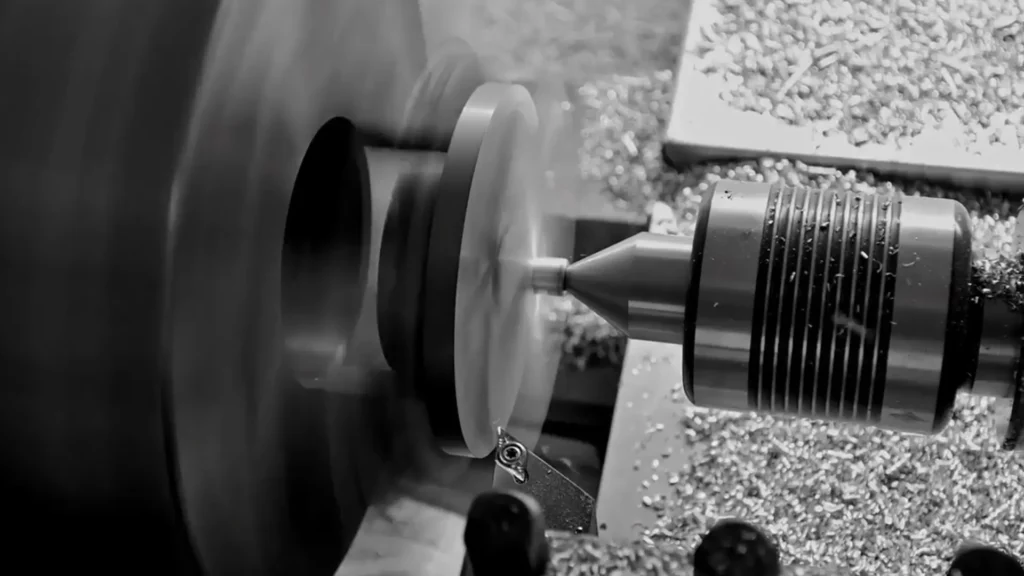
Machining is required to achieve precise sealing surfaces, mounting accuracy, and functional interfaces that cannot be formed during casting.
Each operation adds cumulative cost across production:
- Machine time and tool wear: Longer cycles increase per-unit manufacturing cost
- Fixture complexity: Custom jigs are needed for stable positioning
- Tight tolerances: Higher precision increases inspection and rejection risk
- Multi-axis machining: Complex geometries require advanced equipment and longer setup
Even small design adjustments can multiply machining time. Over a full production run, these costs often exceed initial expectations, especially in high-volume lighting projects.
Surface Finishing Systems and Durability Trade-Offs
Surface finishing protects flood light housings from corrosion, UV exposure, and long-term environmental damage.
Different finishing systems create clear cost-performance trade-offs:
| Finishing Type | Performance Level | Cost Impact | Typical Application |
|---|---|---|---|
| Powder coating | Standard corrosion protection | Low to medium | General outdoor lighting |
| Anodizing | Strong corrosion resistance | Medium to high | Industrial environments |
| Marine-grade coating | Maximum durability | High | Coastal and harsh climates |
Higher-grade finishing increases upfront cost, but it reduces maintenance frequency and extends service life, especially in harsh outdoor environments.
How Machining Quality Affects Coating and Corrosion Resistance
Machining quality directly influences how well coatings perform over time. Poor surface preparation often becomes the root cause of early field failures.
Typical issues include:
- Poor adhesion: Contaminated or rough surfaces reduce coating bonding strength
- Edge corrosion: Unsealed machining edges allow moisture ingress
- Uneven coating thickness: Irregular surfaces cause weak protection zones
High-quality machining improves coating stability and ensures uniform protection across the housing. This directly extends service life and reduces long-term maintenance cost, especially in outdoor applications exposed to moisture and salt.
Cost Control Without Performance Loss
Cost control in flood light housings focuses on improving structural design, thermal efficiency, and manufacturing methods without reducing outdoor durability or long-term reliability.
Manufacturing and Design Strategies for Cost Control
| Optimization Area | Key Strategy | Cost Benefit |
|---|---|---|
| Material & Structure | Standardized housing platforms and modular product families | Lower tooling investment and more stable production cost |
| Thermal Design | Optimized heat paths and efficient heat sink geometry | Reduced material consumption without sacrificing cooling performance |
| Optical Efficiency | Higher-efficiency lenses and improved light distribution | Lower LED power requirements and smaller housing designs |
| Assembly Process | Reduced fastener count and simplified assembly structure | Lower labor cost and fewer production errors |
| Maintenance & Service | Accessible component layout and service-friendly design | Reduced maintenance time and lower lifecycle cost |
| Smart Controls | Sensors, dimming systems, and intelligent operation control | Lower energy consumption and improved total cost of ownership |
Frequently Asked Questions
How can buyers evaluate flood light housing quality before placing a large order?
Requesting samples is the most reliable approach. Buyers should evaluate dimensional consistency, surface finish quality, sealing interfaces, casting density, and heat sink design. It is also helpful to review production inspection procedures and material certifications before approving mass production.
What certifications are commonly required for flood light housing projects?
Requirements vary by target market. Common certifications include CE, RoHS, UL, ETL, and regional safety standards. While certifications usually apply to the complete lighting fixture, housing design must support compliance by maintaining structural integrity, electrical safety clearances, and environmental protection performance.
How early should tooling optimization begin during product development?
Tooling optimization should begin during the initial design stage. Early DFM reviews, mold flow simulation, and structural validation help identify manufacturing risks before tooling is built. This reduces engineering changes, shortens development cycles, and lowers overall project cost.
Is die-cast aluminum always the best choice for flood light housings?
Not necessarily. Die-cast aluminum is often the preferred solution for commercial and industrial outdoor lighting because it combines strength, thermal performance, and cost efficiency. However, lower-power applications or specialized environments may benefit from alternative materials depending on project requirements and budget constraints.
What is your common MOQ for custom die-cast flood light housings?
No MOQ for the first three times order. You can test the quantity and launch the market better.Later MOQ 500pcs for normal products and 1000pcs for small size product.
Final Thoughts
Balancing cost and strength in flood light housings requires understanding materials, structure, tooling, and manufacturing together. Relying only on unit price often leads to higher long-term failure and maintenance costs in outdoor use.
A well-engineered die-cast aluminum solution ensures stable performance and cost efficiency over the lifecycle. For reliable projects, Bian Diecast provides consistent production quality and long-term manufacturing support.