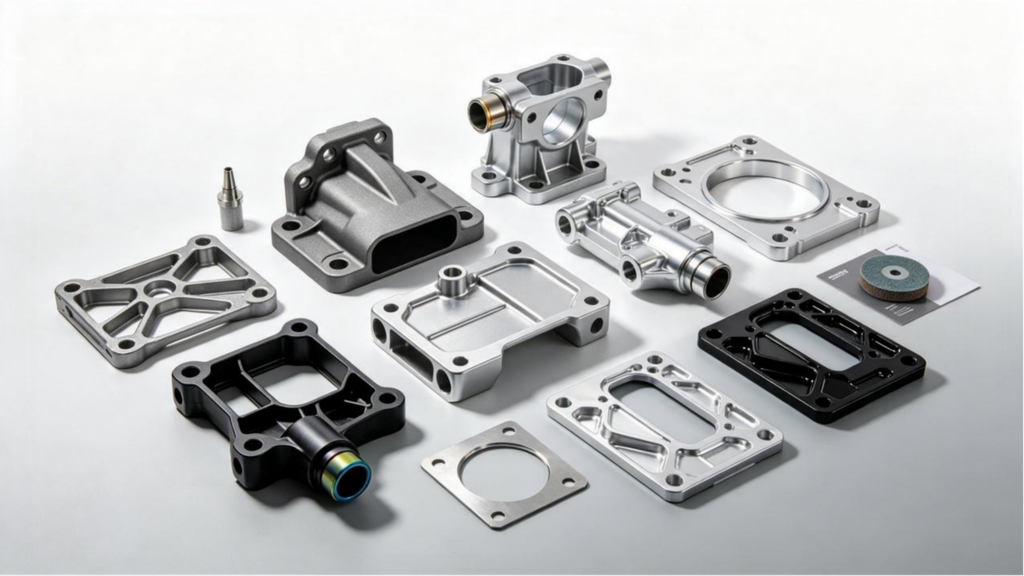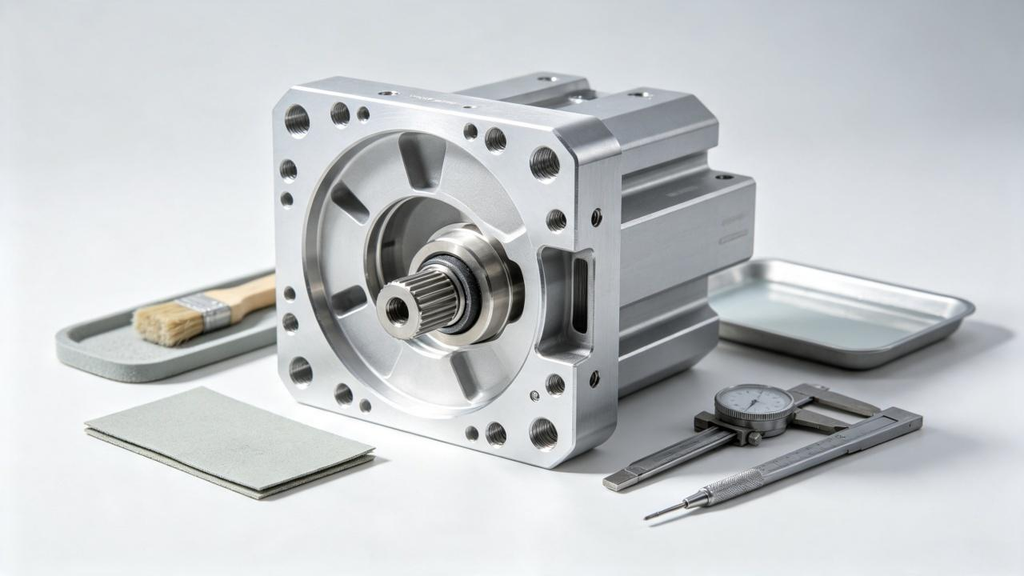
Securing reliable automotive grade casting capabilities determines whether your production line stays active or suffers from critical part failures. OEMs demand absolute precision, and failing to meet IATF 16949 mandates transforms minor casting defects into expensive, mass-scale assembly shutdowns.
This analysis breaks down the strict compliance frameworks required to achieve Level 3 PPAP approvals and maintain sub-80 PPM defect rates. We evaluate advanced product quality planning protocols and statistical capability benchmarks, including CpK targets above 1.33, to help you establish a secure, zero-defect supply chain.
Core Capabilities of Automotive Grade Casting
Automotive grade casting merges high-pressure techniques and specialized alloys to produce precision, lightweight components that reduce vehicle weight and meet strict OEM performance standards.
Primary Casting Methods and Integrated Operations
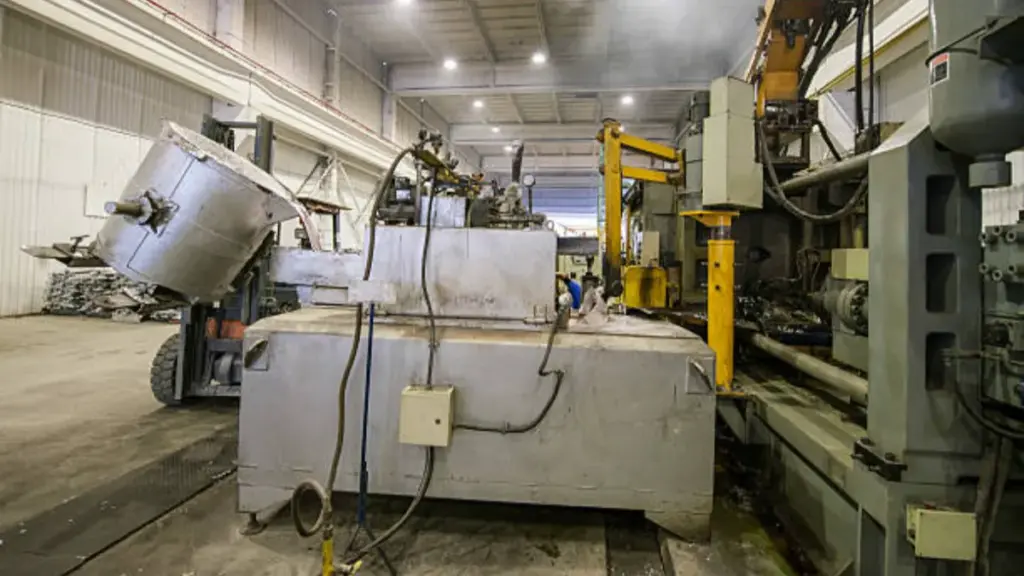
Foundries deploy exact casting methods paired with in-house finishing to achieve tight tolerances and maintain high-volume production schedules.
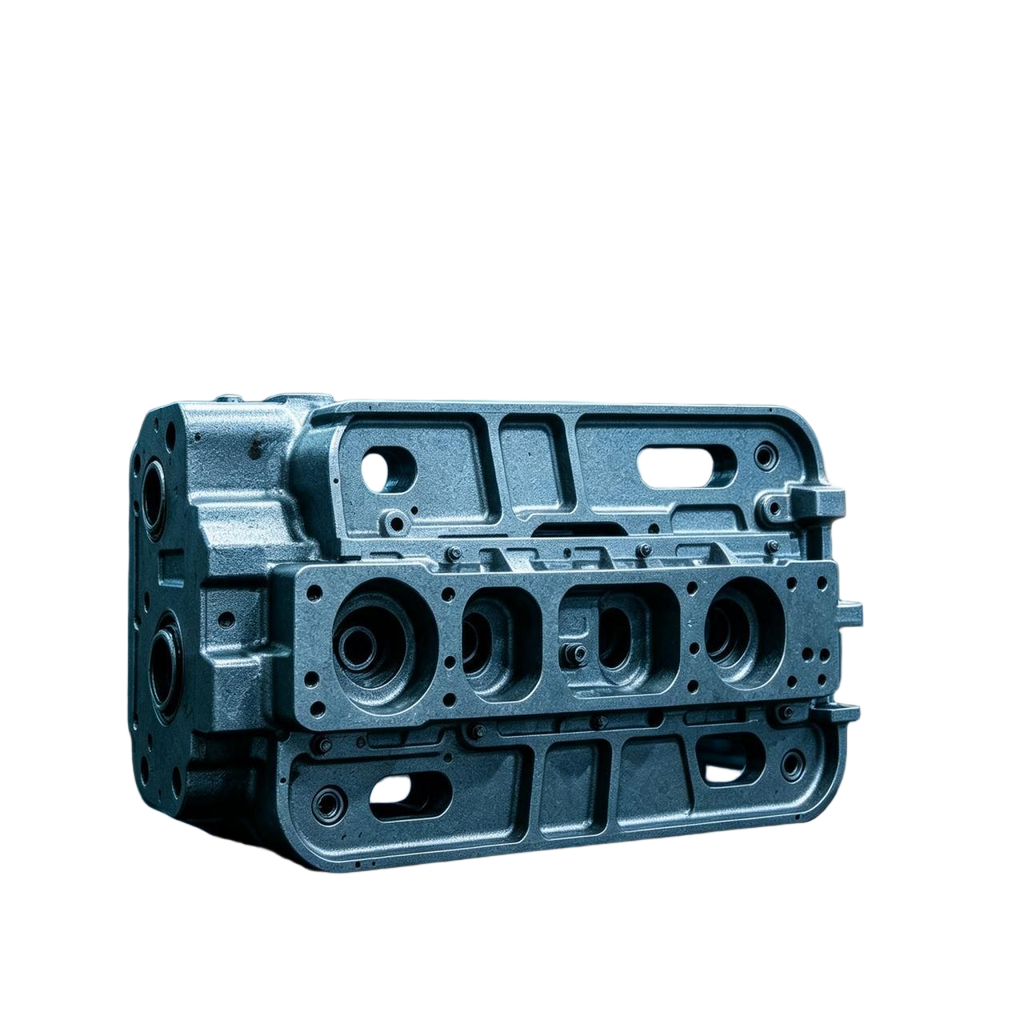
- High-Pressure Die Casting: Applying 1,500 to 25,000 psi forms intricate near-net-shape parts like engine brackets and transmission housings in rapid 30 to 60-second cycle times.
- Permanent Mold and Centrifugal Casting: These methods control solidification and segregate impurities to build dense, durable brake drums and suspension components.
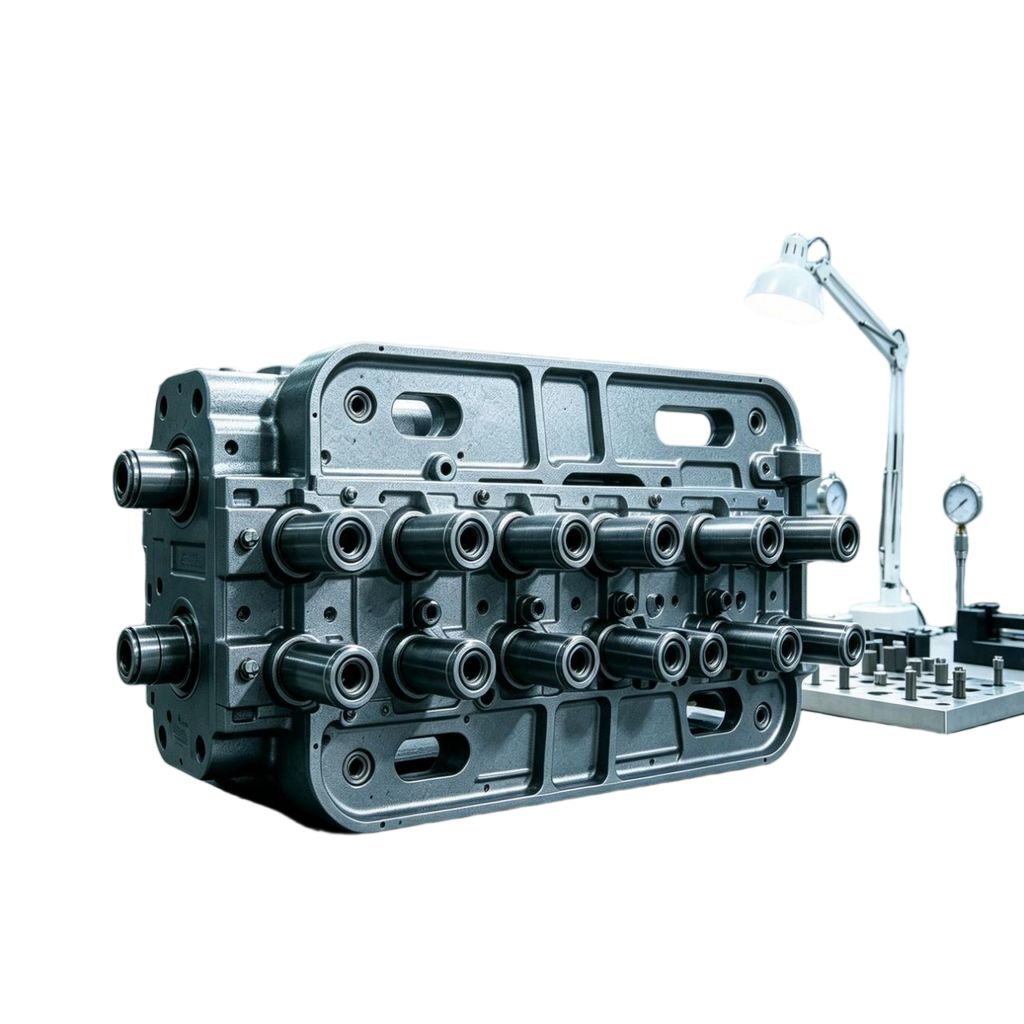
- Vertically Integrated Operations: Facilities combine tooling, multi-axis CNC machining, and proprietary molding techniques to reduce porosity and lock in tight dimensional consistency.
Material Selection and Performance Metrics
Component performance relies directly on the chosen metallurgical profile to balance strength, weight, and thermal dynamics.
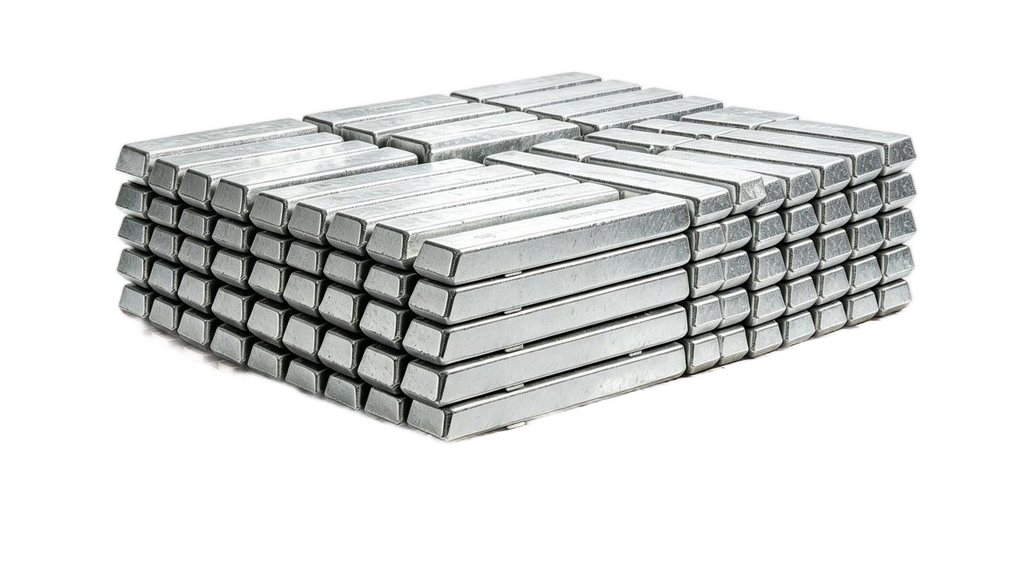
- Aluminum Alloys (A356 and 319): Foundries cast these alloys to build engine blocks and brake calipers, capitalizing on their high fatigue strength, excellent castability, and fluid flow through complex shapes.
- Magnesium and Zinc: Replacing heavier steel elements, these metals cut vehicle weight by roughly 60 percent and boost overall fuel efficiency by up to 25 percent.
- Alloying Elements: Adding silicon, copper, and magnesium increases thermal conductivity. This enables rapid heat dissipation critical for heavy-duty braking systems and EV drivetrains.
Understanding IATF 16949 Standards for OEMs
IATF 16949 transforms generic ISO 9001 baselines into strict automotive quality mandates. Foundries must adopt core tools like PPAP and SPC to eliminate defects and secure OEM contracts.
Transitioning from ISO 9001 to IATF 16949
ISO 9001 provides a general quality framework, but automotive OEMs demand absolute precision. You start the transition by conducting a thorough gap analysis between your existing ISO 9001 processes and the strict automotive mandates of IATF 16949.
Foundries must integrate Automotive Core Tools—such as PPAP, APQP, and FMEA—directly into daily casting operations. You track and document data across the entire production cycle, spanning from the initial wax pattern creation to the actual molten metal pouring.
Basic quality checks no longer work for high-volume automotive lines. You upgrade these to rigorous process controls at every stage to aggressively reduce scrap rates and prevent defects in high-precision parts. Once you lock in these new controls, you perform internal audits and finalize pre-audit plans before scheduling the mandatory external audit with an accredited body.
Key Compliance Metrics for Foundries
To maintain compliance and hit OEM targets, foundries track process stability through specific performance metrics and technical studies.
- Measurement System Analysis (MSA): Execute statistical studies to track variation in inspection and test equipment, ensuring tight tolerances for all cast components.
- Process Control & Risk Assessment: Apply Statistical Process Control (SPC) to monitor molten metal pouring consistency and use FMEA to assess defect risks in structural parts.
- Non-Destructive Testing (NDT): Implement rigorous testing protocols to validate fatigue-resistant alloys and consistently lower overall defect rates.
- Customer-Specific Requirements: Incorporate OEM-specific mandates, such as strict visual standards, directly into the certification scope covering all production components.
Tracking these metrics removes the guesswork from foundry operations. You rely entirely on statistical data to prove your castings meet the exact structural and dimensional requirements the automotive supply chain demands.
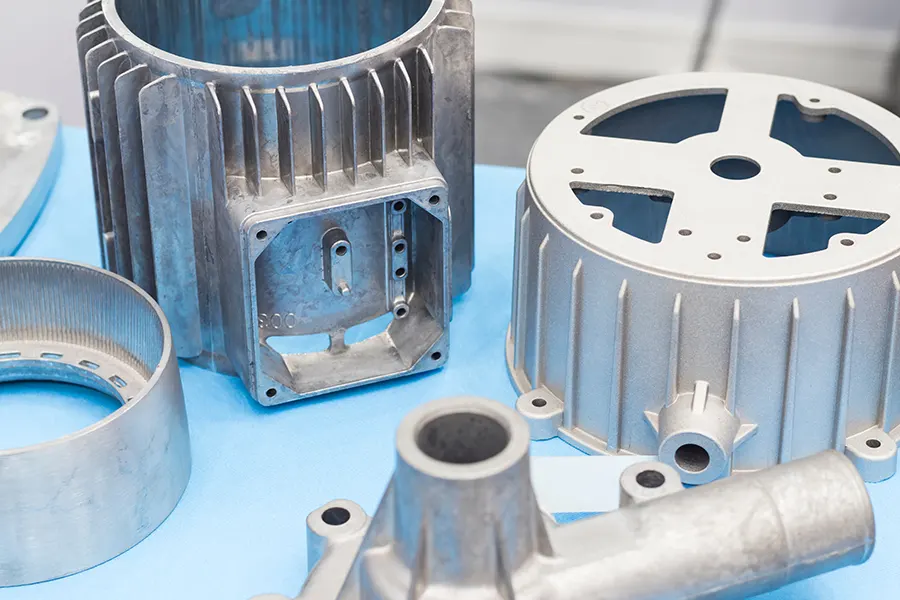
Engineering-Driven Die Casting for Global Brands
Navigating PPAP and APQP Audits
PPAP and APQP frameworks dictate automotive quality. Mastering APQP’s early planning and design phases ensures smooth, compliant Level 3 PPAP submissions for high-volume production.
| Framework Element | Core Focus | Primary Output |
|---|---|---|
| APQP Phase 1 | Program definition and scope | Aligned customer requirements and quality goals |
| APQP Phase 2 | Product design and development | Technical specifications and engineering approval |
| PPAP Level 3 | Comprehensive part approval | Part Submission Warrant (PSW) and supporting data |
Advanced Product Quality Planning (APQP) Phases
APQP acts as the roadmap for launching new automotive components. It forces cross-functional teams to align on specifications long before manufacturing begins, guiding the project through structured development stages.
Phase 1: Plan and Define Program sets the foundation for product development. Teams capture customer engineering criteria, review design records, and define strict quality objectives. Utilizing specific APQP checklists during this stage ensures your team locks in expectations before initiating any actual design work.
Phase 2: Product Design and Development translates those initial requirements into hard technical specifications. Engineers generate part drawings, finalize material specifications, and secure customer engineering approval. You also establish engineering change documentation procedures here to manage modifications effectively throughout the rest of the development cycle.
Production Part Approval Process (PPAP) Levels
The Production Part Approval Process acts as the final gatekeeper before mass production. Triggered during the later validation stages of APQP, it proves your facility can reliably manufacture parts to exact specifications. Automotive OEMs rely heavily on the comprehensive Level 3 submission for new components.
A complete Level 3 PPAP submission requires the supplier to provide the Part Submission Warrant (PSW) alongside physical product samples and extensive supporting data. The standard documentation package includes:
- FMEA Documents: Design and process failure mode analysis identifying potential defect risks.
- Measurement System Analysis (MSA): Studies confirming your inspection tools and measurement systems operate accurately.
- Capability Studies: Statistical proof demonstrating the manufacturing process stays within strict tolerances, demanding a CpK value greater than 1.33.
- Process Flow Diagrams: Detailed mapping of the entire production sequence from raw material to finished product.
- Production Samples: Physical parts produced using the exact mass-production tooling and parameters.
Submitting this comprehensive data package demonstrates to OEMs that your operations can repeatedly fabricate parts for mass assembly while hitting all critical quality and engineering metrics.
Evaluating Certified Supplier Capabilities
Evaluating casting suppliers requires strict on-site audits and trial runs to verify sub-80 PPM defect rates and IATF 16949 compliance before signing high-volume production contracts.
Structured Supplier Assessment Process
You cannot afford guesswork when sourcing automotive castings. Procurement teams rely on a rigid assessment process starting with detailed questionnaires. They follow this up with 6-to-8-hour on-site audits. During these visits, engineers tear down the supplier’s quality control systems, verify their machining capabilities, and check material standards like the EN specifications for gray cast iron.
Once a supplier passes the audit, buyers do not immediately sign long-term contracts. They demand a 500-piece trial order to measure real-world manufacturing stability. Evaluators scrutinize these initial batches to ensure defect rates stay under 80 parts per million (PPM). This step is mandatory before moving forward with safety-critical components like engine blocks and chassis elements.
Key Performance Metrics and Certifications
Automotive original equipment manufacturers (OEMs) demand strict adherence to international quality and environmental standards. Reliable casting facilities must carry specific credentials and hit tight operational benchmarks to qualify for producing highly stressed powertrain and structural parts.
- Mandatory Certifications: IATF 16949, ISO 9001, and ISO 14001:2015 compliance.
- Delivery Metrics: 98% to 99% on-time delivery (OTD) rates.
- Logistics Capability: Just-in-time (JIT) supply chain integration.
As automotive supply chains adapt to aggressive 2026 production demands, evaluators set these rigorous key performance indicators to prevent assembly line shutdowns. Suppliers must prove they can sustain these delivery and quality metrics month over month to maintain their certified status.
Frequently Asked Questions
What is the difference between ISO 9001 and IATF 16949?
ISO 9001 provides a broad quality management framework for any industry. IATF 16949 builds on that foundation but layers in strict, automotive-specific requirements. In the foundry environment, IATF 16949 mandates predictive core tools—APQP, FMEA, SPC, and MSA—to stop defects like porosity and shrinkage before they start. While ISO 9001 asks for general risk-based thinking, OEMs consider that baseline insufficient for high-reliability parts. To supply global automotive chains, foundries need the rigorous audits and approved-body certifications that IATF 16949 demands.
How do OEMs verify PPAP documentation?
OEMs verify PPAP documentation through a structured audit of 18 specific elements, matching submitted data against their strict engineering standards. They scrutinize ballooned drawings, dimensional results, and material certifications to confirm the foundry meets every tolerance. The audit focuses heavily on statistical data, verifying capability studies—which typically demand a CpK greater than 1.33—and Measurement System Analysis (MSA) to ensure repeatable inspection accuracy. OEMs adjust the required submission level based on the part’s complexity, safety criticality, and the supplier’s track record. If the audit reveals any discrepancies, the supplier must correct the process and resubmit before the OEM grants final production approval.
Why is APQP essential for automotive casting suppliers?
APQP structures product development to predict and prevent defects, directly enforcing IATF 16949 compliance. Casting processes carry high inherent risks, including porosity, pressure leaks, and dimensional shifts during cooling. APQP forces cross-functional teams to use tools like PFMEA and rigorous design reviews to catch these vulnerabilities early in the engineering phase. This front-loaded planning allows foundries to hit zero-defect targets during high-volume runs. Foundries that integrate APQP launch programs reliably and secure long-term contracts with major automotive OEMs.
Final Thoughts
Generic foundries offer lower upfront pricing, but sourcing IATF 16949-certified automotive castings is the only way to safeguard your supply chain against costly assembly line shutdowns. Demanding strict APQP and PPAP frameworks eliminates production guesswork and locks in sub-80 PPM defect rates for high-stress powertrain and structural components.
Don’t guess on automotive quality—verify it with hard statistical data and physical prototypes. We recommend starting with a 500-piece trial order to validate our casting precision and review our comprehensive PPAP documentation firsthand. Contact our engineering team to align your exact OEM specifications and secure your long-term manufacturing roadmap.