La evaluación de una fábrica de fundición a presión para viviendas de alumbrado público es fundamental a la hora de buscar proyectos de iluminación exterior., especialmente donde el riesgo de falla, estabilidad térmica, y la resistencia a la corrosión afectan directamente el rendimiento a largo plazo. Muchos compradores todavía enfrentan problemas como la calidad inconsistente, mal sellado, y entrega inestable de proveedores no calificados.
Esta guía muestra cómo evaluar fábricas de forma estructurada., centrándose en la capacidad de ingeniería, control de producción interno, sistemas de inspección, y estabilidad de entrega, Ayudar a los compradores OEM y a las marcas de iluminación a reducir el riesgo y seleccionar socios confiables a largo plazo..
Conceptos básicos de evaluación de fábricas de viviendas de alumbrado público
La evaluación de una fábrica de fundición a presión de carcasas de alumbrado público requiere centrarse en el rendimiento real del sistema en condiciones de calor., humedad, y condiciones de corrosión en lugar del precio o la apariencia de la muestra únicamente.
Por qué la evaluación basada únicamente en precios conduce a fallas en el campo
Centrarse únicamente en el precio unitario a menudo oculta riesgos de ingeniería más profundos en una fábrica de fundición a presión para viviendas de alumbrado público., que solo aparecen después de la instalación. Una vivienda de bajo coste puede parecer aceptable en el momento de la entrega, pero carece de estabilidad en entornos exteriores reales..
Un abastecimiento más barato suele conducir a rutas térmicas débiles, sellado inestable, y mal control del recubrimiento. Con el tiempo, Estos problemas reducen la vida útil de los LED y aumentan la frecuencia de mantenimiento en los sistemas de iluminación exterior producidos por dichos proveedores..
Las fallas en el campo rara vez son repentinas. Por lo general, comienzan con pequeñas brechas de rendimiento que crecen gradualmente bajo una exposición continua al aire libre.. en la mayoría de los casos, La causa raíz se remonta a las primeras decisiones de fabricación y control de procesos..
El papel de la vivienda en el rendimiento de la iluminación a nivel del sistema
Una vivienda de alumbrado público funciona como sistema de control estructural y ambiental, no solo una capa protectora. Afecta directamente el flujo de calor., integridad del sellado, y alineación mecánica.
- Regulación térmica: Transfiere el calor de los módulos LED al aire ambiente y evita el sobrecalentamiento.
- Sellado ambiental: Bloquea la humedad, polvo, y los contaminantes lleguen a los componentes internos
- Estabilidad mecánica: Mantiene la alineación bajo carga de viento y vibración a largo plazo.
Si alguna de estas funciones se debilita, todo el rendimiento de la luminaria se vuelve inestable e impredecible en el uso en el campo.
Dimensiones centrales de la evaluación que los compradores deben comprender
Una evaluación estructurada ayuda a los compradores a identificar si una fábrica puede respaldar proyectos al aire libre a largo plazo en lugar de entregas de muestras a corto plazo..
- Estabilidad del material: Composición consistente de aleación de aluminio con impurezas controladas para mayor durabilidad.
- control de procesos: Parámetros estables de fundición a presión y gestión del molde para evitar porosidad y deformación.
- Precisión dimensional: Precisión de mecanizado repetible en todos los lotes para garantizar el sellado y la consistencia del ajuste.
- Mentalidad de confiabilidad al aire libre: Comprensión de la protección de la propiedad intelectual, ciclo térmico, y comportamiento de la corrosión en entornos reales.
Estas cuatro dimensiones definen si un proveedor puede ir más allá de la fabricación básica y respaldar proyectos de iluminación confiables de nivel de infraestructura..
Quizás te interese: Arriba 10 Proveedores de Fundición a presión de aluminio en 2026
Capacidades internas que los compradores deben comprobar
La evaluación de una fábrica de fundición a presión para viviendas de alumbrado público requiere comprobar si los procesos clave se controlan internamente para lograr una calidad estable y trazable..
Control de fundición a presión y herramientas como base de la calidad
La fundición a presión define la resistencia estructural y la solidez interna de la carcasa.. Si este proceso es inestable, las mejoras posteriores no pueden solucionar completamente los defectos ocultos.
Una fábrica capaz debe garantizar un control estable en las condiciones de fundición del núcleo.:
- Estabilidad de la máquina: control de tonelaje consistente para carcasas grandes y complejas
- Mantenimiento de herramientas: Servicio regular del molde para reducir los defectos relacionados con el desgaste.
- control de procesos: Parámetros de inyección estables para evitar contracción y cierres en frío.
Cuando estos controles son débiles, La porosidad interna puede no ser visible al principio.. Sin embargo, bajo ciclos térmicos y vibración en ambientes al aire libre, Puede expandirse gradualmente hasta agrietarse o fallar el sellado..
Precisión de superficie de sellado y mecanizado CNC
La calidad del mecanizado determina directamente si la carcasa puede mantener el rendimiento IP a largo plazo. Incluso pequeñas desviaciones en las superficies de las juntas pueden cambiar el comportamiento de compresión y reducir la estabilidad del sellado..
Los requisitos clave incluyen:
- Control de planitud de sellado: asegura una compresión uniforme de la junta
- Tolerancia dimensional estricta: Estabiliza la precisión del montaje y del montaje.
- Repetibilidad de lotes: mantiene el rendimiento constante en grandes tiradas de producción
Si la precisión del mecanizado es inconsistente, La presión de la junta no se distribuirá uniformemente.. Esto crea puntos débiles a lo largo de la interfaz de sellado., lo que a menudo conduce a una lenta entrada de humedad en lugar de una falla inmediata.
Capacidad de integración de ensamblaje y tratamiento de superficies
El acabado superficial y el montaje definen la durabilidad final de una carcasa de farola.. En esta etapa, Pequeñas variaciones en el proceso pueden afectar directamente la resistencia a la corrosión a largo plazo y la estabilidad del sellado..
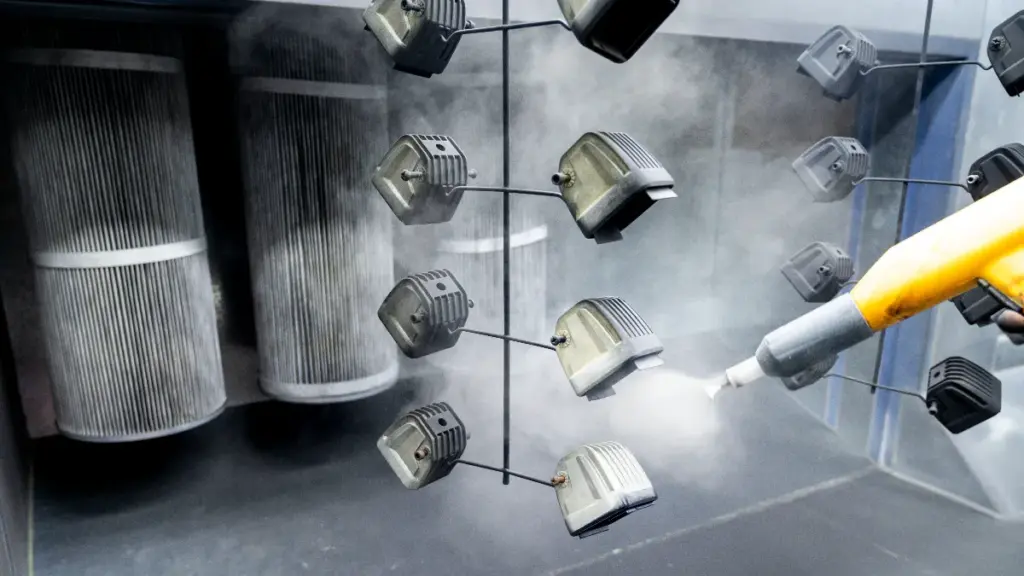
La calidad del recubrimiento en polvo depende de un tratamiento previo adecuado, incluyendo limpieza, desengrasar, y revestimiento de conversión. Sin estos pasos, Incluso un buen sistema de recubrimiento puede fallar prematuramente bajo exposición a los rayos UV y la humedad..
La calidad del montaje también juega un papel clave. Ajuste preciso de juntas, lentes, y el hardware ayuda a mantener un sellado estable y una alineación estructural. Un control deficiente del montaje a menudo provoca puntos de sellado débiles y corrosión prematura en las juntas o bordes..
También explicamos este concepto con más detalle en nuestro artículo sobre Acabado superficial para piezas de fundición a presión.
Su socio certificado para piezas complejas de fundición a presión
Soporte de ingeniería y revisión de DFM
Un sólido soporte de ingeniería garantiza que una fábrica de fundición a presión de carcasas de alumbrado público pueda convertir los conceptos de diseño en conceptos estables., Productos fabricables con riesgo controlado y calidad constante..
Por qué DFM determina la confiabilidad a largo plazo
DFM define si un diseño se puede producir a escala sin introducir defectos ocultos durante la fundición o el mecanizado.. Conecta la intención del diseño con los límites reales de fabricación..
Ayuda a reducir riesgos clave de producción, como defectos de fundición causados por una geometría deficiente., inestabilidad del sellado debido al diseño de interfaz débil, y desequilibrio térmico causado por rutas de calor ineficientes.
Las fábricas sin una revisión DFM estructurada a menudo pasan directamente de los dibujos a las herramientas. Esto generalmente lleva a que los problemas se descubran solo después de que comienza la producción en masa., cuando los costos de corrección son mucho más altos.
Si quieres entender esto con más detalle, También puedes leer nuestra guía en Las reglas clave del DFM para carcasas de luces fundidas a presión.
Optimización térmica y de sellado en la etapa de diseño
Los sistemas térmicos y de sellado deben desarrollarse juntos porque se afectan directamente entre sí en condiciones exteriores.. Un diseño resistente garantiza tanto la disipación del calor como la estabilidad a prueba de agua bajo estrés a largo plazo..
Las áreas clave de enfoque de ingeniería incluyen:
- Diseño de ruta de calor: Garantiza una transferencia eficiente desde la placa LED a las aletas de la carcasa.
- Estructura de compresión de juntas: Mantiene una presión de sellado estable en todas las interfaces.
Al mismo tiempo, El diseño IP también debe considerar la dirección del flujo de agua y las rutas de drenaje.. Sin coordinación entre estructuras térmicas y de sellado., La carcasa puede funcionar bien en las pruebas, pero se degrada más rápido en entornos exteriores reales..
Viabilidad de herramientas y control de riesgos de producción en masa
El diseño de herramientas determina si una carcasa puede escalar hasta alcanzar una producción en masa estable sin defectos repetidos ni variaciones de calidad..
Esta etapa se centra en el control temprano de riesgos mediante la validación de ingeniería antes de cortar cualquier acero.. La simulación del flujo del molde ayuda a predecir el comportamiento del llenado y reducir el riesgo de porosidad., mientras que los ángulos de inclinación garantizan un desmoldeo suave. Al mismo tiempo, El espesor de la pared está equilibrado para evitar la contracción y la deformación durante el enfriamiento..
Una fábrica capaz completa estas evaluaciones antes de que comience la fabricación del molde.. Este paso mejora la estabilidad de la producción y afecta directamente el costo a largo plazo., tasa de rendimiento, y consistencia.
Sistemas de inspección para carcasas de iluminación
Los sistemas de inspección confiables garantizan que una fábrica de fundición a presión de carcasas de alumbrado público pueda detectar defectos antes de que los productos entren en servicio al aire libre..
Descripción general del sistema de inspección funcional
Los sistemas de inspección confiables garantizan que una fábrica de fundición a presión de carcasas de alumbrado público pueda controlar los defectos en todas las etapas de producción., no sólo en el envío final. Un sistema completo integra precisión dimensional, estabilidad del proceso, y validación ambiental en un flujo de calidad continuo.
| Categoría de inspección | Método / Herramienta | Propósito principal | Riesgo clave controlado |
|---|---|---|---|
| Control de material entrante | Pruebas de composición de aleaciones, análisis de impurezas | Garantizar la estabilidad de la materia prima. | Previene el aluminio débil y el riesgo de corrosión. |
| Monitoreo en proceso | Control de presión de fundición, seguimiento de temperatura, controles de mecanizado | Mantener la estabilidad del proceso durante la producción. | Reduce la porosidad, contracción, deriva dimensional |
| Verificación dimensional | MMC, 3D escaneo óptico, medidores manuales | Garantizar la precisión geométrica y la repetibilidad | Previene fallas de sellado y desajustes de ensamblaje |
| Inspección de calidad de superficie | Medición del espesor del recubrimiento, pruebas de adherencia | Validar el rendimiento del recubrimiento en polvo | Evita pelar, abrasador, corrosión temprana |
| Ambiental & Pruebas funcionales | pruebas de propiedad intelectual, ciclo térmico, vibración, simulación de corrosión | Simule condiciones reales al aire libre | Garantiza durabilidad a largo plazo en uso en campo. |
Capacidad, Cantidad mínima de pedido, y evaluación de entrega
La capacidad de producción en una fábrica de fundición a presión para viviendas de alumbrado público no está definida únicamente por la producción máxima, sino por la consistencia con la que puede soportar una entrega estable en condiciones reales del proyecto..
Capacidad de producción real versus producción teórica de la máquina
La capacidad de producción real a menudo difiere de las especificaciones de la máquina porque la producción real de la fábrica depende de toda la cadena de producción., no equipo individual.
La capacidad suele estar limitada por cuellos de botella posteriores más que por las propias máquinas de fundición.. Velocidad de mecanizado CNC, rendimiento de la línea de recubrimiento, y los ciclos de mantenimiento del molde afectan directamente la estabilidad real de la producción.. Incluso una fábrica con muchas máquinas puede tener dificultades para mantener una producción continua si estas etapas no están equilibradas..
Estrategia MOQ y su impacto en la planificación de proyectos
La estructura MOQ influye directamente en el control de costos, flexibilidad de producción, y planificación de inventarios para proyectos de iluminación..
En la mayoría de las fábricas de fundición a presión, MOQ no es un número fijo sino un sistema escalonado que refleja el riesgo de producción y el costo de instalación.. Los pedidos de muestra generalmente admiten pruebas de validación con cantidades flexibles.. Las ejecuciones piloto se utilizan para confirmar la estabilidad del proceso antes de escalarlo.. Los MOQ de producción en masa están optimizados para lograr eficiencia y reducir los costos unitarios..
Comprender esta estructura ayuda a los compradores a evitar el exceso de existencias y, al mismo tiempo, garantiza la preparación de la producción para la implementación gradual del proyecto..
Estabilidad de entrega y control de riesgos de la cadena de suministro
El rendimiento de las entregas refleja qué tan bien una fábrica gestiona la planificación de la producción., coordinación interna, y fluctuaciones estacionales de la demanda.
Los factores clave de evaluación incluyen:
- Consistencia del tiempo de entrega: rendimiento de entrega estable en pedidos repetidos
- Control de temporada alta: capacidad de mantener la producción durante períodos de alta demanda
- Soporte de envío por fases: flexibilidad para adaptarse a los cronogramas de instalación del proyecto
La planificación de entrega inestable puede crear retrasos en cascada en proyectos de iluminación exterior, especialmente cuando la instalación depende del suministro por lotes sincronizado.
Banderas rojas de proveedores en la selección de fábricas
La identificación temprana de riesgos es fundamental al evaluar una fábrica de fundición a presión para viviendas de alumbrado público., ya que muchos fracasos de proyectos a largo plazo surgen de señales débiles de capacidad de los proveedores.
Banderas rojas comerciales que indican una confiabilidad débil
El comportamiento comercial a menudo refleja cómo una fábrica gestiona la responsabilidad de ingeniería y la cooperación a largo plazo..
- Estructura de precios opaca: Oculta el desglose de costes de las herramientas., fundición, y tratamiento de superficies, reducir la transparencia en la evaluación de proveedores
- Términos de propiedad de herramientas poco claros: crea riesgo de disputas por el control del moho y una débil protección de la inversión del comprador
- Promesas de garantía poco realistas: indica poca confianza en la durabilidad del recubrimiento y la estabilidad de la fundición a largo plazo
Estas señales generalmente indican un compromiso limitado a largo plazo y una débil responsabilidad del proceso..
Brechas de capacidad técnica en las operaciones de fundición a presión
La capacidad técnica determina directamente si el diseño de una vivienda se puede convertir en una calidad de producción en masa estable..
La falta de capacidad de simulación del flujo del molde aumenta el riesgo de porosidad y llenado incompleto durante la fundición.. La selección inadecuada de la máquina para carcasas grandes a menudo conduce a una densidad inestable y un rendimiento de fundición inconsistente. La experiencia limitada en aplicaciones de iluminación también debilita la comprensión de los requisitos de gestión térmica y sellado IP..
Estas brechas afectan directamente la estabilidad de la producción y la confiabilidad del campo a largo plazo..
Debilidades del sistema de calidad y trazabilidad
Un estructurado sistema de calidad garantiza que se pueda rastrear cada problema de producción, analizado, y corregido en la fuente.
- Sin CMM ni herramientas de inspección avanzadas: Reduce la precisión en el control dimensional de las interfaces de sellado y montaje.
- Sin sistema de trazabilidad de materiales.: evita el seguimiento de la causa raíz a nivel de lote para problemas de aleación o corrosión
- Proceso de acción correctiva débil: Las fallas se repiten porque el análisis de la causa raíz no se implementa sistemáticamente.
Sin trazabilidad y estructura correctiva, Los pequeños defectos pueden convertirse en fallos repetidos a nivel de lote..
Preguntas frecuentes
¿Cuál es la diferencia entre un proveedor de fundición y una verdadera fábrica de fundición a presión para viviendas de alumbrado público??
Un proveedor de fundición sólo produce piezas de aluminio en bruto., mientras que una fábrica calificada de fundición a presión para carcasas de alumbrado público administra el sistema completo, incluidas las herramientas., mecanizado, tratamiento de superficies, y validación de ingeniería. Sólo las fábricas con control total del proceso pueden garantizar una confiabilidad exterior constante.
¿Cómo verifican los compradores OEM si una fábrica puede respaldar proyectos de iluminación municipal a largo plazo??
Los compradores deben revisar no solo las muestras sino también los registros de estabilidad de la producción., capacidad de respuesta de ingeniería, y consistencia pasada de la producción en masa. Una fábrica confiable puede demostrar una producción estable en múltiples lotes con variación controlada de dimensiones y recubrimiento..
¿Qué documentos de ingeniería debe proporcionar una fábrica de fundición a presión antes de la producción en masa??
Una fábrica capaz debe proporcionar informes de análisis del flujo del molde., Comentarios de DFM, planos de inspección dimensional, y datos de validación del proceso de recubrimiento. Estos documentos muestran si el diseño ha sido completamente verificado en cuanto a capacidad de fabricación y estabilidad a largo plazo..
¿Qué debo preguntarle a un fabricante de fundición a presión para carcasas de alumbrado público??
Centrarse en preguntas que verifiquen sus capacidades técnicas y de calidad.. Pregunte por su aleación de aluminio recomendada., procedimientos de trazabilidad de materiales, y opciones de protección contra la corrosión disponibles. Consulte sobre sus tolerancias dimensionales estándar., políticas de vida de herramientas, y certificaciones de calidad. También es importante comprender sus métodos de inspección para detectar defectos comunes como la porosidad., su capacidad total de producción, y qué operaciones secundarias gestionan internamente.
¿Cómo sé si un proveedor puede escalar la producción para grandes proyectos??
Evaluar su capacidad de producción analizando las tasas de utilización de sus máquinas., capacidad de herramientas, y posibles cuellos de botella en procesos posteriores como el mecanizado o el recubrimiento. Revisar su cadena de suministro de materias primas para asegurarse de que pueda soportar mayores volúmenes.. Un proveedor escalable debe tener un sistema de calidad que mantenga el rendimiento bajo carga., un fuerte equipo de ingeniería, y un historial documentado de aumento exitoso de la producción para otros clientes.
Pensamientos finales
La evaluación de una fábrica de fundición a presión para viviendas de alumbrado público requiere una visión a nivel de sistema en lugar de una simple comparación de precios.. El rendimiento real depende de qué tan bien funcione la capacidad de ingeniería., estabilidad del proceso, sistemas de inspección, y el control de entrega trabajan juntos en toda la producción.
Para proyectos de iluminación exterior a largo plazo, Elegir un socio de fabricación confiable reduce los riesgos de fallas en el campo y mejora la estabilidad del ciclo de vida.. Bian Diecast apoya este enfoque a través de controles procesos de fundición a presión, soporte de ingeniería estructurada, y calidad de producción constante para aplicaciones exigentes en exteriores.