Evaluating a street light housing die cast factory is critical when sourcing for outdoor lighting projects, especially where failure risk, thermal stability, and corrosion resistance directly affect long-term performance. Many buyers still face issues like inconsistent quality, poor sealing, and unstable delivery from unqualified suppliers.
This guide shows how to evaluate factories in a structured way, focusing on engineering capability, in-house production control, inspection systems, and delivery stability, helping OEM buyers and lighting brands reduce risk and select reliable long-term partners.
Street Light Housing Factory Evaluation Basics
Evaluating a street light housing die cast factory requires focusing on real system performance under heat, moisture, and corrosion conditions rather than price or sample appearance alone.
Why Price-Only Evaluation Leads to Field Failures
Focusing only on unit price often hides deeper engineering risks in a street light housing die cast factory, which only appear after installation. A low-cost housing may look acceptable at delivery but lacks stability in real outdoor environments.
Cheaper sourcing usually leads to weak thermal paths, unstable sealing, and poor coating control. Over time, these issues reduce LED lifespan and increase maintenance frequency in outdoor lighting systems produced by such suppliers.
Field failures are rarely sudden. They usually start with small performance gaps that gradually grow under continuous outdoor exposure. In most cases, the root cause can be traced back to early manufacturing and process control decisions.
The Role of Housing in System-Level Lighting Performance
A street light housing works as a structural and environmental control system, not just a protective shell. It directly affects heat flow, sealing integrity, and mechanical alignment.
- Thermal regulation: Transfers heat from LED modules to ambient air and prevents overheating
- Environmental sealing: Blocks moisture, dust, and pollutants from reaching internal components
- Mechanical stability: Maintains alignment under wind load and long-term vibration
If any of these functions weaken, the entire luminaire performance becomes unstable and unpredictable in field use.
Core Evaluation Dimensions Buyers Must Understand
A structured evaluation helps buyers identify whether a factory can support long-term outdoor projects instead of short-term sample delivery.
- Material stability: Consistent aluminum alloy composition with controlled impurities for durability
- Process control: Stable die casting parameters and mold management to avoid porosity and deformation
- Dimensional accuracy: Repeatable machining precision across batches to ensure sealing and fit consistency
- Outdoor reliability mindset: Understanding of IP protection, thermal cycling, and corrosion behavior in real environments
These four dimensions define whether a supplier can move beyond basic manufacturing and support reliable infrastructure-grade lighting projects.
You may interested in: Top 10 Aluminum Die Casting Suppliers in 2026
In-House Capabilities Buyers Should Check
Evaluating a street light housing die cast factory requires checking whether key processes are controlled in-house for stable and traceable quality.
Die Casting and Tooling Control as the Quality Foundation
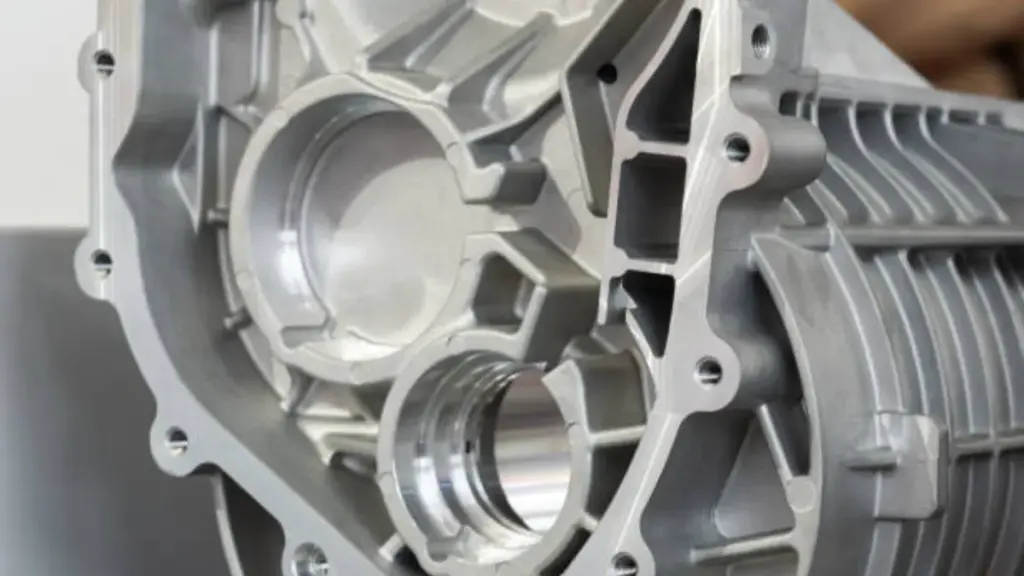
Die casting defines the structural strength and internal soundness of the housing. If this process is unstable, later improvements cannot fully fix hidden defects.
A capable factory should ensure stable control in core casting conditions:
- Machine stability: consistent tonnage control for large and complex housings
- Tooling maintenance: regular mold servicing to reduce wear-related defects
- Process control: stable injection parameters to prevent shrinkage and cold shuts
When these controls are weak, internal porosity may not be visible at the beginning. However, under thermal cycling and vibration in outdoor environments, it can gradually expand into cracking or sealing failure.
CNC Machining and Sealing Surface Precision
Machining quality directly determines whether the housing can maintain long-term IP performance. Even small deviations on gasket surfaces can change compression behavior and reduce sealing stability.
Key requirements include:
- Sealing flatness control: ensures uniform gasket compression
- Tight dimensional tolerance: stabilizes mounting and assembly accuracy
- Batch repeatability: keeps performance consistent across large production runs
If machining accuracy is inconsistent, gasket pressure will not distribute evenly. This creates weak points along the sealing interface, which often leads to slow moisture ingress rather than immediate failure.
Surface Treatment and Assembly Integration Capability
Surface finishing and assembly define the final durability of a street light housing. At this stage, small process variations can directly affect long-term corrosion resistance and sealing stability.
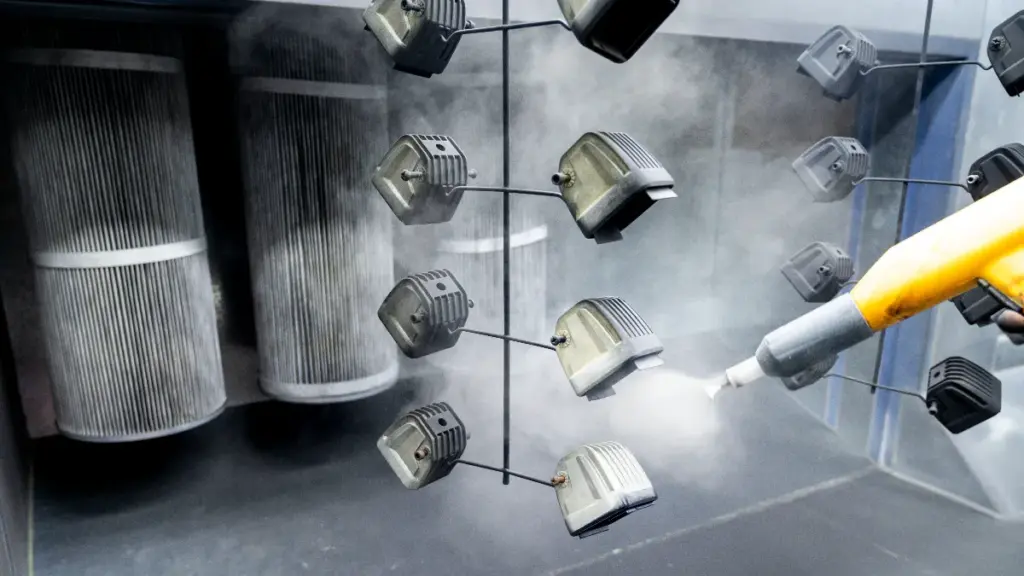
Powder coating quality relies on proper pretreatment, including cleaning, degreasing, and conversion coating. Without these steps, even a good coating system may fail early under UV and humidity exposure.
Assembly quality also plays a key role. Accurate fitting of gaskets, lenses, and hardware helps maintain stable sealing and structural alignment. Poor assembly control often leads to weak sealing points and early corrosion at joints or edges.
We also explain this concept further in our article about Surface Finish for Die Casting Parts.
Your Certified Partner for Complex Die-Cast Parts
Engineering Support and DFM Review
Strong engineering support ensures a street light housing die cast factory can convert design concepts into stable, manufacturable products with controlled risk and consistent quality.
Why DFM Determines Long-Term Reliability
DFM defines whether a design can be produced at scale without introducing hidden defects during casting or machining. It connects design intent with real manufacturing limits.
It helps reduce key production risks such as casting defects caused by poor geometry, sealing instability from weak interface design, and thermal imbalance caused by inefficient heat paths.
Factories without structured DFM review often move directly from drawings to tooling. This usually leads to problems being discovered only after mass production starts, when correction costs are much higher.
If you want to understand this in more detail, you can also read our guide on the Key DFM Rules for Die Cast Light Housings.
Thermal and Sealing Optimization in Design Stage
Thermal and sealing systems must be developed together because they directly affect each other in outdoor conditions. A strong design ensures both heat dissipation and waterproof stability under long-term stress.
Key engineering focus areas include:
- Heat path design: Ensures efficient transfer from LED board to housing fins
- Gasket compression structure: Maintains stable sealing pressure across interfaces
At the same time, IP design must also consider water flow direction and drainage paths. Without coordination between thermal and sealing structures, the housing may perform well in testing but degrade faster in real outdoor environments.
Tooling Feasibility and Mass Production Risk Control
Tooling design determines whether a housing can scale into stable mass production without repeated defects or quality variation.
This stage focuses on early risk control through engineering validation before any steel is cut. Mold flow simulation helps predict filling behavior and reduce porosity risk, while draft angles ensure smooth demolding. At the same time, wall thickness is balanced to avoid shrinkage and deformation during cooling.
A capable factory completes these evaluations before mold fabrication begins. This step improves production stability and directly affects long-term cost, yield rate, and consistency.
Inspection Systems for Light Housings
Reliable inspection systems ensure a street light housing die cast factory can detect defects before products enter outdoor service.
Functional Inspection System Overview
Reliable inspection systems ensure a street light housing die cast factory can control defects across all production stages, not only at final shipment. A complete system integrates dimensional accuracy, process stability, and environmental validation into one continuous quality flow.
| Inspection Category | Method / Tool | Main Purpose | Key Risk Controlled |
|---|---|---|---|
| Incoming Material Control | Alloy composition testing, impurity analysis | Ensure raw material stability | Prevents weak aluminum and corrosion risk |
| In-Process Monitoring | Casting pressure control, temperature tracking, machining checks | Maintain process stability during production | Reduces porosity, shrinkage, dimensional drift |
| Dimensional Verification | CMM, 3D optical scanning, manual gauges | Ensure geometric accuracy and repeatability | Prevents sealing failure and assembly misfit |
| Surface Quality Inspection | Coating thickness measurement, adhesion testing | Validate powder coating performance | Avoids peeling, blistering, early corrosion |
| Environmental & Functional Testing | IP testing, thermal cycling, vibration, corrosion simulation | Simulate real outdoor conditions | Ensures long-term durability in field use |
Capacity, MOQ, and Delivery Evaluation
Production capability in a street light housing die cast factory is not defined by maximum output alone, but by how consistently it can support stable delivery under real project conditions.
Real Production Capacity vs Theoretical Machine Output
Actual production capacity often differs from machine specifications because real factory output depends on the full production chain, not individual equipment.
Capacity is usually limited by downstream bottlenecks rather than casting machines themselves. CNC machining speed, coating line throughput, and mold maintenance cycles all directly affect real output stability. Even a factory with many machines may struggle to maintain continuous production if these stages are not balanced.
MOQ Strategy and Its Impact on Project Planning
MOQ structure directly influences cost control, production flexibility, and inventory planning for lighting projects.
In most die casting factories, MOQ is not a fixed number but a tiered system that reflects production risk and setup cost. Sample orders usually support validation testing with flexible quantity. Pilot runs are used to confirm process stability before scaling. Mass production MOQs are optimized for efficiency and unit cost reduction.
Understanding this structure helps buyers avoid overstocking while ensuring production readiness for phased project rollout.
Delivery Stability and Supply Chain Risk Control
Delivery performance reflects how well a factory manages production planning, internal coordination, and seasonal demand fluctuations.
Key evaluation factors include:
- Lead time consistency: stable delivery performance across repeat orders
- Peak season control: ability to maintain output during high-demand periods
- Phased shipment support: flexibility to match project installation schedules
Unstable delivery planning can create cascading delays in outdoor lighting projects, especially when installation depends on synchronized batch supply.
Supplier Red Flags in Factory Selection
Early risk identification is critical when evaluating a street light housing die cast factory, as many long-term project failures start from weak supplier capability signals.
Commercial Red Flags That Indicate Weak Reliability
Commercial behavior often reflects how a factory manages engineering responsibility and long-term cooperation.
- Opaque pricing structure: hides cost breakdown of tooling, casting, and surface treatment, reducing transparency in supplier evaluation
- Unclear tooling ownership terms: creates risk of mold control disputes and weak protection of buyer investment
- Unrealistic warranty promises: indicates low confidence in coating durability and long-term casting stability
These signals usually indicate limited long-term commitment and weak process accountability.
Technical Capability Gaps in Die Casting Operations
Technical capability directly determines whether a housing design can be converted into stable mass production quality.
Missing mold flow simulation capability increases risk of porosity and incomplete filling during casting. Improper machine selection for large housings often leads to unstable density and inconsistent casting performance. Limited experience in lighting applications also weakens understanding of thermal management and IP sealing requirements.
These gaps directly affect production stability and long-term field reliability.
Quality System and Traceability Weaknesses
A structured quality system ensures every production issue can be traced, analyzed, and corrected at the source.
- No CMM or advanced inspection tools: reduces accuracy in dimensional control for sealing and mounting interfaces
- No material traceability system: prevents batch-level root cause tracking for alloy or corrosion issues
- Weak corrective action process: failures repeat because root cause analysis is not systematically implemented
Without traceability and corrective structure, small defects can escalate into repeated batch-level failures.
Frequently Asked Questions
What is the difference between a casting supplier and a true street light housing die cast factory?
A casting supplier only produces raw aluminum parts, while a qualified street light housing die cast factory manages the full system including tooling, machining, surface treatment, and engineering validation. Only factories with full process control can ensure consistent outdoor reliability.
How do OEM buyers verify if a factory can support long-term municipal lighting projects?
Buyers should review not only samples but also production stability records, engineering response capability, and past mass production consistency. A reliable factory can demonstrate stable output across multiple batches with controlled dimensional and coating variation.
What engineering documents should a die cast factory provide before mass production?
A capable factory should provide mold flow analysis reports, DFM feedback, dimensional inspection plans, and coating process validation data. These documents show whether the design has been fully verified for manufacturability and long-term stability.
What should I ask a die casting manufacturer for street light housings?
Focus on questions that verify their technical and quality capabilities. Ask about their recommended aluminum alloy, material traceability procedures, and available corrosion protection options. Inquire about their standard dimensional tolerances, tooling life policies, and quality certifications. It is also important to understand their inspection methods for common defects like porosity, their total production capacity, and which secondary operations they manage in-house.
How do I know if a supplier can scale production for large projects?
Evaluate their production capacity by analyzing their machine utilization rates, tooling capacity, and potential bottlenecks in downstream processes like machining or coating. Review their supply chain for raw materials to ensure it can support higher volumes. A scalable supplier should have a quality system that maintains performance under load, a strong engineering team, and a documented history of successfully ramping up production for other customers.
Final Thoughts
Evaluating a street light housing die cast factory requires a system-level view rather than a simple price comparison. Real performance depends on how well engineering capability, process stability, inspection systems, and delivery control work together across production.
For long-term outdoor lighting projects, choosing a reliable manufacturing partner reduces field failure risks and improves lifecycle stability. Bian Diecast supports this approach through controlled die casting processes, structured engineering support, and consistent production quality for demanding outdoor applications.