In aluminum die casting production, the mold is your money printer. Every hour it’s down costs you dearly—that’s a fact. So keeping your molds running longer and more reliably is the top priority for every die caster.
The working environment of a die casting mold is nothing short of hellish. The cavity surface repeatedly contacts molten aluminum at 600–700°C, then is rapidly cooled by release agents and water. Thermal cycling, high-pressure impact, aluminum flow erosion, soldering… under these brutal conditions, mold steel faces constant threats: thermal fatigue cracking, chipping, edge collapse, erosion, and soldering.
To withstand all this, the mold steel itself must be exceptional. Our two most commonly used premium materials—H13 ESR and 8418—how do you choose between them? Let’s break it down from a practical die casting perspective.
| Property | H13 ESR | 8418 |
|---|---|---|
| Thermal Fatigue Resistance | Excellent | Excellent to superior |
| Toughness | Excellent | Very high |
| Hot Hardness | Excellent | Excellent |
| Thermal Conductivity | Good | Good to very good |
| Resistance to Heat Checking | Very good | Excellent |
| Large Die Applications | Suitable | Particularly suitable |
| Complex Die Geometry | Suitable | Strong choice |
| Application History | Very extensive | Increasing use in demanding applications |
| Cost | More economical | Generally higher |
| Best Use | Balanced performance and cost | High-demand, extended die-life applications |
Thermal Fatigue Resistance: The First Line of Defense
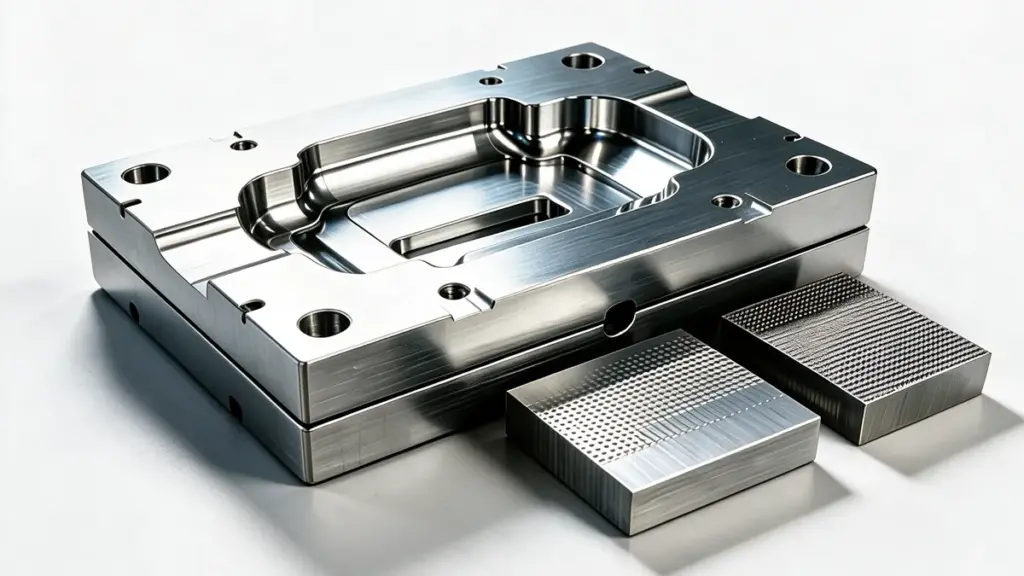
Let’s start with the bottom line:thermal fatigue cracking is the #1 cause of die casting mold failure, accounting for 60–70% of all failures.
The cavity surface expands and contracts repeatedly under thermal cycling. Thermal stress accumulates. When stress exceeds the material’s elastic limit, micro-cracks appear. This is “heat checking.” Once initiated, cracks only deepen until the mold is scrapped.
H13 ESR, thanks to its electro slag remelting (ESR) refinement, offers high purity, minimal internal defects, and already outperforms conventional electric-furnace steels in thermal fatigue—making it the mainstream choice.
8418, however, is engineered with a more explicit goal—enhanced thermal fatigue resistance. Its optimized chemistry (higher Mo, lower Si) effectively reduces thermal stress and inhibits heat checking. Some data suggest that reducing nitrogen content further improves the thermal fatigue performance of 8418.
Bottom line: If your mold is sensitive to heat checking, or if operating conditions are particularly severe, 8418’s thermal fatigue advantage becomes more pronounced.
Toughness & Impact Resistance: The Value of ESR
Die casting is a high-pressure process. Molds not only endure heat but also significant mechanical impact. Insufficient toughness leads to chipping, edge collapse, or even catastrophic cracking.
Both H13 ESR and 8418 utilize the electro slag remelting (ESR) process. The core value of this process is purification: reducing sulfur, phosphorus, and other impurities, minimizing non-metallic inclusions, and eliminating chemical segregation. The result is significantly improved cleanliness and is otropy, with a marked increase in toughness.
The difference: 8418 is an improved hot-work steel with higher toughness margins, making it particularly suitable for thick, large-section parts and complex mold geometries.
Red Hardness (Hot Hardness) & Erosion Resistance
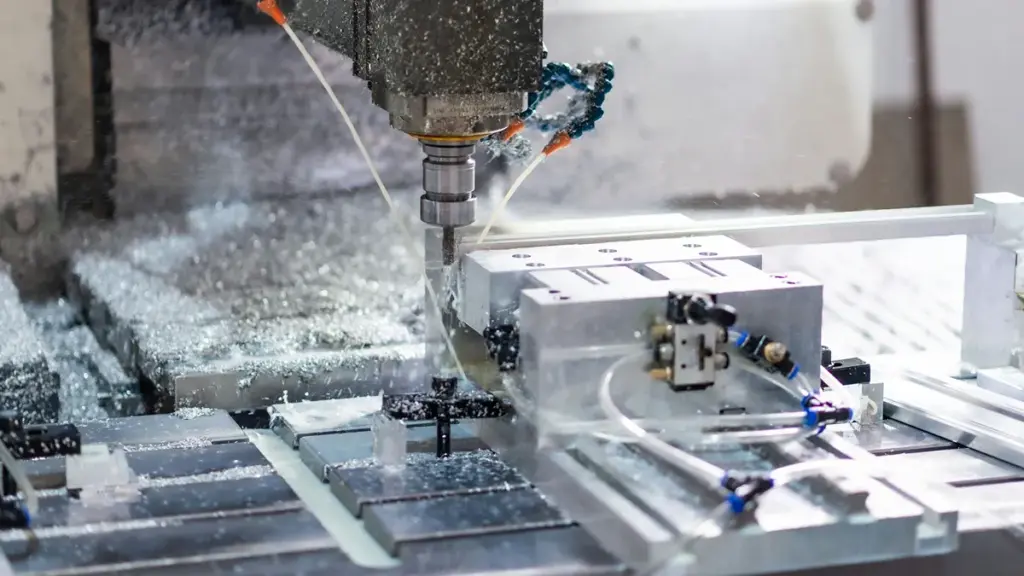
When molds are in prolonged contact with high-temperature molten aluminum, surface hardness cannot drop. Once softened, the cavity surface is eroded by aluminum flow, forming “pits,” losing dimensional accuracy, and potentially causing soldering.
H13 ESR’s red hardness is sufficient for the vast majority of aluminum die casting applications. However, 8418, with its elevated Mo content, delivers superior high-temperature strength and tempering resistance, maintaining excellent performance even in ultra-high-temperature conditions (e.g., 680°C environments).
Regarding resistance to molten aluminum erosion (soldering): the denser and cleaner the steel matrix, the better its ability to resist “attack” by molten aluminum. Both grades perform well in this regard, but 8418—with its superior high-temperature properties—offers a lower risk of soldering.
Other Key Properties: Thermal Conductivity, Polishability, Heat Treatment Stability
- Thermal Conductivity: 8418 adopts a low-Si design for higher thermal conductivity, enabling faster heat extraction from the cavity to reduce localized overheating and delay thermal cracking.
- Polishability: High-purity steel yields fewer surface defects after polishing. Both H13 ESR and 8418 offer good polishability to meet cosmetic surface requirements.
- Heat Treatment Stability: Both grades achieve uniform hardness (44–48 HRC for typical die casting applications) with minimal distortion. 8418’s hardenability is superior, making it ideal for large molds.
Selection Guide: H13 ESR or 8418?
Prioritize H13 ESR when:
- Conventional aluminum die castings with non-extreme geometries; expected mold life of 50,000–80,000 shots.
- Seeking a balanced solution between performance and cost-effectiveness.
- Preferring a mature, mainstream choice with extensive application history and controlled risk.
Consider upgrading to 8418 when:
- Large-tonnage machines (e.g., 1600T and above) producing thick, large-structural parts.
- Complex mold geometry with thin walls, deep cavities, sharp corners—features prone to cracking.
- Demanding longer mold life, reduced maintenance frequency, and extended production cycles.
- Thermal fatigue cracking is the primary cause of current mold failures.
To put it simply: H13 ESR is your “main force”—well-balanced, reliable, and cost-effective. 8418 is your “special forces”—built for tough battles, longer life, at a higher cost.The choice depends on your failure mode and cost equation.
Both are premium steels—choose wisely, and they become powerful tools for cost reduction and efficiency gains.
Our team of materials specialists is ready to help you select the optimal mold steel for your specific application. Contact us for a consultation.
Anna Deng
International Sales Manager
Phone: +86 18988689969
WhatsApp: +86 18988689969
WeChat: 18988689969 / denglijuan1025
E-Mail: sales@mag-cast.com