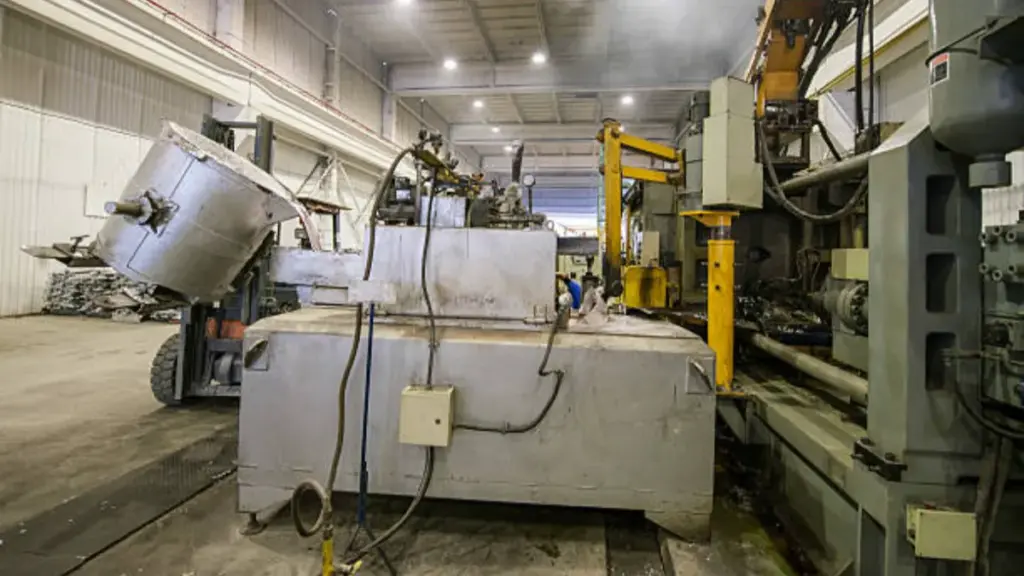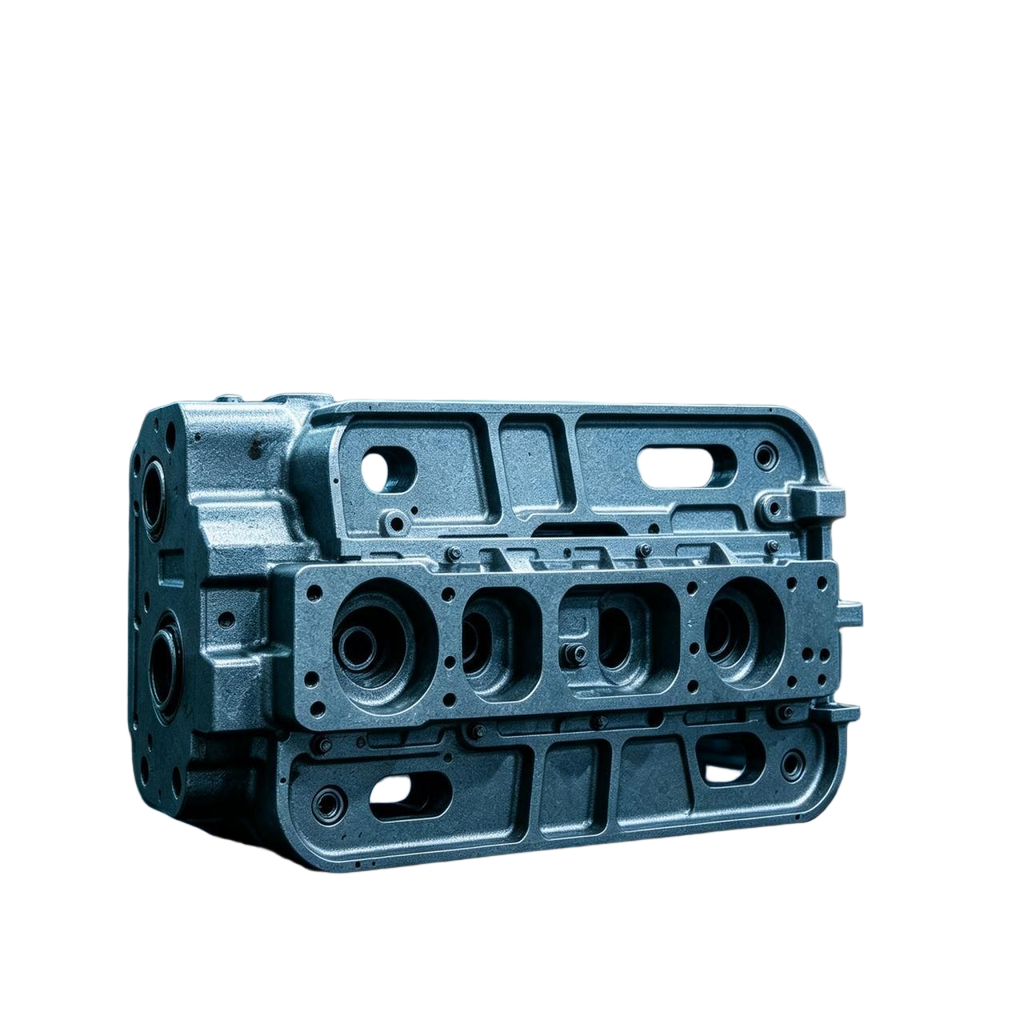
Axis counts get marketed like hotel star ratings, as if five is automatically better than three. For a die cast part, the honest question is narrower. Which faces do the features point at, and how many reclamps does the shop need to reach them? Our guide to what is 5 axis machining explains how five-axis machines work. This article turns that into a selection checklist for housings, brackets and ports machined after the die.
Each added rotary axis buys access, not accuracy. A 4-axis or 5-axis machine can hold cross-face relationships in one setup, and that often protects tolerance. But the axes themselves do not cut better; they remove repositioning and let a shorter, stiffer tool reach awkward geometry. Every axis also charges you in programming time, setup skill and hourly rate. The goal is to buy exactly as much access as the drawing needs.
Three Axis Machining and Its Limits
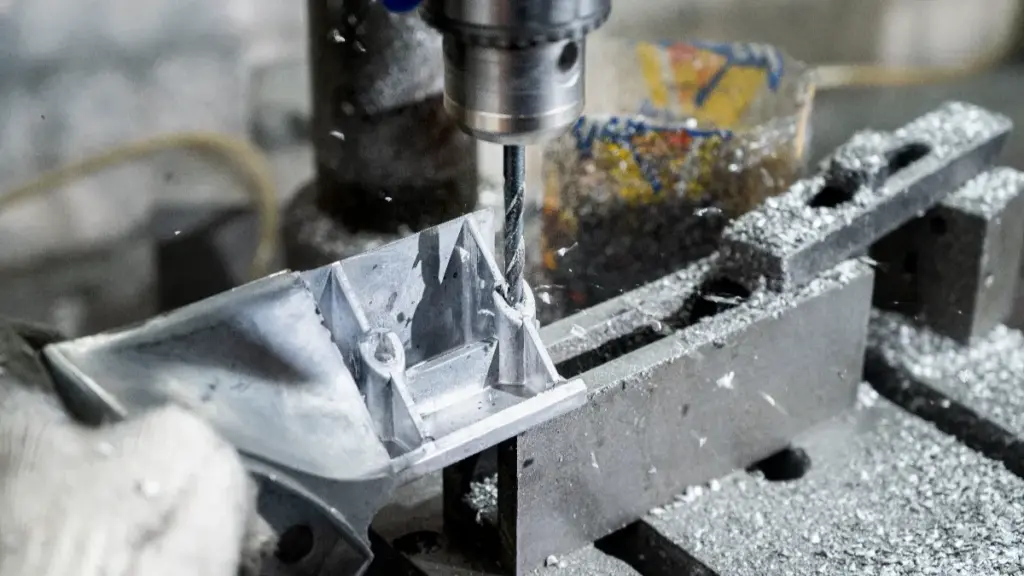
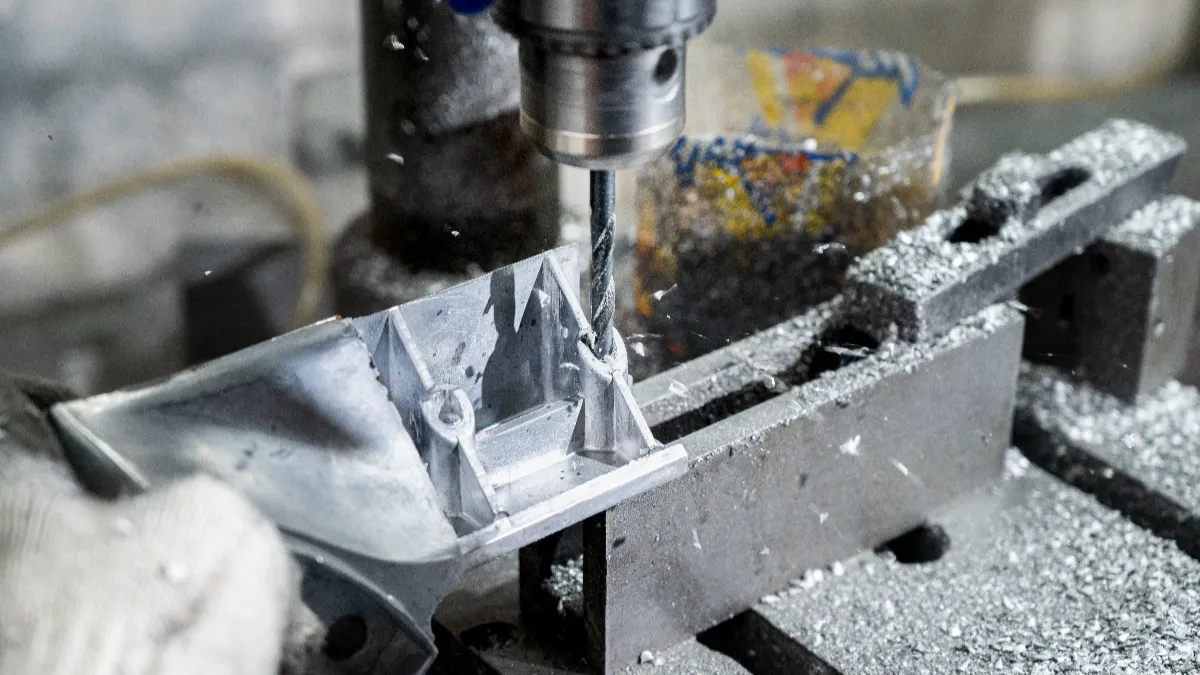
A 3-axis machine moves the cutter in X, Y and Z while the workpiece sits fixed in a vise or on a fixture. On die cast parts that covers facing, pocketing, drilling and tapping wherever the tool can drop straight onto the surface. Most features on most cast housings live on one or two faces, so 3-axis work carries the bulk of post-casting volume at the lowest hourly rate.
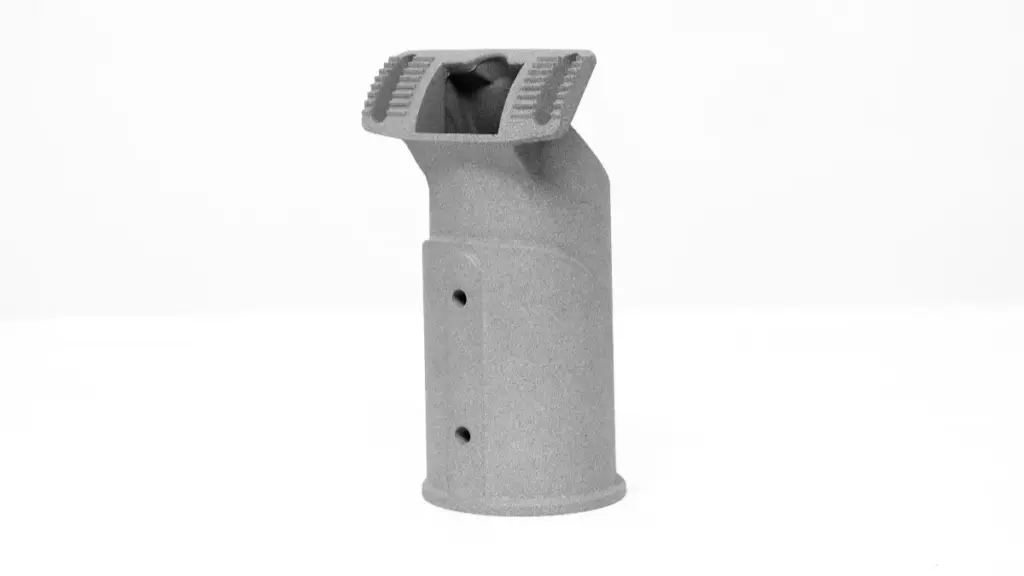
The limits are physical. Tool access means a straight path from the loaded direction, and deep pockets demand long tools that flex, vibrate and clear chips poorly. The fixture blocks whatever its jaws, clamps and risers cover, so a feature hidden under a clamp cannot be cut without a second setup. Side walls, angled faces and undercuts simply sit outside the machine’s reach.
Good design leans into this. Critical faces grouped on one side, with draft and fillets doing the shaping elsewhere, let a 3-axis cell machine the part cheap and fast. When most line items on a quote are 3-axis work, that is a sign of good design rather than limited capability.
The one-direction rule also explains why cast features matter so much here. A cored boss that already stands perpendicular to the top face needs only drilling. The same boss cast at an angle asks for a tilted fixture, a rotary table, or a machine that can lean the spindle. Buyers who keep functional faces square and grouped are quietly deleting axis cost from the part.
Four Axis Indexing Versus Continuous Cutting
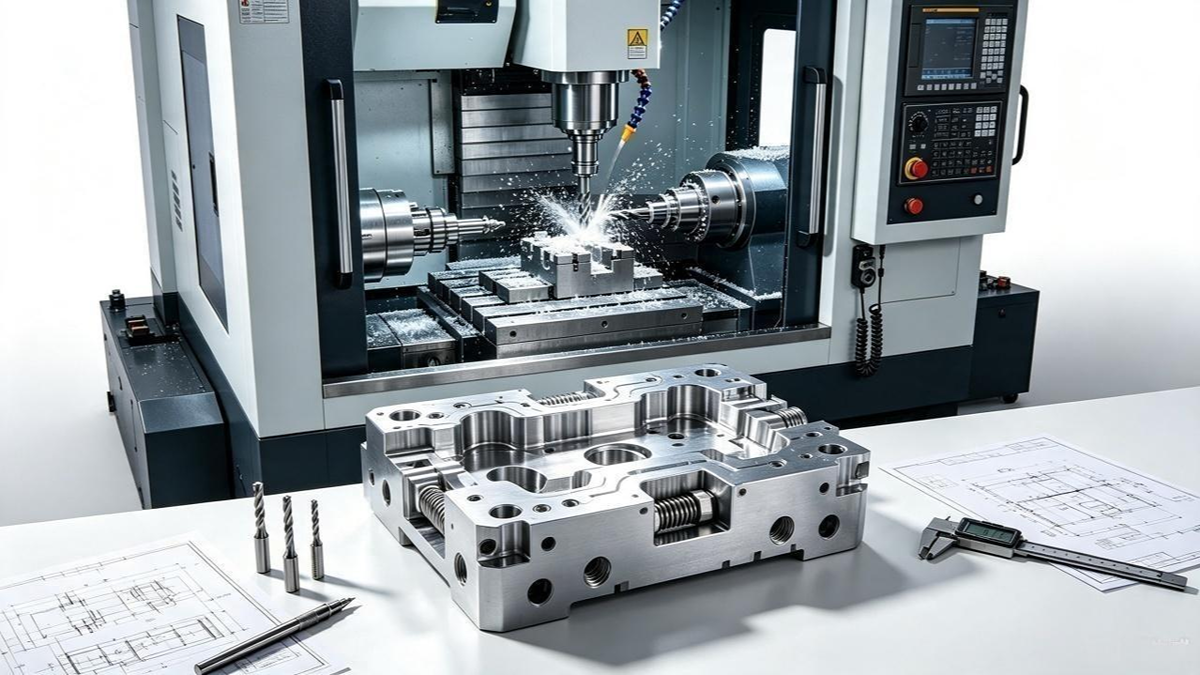
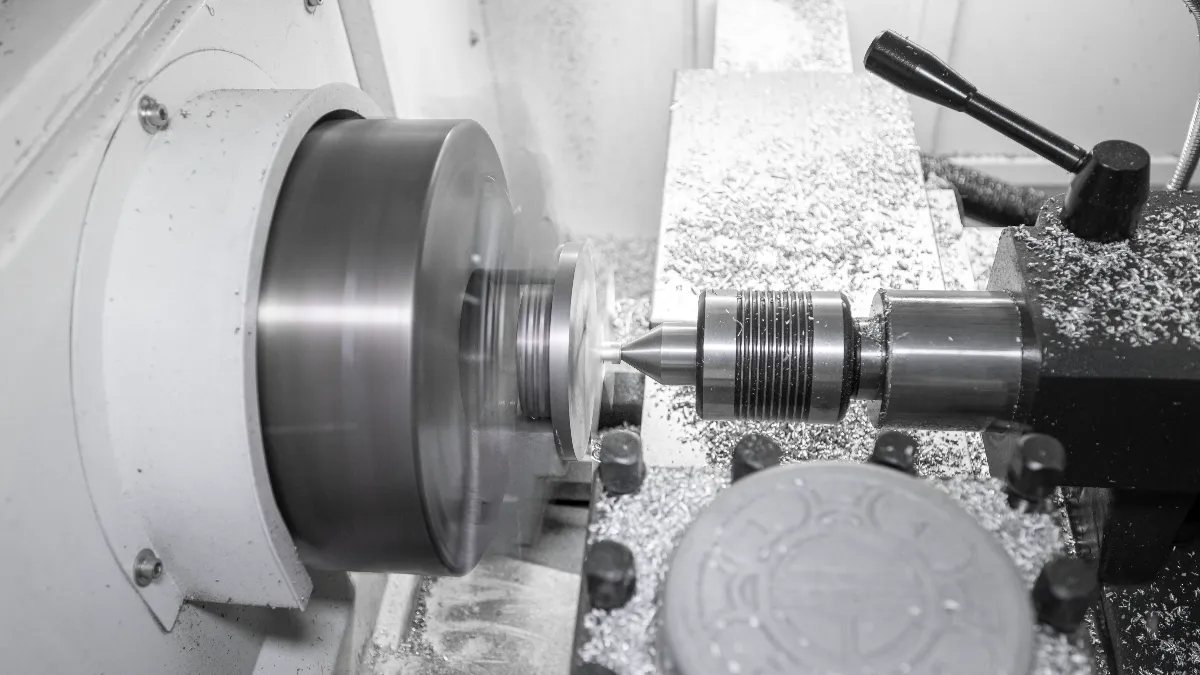
A 4-axis machine adds one rotary axis, and buyers should ask which kind of four-axis work they are getting. Indexing means the rotary table turns the part to a set angle, locks in place, and the three linear axes cut. Continuous four-axis machining coordinates the rotary axis with the linear axes during cutting. It requires a machine and control system that support the programmed simultaneous motion; live tooling or a mill-turn configuration is not inherently required.
The payoff of indexing is one setup instead of four. Cross-face relationships ride on fewer seatings, so the datum chain is broken less often than with repeated reclamping. That is not the same as the machine holding every relationship by itself. Rotary accuracy, calibration of the fourth axis, fixture rigidity and tool condition still decide the result at every position.
Fewer repeated clamps also take non-productive time out of the cycle, which can matter more than the cutting seconds themselves. Ask your supplier which mode a quote assumes, because an indexed four-sided pattern and a wrapped contour are different jobs on different hardware.
Indexing has a cost curve of its own. A four-sided pattern on a rotary table usually beats two reclamps on accuracy and floor time, while a two-sided bracket rarely justifies the fourth axis at all. Ask the shop to show the setup plan: how many positions, which datum each position references, and where the tolerance chain crosses a position change.
Five Axis 3+2 Positioning and Simultaneous Cutting
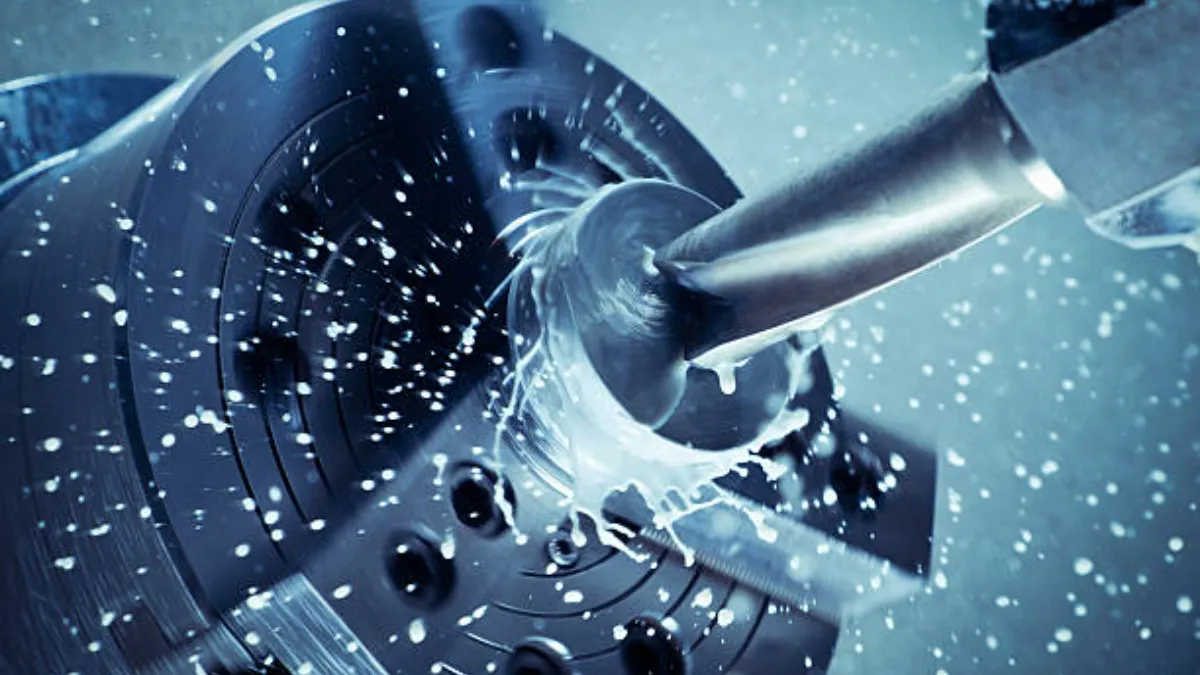
Five-axis marketing often blurs a distinction that changes your price. In 3+2 machining, the two rotary axes tilt the part to a fixed angle and lock, and the cutter then moves in three linear axes like a 3-axis machine. In simultaneous five-axis machining, all five axes move together so the tool follows a curved surface at a continuously controlled angle. The Autodesk guide to 5-axis machining lays out the two modes, and the Haas UMC-750SS page shows how builders specify them. Treat both as process background from equipment vendors, not as certification or endorsement of any specific machine.
For die cast parts, 3+2 is often the honest answer to an angled port or compound face. One tilt replaces a dedicated angled fixture and a second setup, with simpler programming than full simultaneous work. Simultaneous five-axis earns its keep on sculpted surfaces, on deep pockets where tilting keeps the tool short and stiff, and where one setup must consolidate three or four reclamps.
The trade is real. Five-axis programming demands skilled CAM engineering, and those machines carry the highest hourly rate of the three families. Reserving the discipline for features that earn it keeps the part cheap without keeping it wrong.
On die castings specifically, the simultaneous five-axis list is shorter than the brochure suggests. Structural housings mostly want flat machined lands, round bores and clean threads, and 3+2 or indexing reaches most of them. The genuine calls for continuous five-axis work are cosmetic curves, tapered walls cut in one pass, and deep pockets where a tilted short tool beats a long straight one.
Matching Axis Count to Part Features
Run your drawing through the table row by row. The entries are options to compare, not mandates, because fixtures and extra setups often buy the same access as a rotary axis for less money.
| Feature on the part | Options to compare | What decides |
|---|---|---|
| Mounting faces and top pockets | 3-axis machining | Tool access, workholding and required tolerances |
| Flange drilling and tapping | 3-axis machining when holes share an accessible direction | Hole orientation, tool clearance and positional tolerances |
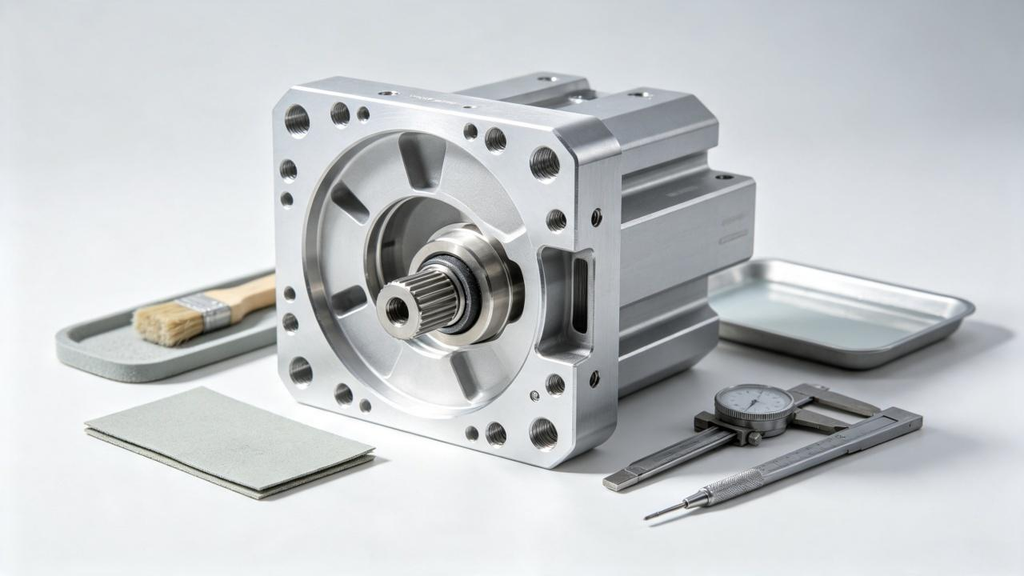
| Multiple faces around a housing | 4-axis indexing or multiple 3-axis setups | Reachable orientations, setup count and total machining cost |
| Cross-drilled sidewall ports | 4-axis indexing where accessible, or a separate 3-axis setup | Port direction, tool access and position relative to drawing datums |
| Angled ports and compound-angle faces | 3+2 five-axis positioning or angled fixtures on a 3-axis machine | Required orientations, fixture cost and repeatability |
| Curved or sculpted surfaces | 3-axis ball-nose machining, 3+2 positioning or simultaneous five-axis machining | Surface geometry, tool reach, finish requirements and cycle time |
The machine you need is the one your hardest feature actually demands, and the cheapest access route counts double. Bring the finished row list to quotation. A supplier who prices feature by feature will tell you which route each line took, and that record becomes your audit trail when the drawing changes. Watch what a shop does with the odd rows. If every answer is five-axis because that is the machine with the open slot, the mix is steering the quote rather than the drawing. A shop that runs 3-, 4- and 5-axis work can route each feature to the machine it deserves and say why in the line item. Our casting versus machining guide shows where this decision sits in the wider process choice.
Re-Clamps, Datums and Total Cost
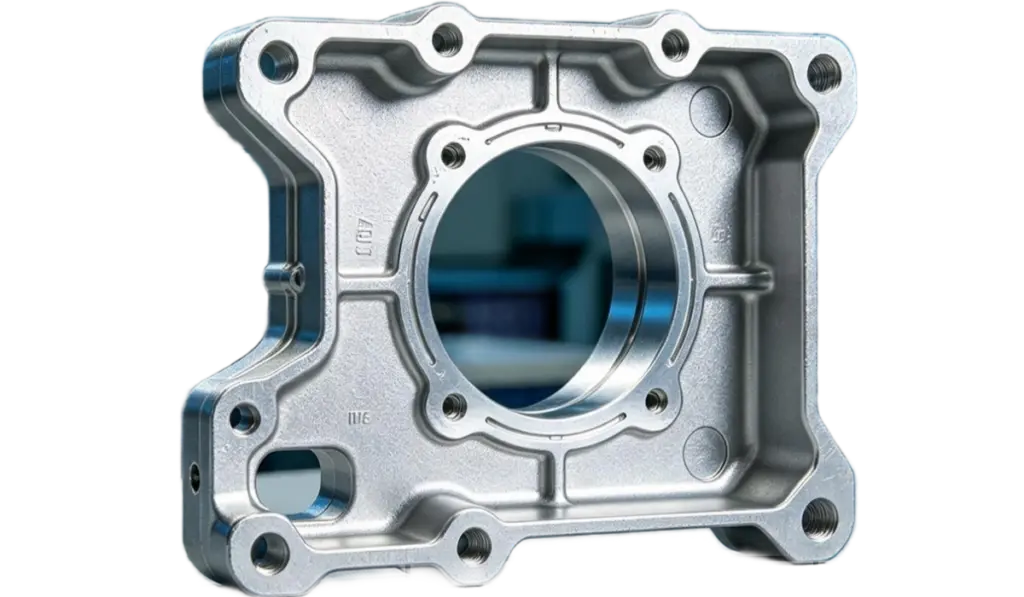
The quiet factor behind axis selection is setup count. Every seating adds a small variation, and every tolerance that crosses a setup boundary must absorb it. Keep the golden section of the drawing, the bores and faces that mate to other components, inside one setup wherever possible. Pin the as-cast locating datums so fixtures and inspection reference the same surfaces from the first part to the last.
That conversation starts before the mold exists. When the die design reserves flat, clampable lands for the fixtures to sit on, every later step inherits a clean reference. Our tool and die making guide explains how those early decisions carry through production. Retrofitting datums onto a finished casting means packing and shimming, and packed parts drift.
Treat cost as a total, not an hourly rate. A 5-axis hour is dearer than a 3-axis hour, but one five-axis setup can beat three 3-axis setups once programming, fixturing, reclamp labor and cross-face inspection are added up. The reverse is equally true. An angled fixture on a 3-axis cell routinely costs less than a five-axis program for a single tilted port.
Our capability pages list CNC tolerances down to ±0.02 mm on suitable features and as-cast tolerances down to ±0.004 in. Those figures describe achievable precision on the right feature with the right setup, not a promise any axis count delivers them everywhere. If your drawing carries aggressive cross-face calls, resolving them is usually a CNC machining datum-and-setup conversation rather than a machine upgrade.
Write the outcome into the purchase order. A clear package names the datum scheme, the allowed setup count, the machine route per feature and the report that must travel with each lot. Those four lines are the cheapest insurance against a late argument about who should have held which tolerance.
Anodizing Notes Before the Machining Plan
Coating requirements reach into the machining plan, so they belong in the DFM conversation. Where anodizing is required, confirm the alloy’s suitability, the coating specification, masking areas and final dimensional requirements before machining. Agree with the finishing supplier how coating growth will be allowed for on bores, threads and mating surfaces, because the film that grows varies with alloy and process. Type II and Type III films differ in thickness and wear role, and that choice lives in the finishing plan, not in the axis count. The same rule covers plating and powder coat: the supplier’s process sheet, not a rule of thumb, sets the allowance.
Questions Buyers Ask About Axis Counts
Is 5-axis machining always better than 3-axis for aluminum parts?
No. Five axes pay off on compound angles, sculpted surfaces, or one setup that replaces several reclamps. For a die cast part whose features face one direction, a 3-axis cell usually wins on total cost once programming, fixturing and inspection are counted. Better means matched to the geometry, not higher on the axis count.
What is the difference between 3+2 machining and five-axis machining?
In 3+2 work, the rotary axes tilt the part to a fixed angle and lock while the three linear axes cut. In simultaneous five-axis work, all five axes move together so the tool follows curved surfaces at a controlled angle. Many angled ports on die cast housings need only 3+2 positioning or an angled fixture, at lower cost.
How does anodizing affect machined dimensions on a die cast part?
Anodic films add thickness to every exposed surface, and the amount varies with alloy, spec and bath. Do not design from assumed growth values. Finish-machine critical features before coating, mask where needed, and confirm the allowance with your finishing supplier before the machining plan is priced.
Can one supplier handle both die casting and multi-axis CNC machining?
Yes, and it keeps the accuracy story in one place: datums planned once for casting, machining and inspection, and one team answering for cross-face results. It does not delete disputes by itself. Put the datum scheme, the setup plan and the acceptance checks in writing before the mold is cut.
Final Thoughts
Axis selection is an access question with a price attached. Which faces do the features point at, how many setups does that take, and what does the whole route cost once programming, fixturing and inspection join in? Answer those on paper during DFM and the machine choice usually picks itself. Three axes carry the bulk, indexing or a fixture handles the sides, and five axes appear only where a tilted port or a curve demands them.
Compare the Bian Diecast capability pages against your feature list, or send the drawing through our contact page. Ask the shop to state, per feature, the axis count, the setup plan and the tolerance route it priced. That answer sheet tells you more about fit than any machine list.