Every die casting program starts with a number that quietly decides everything downstream: tonnage des machines. The rating printed on a high pressure die casting machine, 200T or 1,250T for example, is its clamping force. That force holds the two die halves shut while molten aluminum is injected at speed. Choose too little and the die separates, flashes, and fights the process all day. Choose far too much and the part pays for machine capacity it did not need.
This guide explains how die casting machine tonnage is calculated from projected area, what the published machine classes actually mean, and which claims a buyer should confirm at quotation. The worked example is an assumption exercise, clearly labeled, not a recommendation for any specific part.
What Die Casting Machine Tonnage Measures
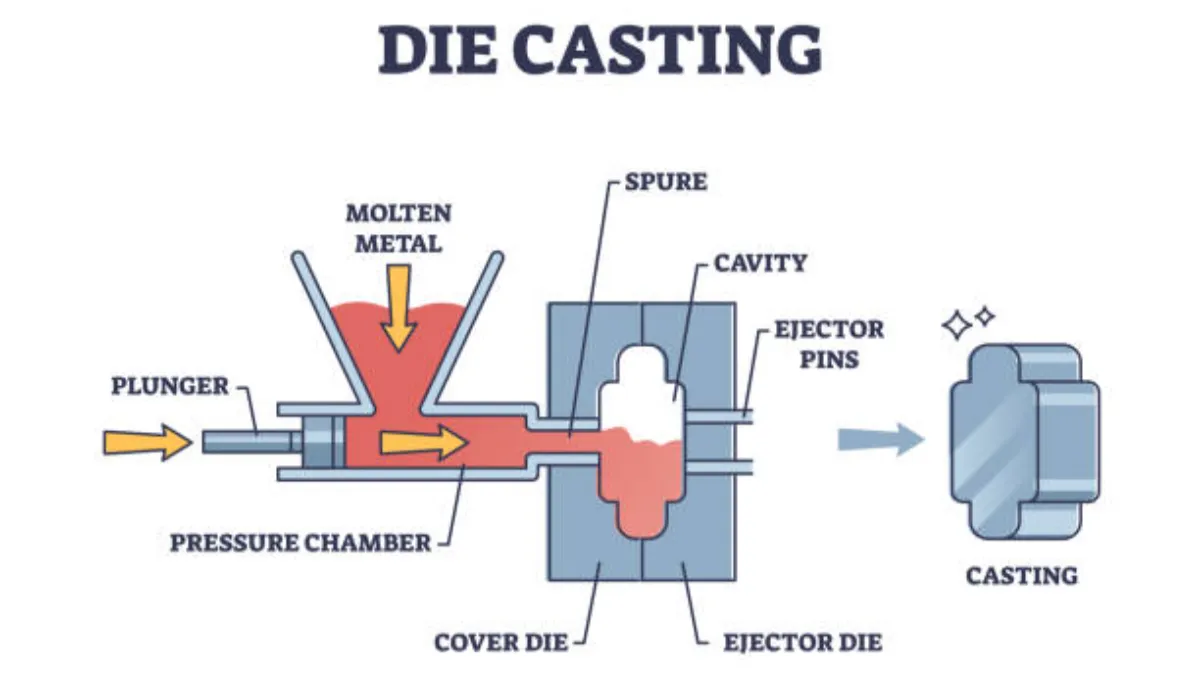
Tonnage is clamping force. It is not shot weight, not die size, and not a general power rating. Le NADCA industry FAQ states the same point. Machine sizes are given in tons, and the number refers to the force holding the die halves together when the machine is closed. Notre aluminum die casting explainer covers the process family behind these ratings.
During injection, metal pressure pushes on the areas that generate die-opening force. Mold engineering should confirm which cavity, runner, débordement, and shot-system areas contribute for the actual die. The machine must clamp harder than the metal pushes. If it does not, the halves separate by a fraction of a millimeter and molten aluminum escapes as flash. The part, the die parting line, and the cell’s uptime all pay for it.
The physics is simple: force equals pressure times area. What makes selection tricky is that the pressure is not one number. The melt fills the cavity at high velocity, and intensification pressure afterward commonly reaches 60–80 MPa on the projected area. Published area ratings differ between builders and models, so this article treats 40 MPa as a stated calculation assumption, not a universal reference pressure. À 40 MPa, one metric ton of clamping force balances roughly 2.45 cm² of pressurized area. The usable area shrinks at the higher pressures a part may actually run.
The Clamping Force Calculation Step by Step
Start from the total effective projected area: the pressurized regions that generate die-opening force on the actual die. Mold engineering confirms which cavity, runner, débordement, and shot-system areas contribute. A blanket percentage added to the part footprint is not a substitute for that calculation. The safety margin should follow the process and equipment requirements, not a house habit.
The working formula is a unit conversion plus a margin factor:
Required clamping force (kN) = total effective projected area (cm²) × cavity pressure (MPa) × 0.1 × selected margin factor.
Here is the arithmetic as an assumption example, not a machine recommendation. Suppose a street light housing with a net projected area of 480 cm², and suppose the die layout brings the total effective area to 576 cm². At a working pressure of 60 MPa, the separating force is 576 × 60 × 0.1 = 3,456 kN, à propos 352 metric tons of force. UN 10% margin lifts the requirement to roughly 388T, and a 25% margin lifts it to about 441T.
The honest reading: a 400T clamp clears the raw force but keeps almost nothing after a 10% margin, and it does not reach a 25% margin at all. At these assumptions, 400T is a borderline answer, not a comfortable one. The next class up, or a die layout that reduces the effective area, is what a supplier should evaluate before naming a machine.
Double the projected area and the required tonnage doubles with it. No gate design or choix d'alliage dodges that multiplication.
One unit note matters in supplier conversations: this article expresses tonnage as metric tons of force, à propos 9.8 kN each. A 400T rating therefore corresponds to roughly 3,920 kN of available clamp, which is why the example above lands so close to the limit.
Machine Classes as a Checking Framework
The classes below are grouped the way machine builders and foundries talk about them. The area column applies this article’s 40 MPa assumption to metric tons of force, one ton balancing about 2.45 cm². No safety margin is included, and usable area shrinks at the pressure class your part actually runs. Treat the numbers as a starting frame, not a rating plate.
| Tonnage class | Theoretical area at 40 MPa, no margin | What to confirm before choosing |
|---|---|---|
| 200–300T | 490–735 cm² | Shot sleeve options and gate design for the actual part |
| 400–800T | 981–1,961 cm² | Multi-phase shot control and plunger range at your pressure class |
| 900–1,600T | 2,206–3,923 cm² | Platen, tie-bar, and daylight clearance for the die envelope |
| 2,000–4,500T | 4,903–11,032 cm² | Proven castings of similar area and pressure class at the foundry |
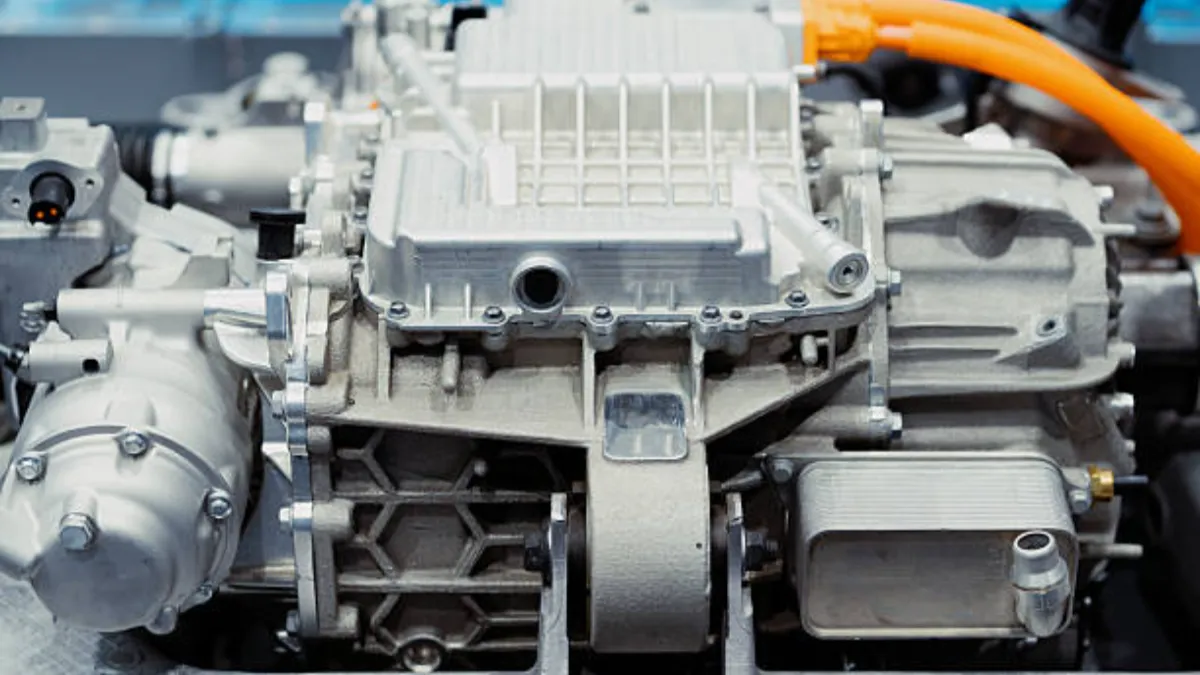
Each confirmation cell names a document a buyer can request: the die layout, the machine data sheet, or records of comparable castings the proposed cell has already produced. The 2,000T-and-above classes exist, and they do real work on very large structural castings for high-volume vehicle programs. Tonnage alone does not mark an entry gate into that class. A buyer with a large casting should verify the specific machine’s published area rating, the die envelope, and the foundry’s history with comparable castings, item by item.
Shot Capability Beyond the Clamp Rating
Tonnage says the machine can hold the die shut. It does not say the machine can fill this part well. Filling quality comes from several interacting variables. Plunger diameter and shot velocity set the flow rate; the intensification phase sets available pressure; gate design and sleeve fill ratio shape how the metal travels.
The old rule of thumb, that a large plunger runs slow and a small one cannot fill, is too simple. A large plunger paired with the right velocity profile can fill quickly and cleanly, and a small plunger can starve a cavity even on a large machine. Ask the supplier to state plunger size, sleeve fill ratio, and shot profile limits for the specific cell they propose.
Also separate two numbers that get conflated: total shot weight and net casting weight. Total shot weight includes all cavity castings, coureurs, débordements, and the biscuit. Net casting weight excludes the material removed during trimming. A machine that can lift a 10 kg shot does not automatically run an 8 kg casting well. The sleeve needs the right fill ratio, and the overflows need to fit inside the die.
Will the Die Physically Fit the Machine
A machine matched on tonnage can still be wrong for the part. The daylight opening, platen dimensions, and tie-bar spacing must physically accept the die, with room for extraction and spray equipment. Parts with demanding porosity or surface specs need multi-phase shot profile control, not just a big clamp; le porosity explainer covers how such voids form and how they are inspected. Notre guide de coulée sous vide covers the route that tightens those specs, while automation and melt delivery decide whether the tonnage you paid for is actually productive.
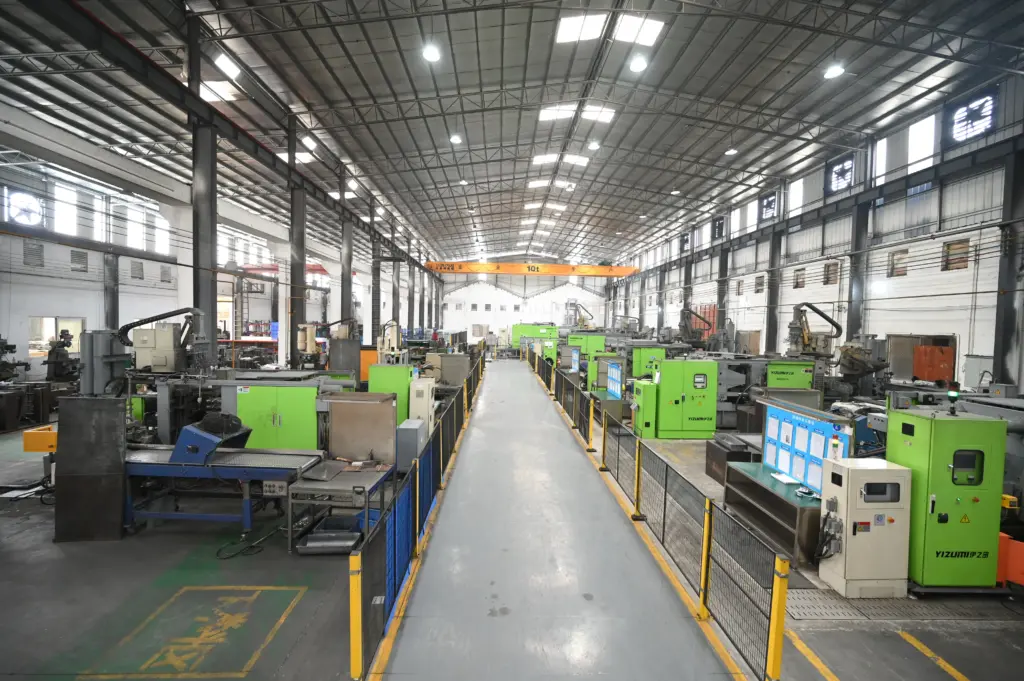
None of these appear on the nameplate, which is why a machine assignment should come from a die design review rather than a catalog page. A fair question to any foundry is not just which machines stand on the floor, but how they are scheduled and which cell is proposed for your tooling.
Before signing off on a machine assignment, put these questions into the RFQ. What is the total effective projected area on the die layout? What cavity pressure class does this part need, and what is the basis? What margin factor is applied, and what does it cover? Which plunger size and sleeve fill ratio will run the part? Does the die clear the platen and tie bars with room for extraction? Which comparable castings has the proposed cell already produced? A quotation that answers these questions is straightforward to compare across suppliers, and one that skips them is a claim rather than a selection.
What Mag-cast Publishes About Its Park
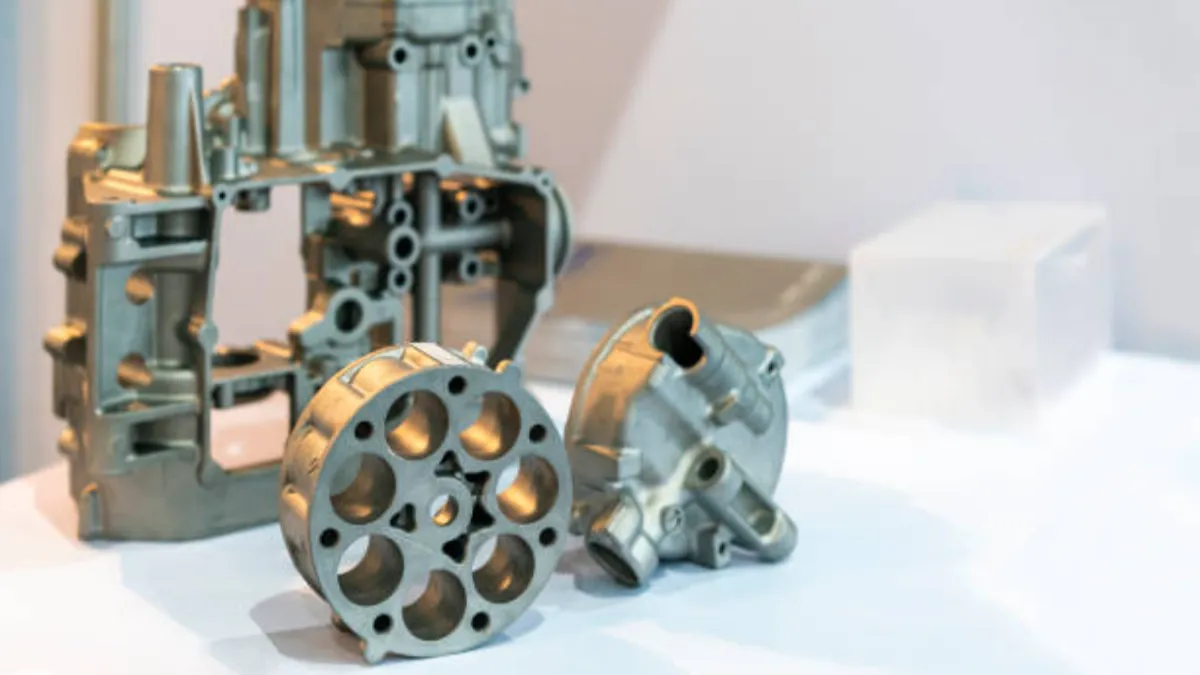
For this shop, the honest framing is what the site publishes, with its limits stated. UN capability overview article on the Mag-cast blog lists HPDC clamping force from 200T to 4,500T. The company profile on the homepage lists 300T to 2,000T machines with in-house tooling, and a largest casting area of 3,125 cm². These pages describe ranges, not a per-machine specification, and neither states which cell at which facility would run your part. Confirm the proposed production facility, machine model, rated clamping force, and die capacity with Mag-cast for your drawing.
The same profile lists IATF 16949 et ISO 9001 certification and two facilities, Foshan in China and Monterrey in Mexico. The stated service commitments are a quotation in two days and a free DFM analysis in three. When a drawing exceeds the published window in area or pressure class, the supplier should say so at quotation. The honest answer is a referral, not a forced fit on the largest available clamp.
When a drawing is ready, le page de contact puts it in front of engineers who answer with numbers. Questions about a specific machine assignment or die envelope are easier to answer with a drawing attached.
Questions About Die Casting Machine Tonnage
How is die casting machine tonnage calculated?
Multiply the total effective projected area, in square centimeters, by the cavity pressure in megapascals and by 0.1. That gives the separating force in kilonewtons. Convert to metric tons of force, then apply the margin factor your process and equipment require. Mold engineering confirms which pressurized regions contribute to the area total.
Why does this guide use 40 MPa in its examples?
40 MPa is a stated calculation assumption that keeps the worked examples transparent, not a reference pressure stamped on every machine. Published area ratings differ by builder and model, and intensification pressures often run 60–80 MPa. Ask for the machine data sheet and recheck the area against the pressure class your part needs.
Can a 400T machine cast a part with 576 cm² of projected area?
À 60 MPa, that area produces roughly 3,456 kN of separating force, à propos 352 metric tons before any margin. UN 10% margin lands near 388T, which is borderline for a 400T clamp, and a 25% margin exceeds it. The example is arithmetic on assumptions; the die layout and data sheet decide the real answer.
What is the largest casting Mag-cast can produce?
The company profile lists a largest casting area of 3,125 cm², and a blog capability article separately lists 200T to 4,500T of clamping force. Those are published ranges, not an equipment spec sheet for any single facility. Confirm the proposed production facility, machine model, rated clamping force, and die capacity with Mag-cast for your drawing.
Pensées finales
Die casting machine tonnage is one multiplication, and the arguments start when the inputs get guessed. Insist on the projected area from the die layout, the pressure class the part actually needs, and a margin factor with a stated basis. Then check the shot system and the die envelope, because a clamp rating that clears the math can still lose the part.
Compare suppliers on the same drawing with the same confirmation list, and treat any machine assignment without a calculation as a placeholder. Settling die casting machine tonnage on evidence helps reduce the risk of machine mismatch and process-related rejects.