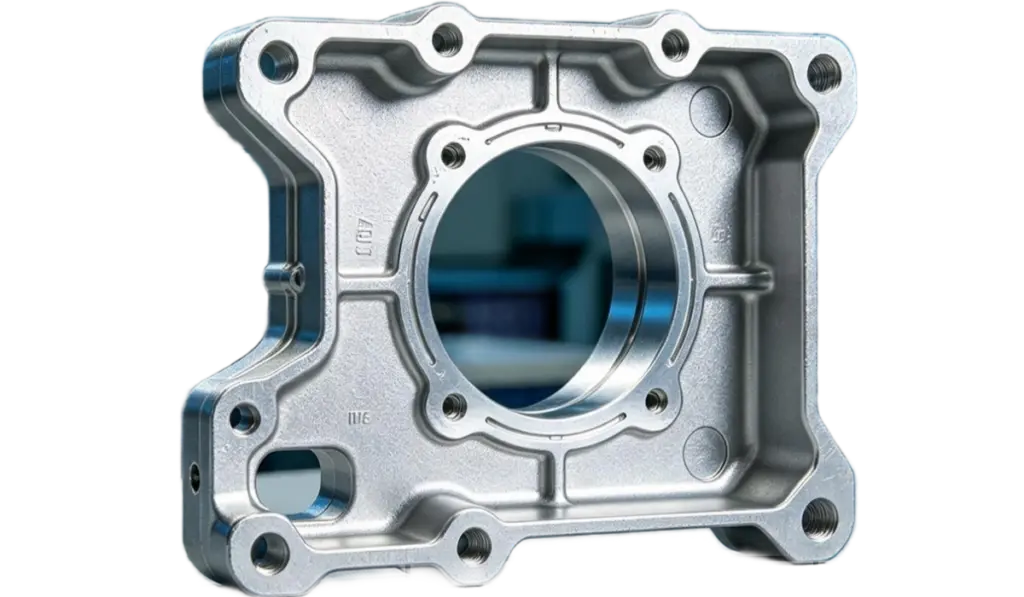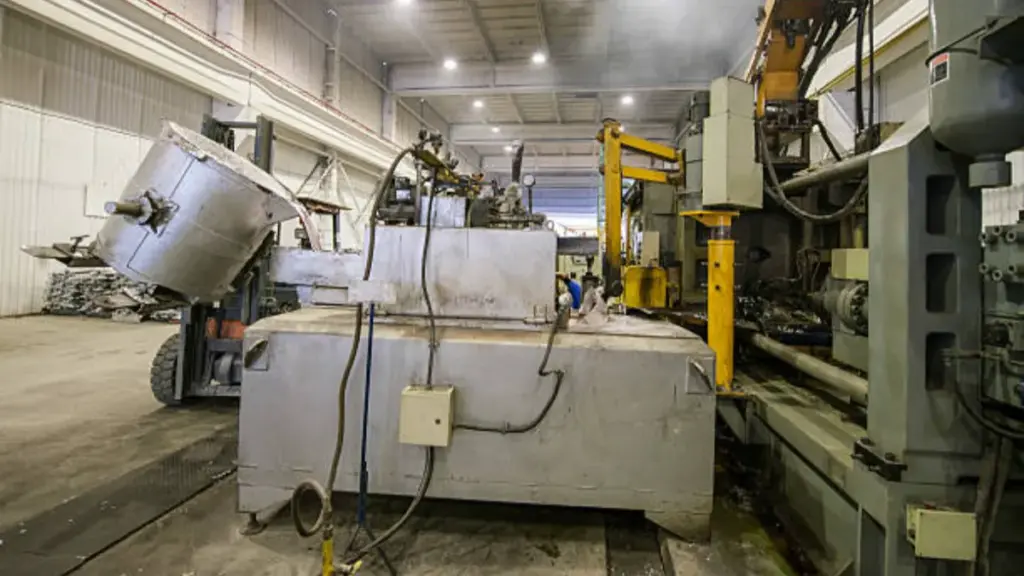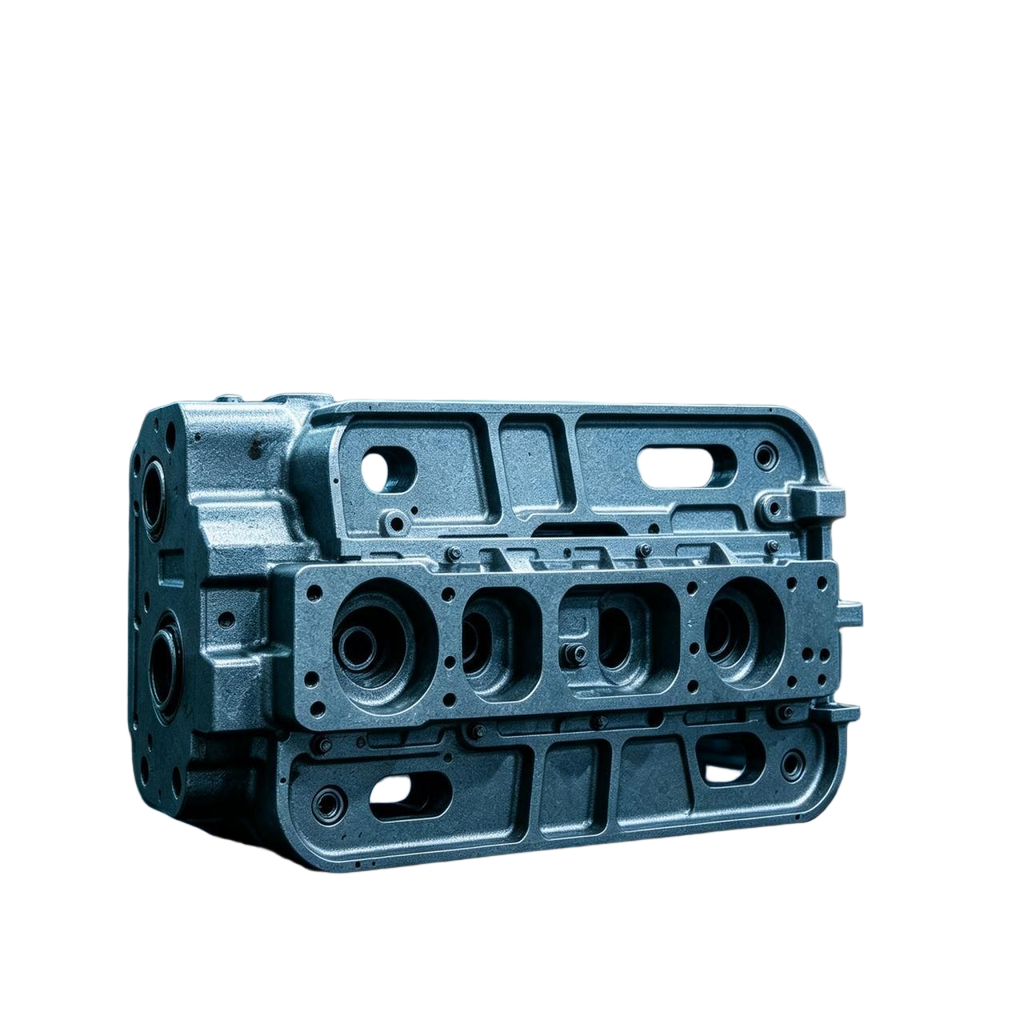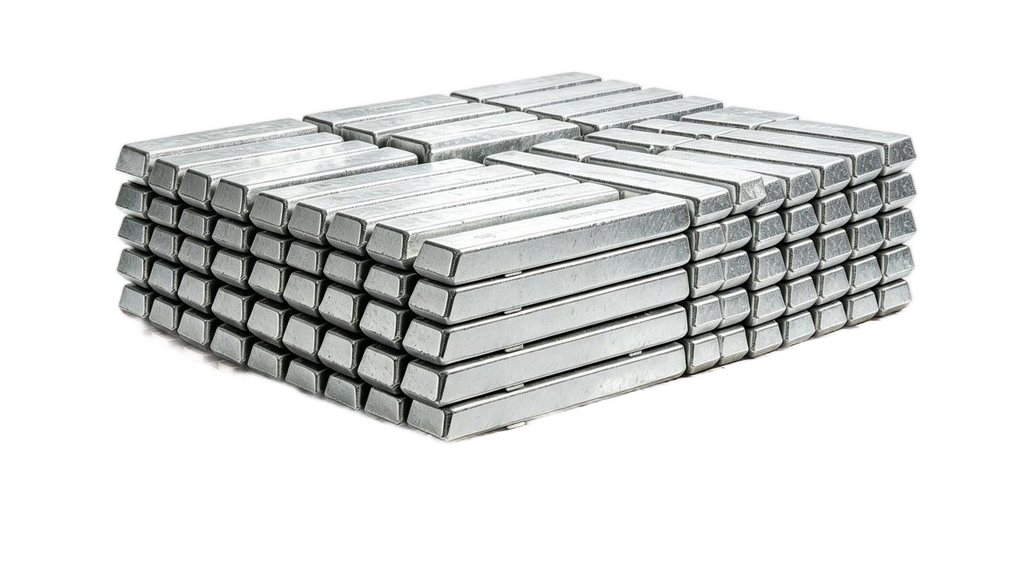
Design decisions affect both tooling cost and the unit price of custom aluminum die casting parts. Uneven walls, difficult undercuts and unnecessary tight tolerances can lead to extra machining or tooling changes after the mold is cut. This guide explains what to check before requesting a quote, what information to send with the drawing, and what to confirm in the quotation you get back. A design for manufacturability (डीएफएम) review at this stage turns findings into drawing edits instead of tooling revisions.
Information Your Quote Request Should Include
A supplier prices what it can see. Details missing from the request for quotation (RFQ) become assumptions in the price, and assumptions surface later as change orders or scope disputes. The goal of a good RFQ package is that two competent suppliers would be quoting the same part.
| Information to Include | What to Provide | Why It Matters |
|---|---|---|
| 2D Drawing and 3D Model | Matching files with the same revision number, आयामों सहित, tolerances and surface requirements. | Helps suppliers quote the same geometry and identify discrepancies before tooling. |
| Alloy and Material Standard | Required alloy, such as ADC12 or A380, and the applicable material standard or internal specification. | Affects material cost, casting behavior and production requirements. |
| Order Quantity and Annual Usage | Trial batch size, expected order quantities and annual forecast. | Helps suppliers plan cavity count and production capacity. Machine selection also depends on part geometry and tooling requirements. |
| Critical Dimensions and Datums | Acceptance-critical dimensions, their tolerances and the reference datums. | Helps define machining, fixturing and inspection requirements. |
| Machined and Cosmetic Surfaces | Identify surfaces to remain as-cast, areas requiring machining and visible surfaces with appearance requirements. | Clarifies machining scope, ejector-mark restrictions and finishing work. |
| परिष्करण, Sealing and Inspection | Required coating or plating, सीलिंग आवश्यकताएँ, test methods and inspection reports. | Allows suppliers to include finishing, testing and documentation in the quotation. |
Providing these details helps suppliers quote the same scope and makes differences in price, tooling and inspection requirements easier to compare.
दीवार की मोटाई, Draft and Corner Checks
Many aluminum die castings start around 2 को 4 मिलीमीटर, but treat that as a reference for early sketches, not a rule. The workable range depends on the alloy, the size of the part, the distance the metal must flow and the machine holding the die. The North American Die Casting Association (नादका) publishes design guidance that asks for uniform wall thickness rather than naming a number for every part (NADCA die design FAQs). Read that page as general guidance for early decisions, not as evidence that any specific geometry is automatically production-ready or certified.
Uniformity matters more than the number itself. A heavy section beside a thin one solidifies at a different rate, and the shrinkage difference shows up as sink marks or porosity at the transition. Core out thick bosses, rib flat panels instead of thickening them, and blend every section change with generous radii.
Wall thickness also decides whether the die fills at all. A section too thin for its flow length produces misruns at the far corners of the part; a section too thick traps shrink porosity in its middle. This is why a supplier’s first DFM comment is often a section proposal rather than a price note.
Draft needs the same per-feature thinking. A casting shrinks onto its cores as it cools, so walls parallel to the ejection direction need taper. Inner and outer walls, deep cavities and textured surfaces do not share one minimum angle, and the right value for your part comes out of the die design. Walls drawn without draft are not impossible, but they require special ejection arrangements or post-machining plans that must be evaluated case by case before anyone commits to steel.
Inside corners want fillets for the same reason: they help metal flow around the feature and remove the stress concentration where cracks start. अंत में, the part leaves the die on ejector pins. Mark the cosmetic faces clearly on the drawing, because pin location is negotiable before the mold is cut and expensive after.
Holes, Threads and Tolerance Assignment
Die casting forms holes within limits. Small or deep holes are usually cast as pilot features and finished by drilling. Blind hole depth is also constrained by the core pins, which must survive repeated production cycles. Calling a hole drilled-after-casting costs nothing on the drawing and removes a common tooling risk.
Threads have three separate routes, and they should be quoted separately. Internal threads are commonly tapped after casting, which keeps the die simple and thread quality predictable. Threaded inserts suit joints that see repeated assembly or sit in thin wall sections where tapped thread strength runs out. Cast or formed internal threads require special mold features, add tooling cost, and inherit draft on the flanks, so reserve them for functions that genuinely need the thread as-cast.
Tolerances follow the same logic: assign them by function, not by habit. The Bian Diecast capability pages list as-cast tolerances down to ±0.004 in (0.1 मिमी) and CNC machining tolerances down to ±0.02 mm on suitable features. Those figures describe achievable precision on the right feature, not a promise that every dimension on every part will hold them. Tight calls belong on sealing faces, bores and interfaces; everything else stays at general as-cast limits.
There is a second reason to spend tolerances carefully. Every tight call you keep is a dimension someone must measure and record, on a fixture, in a report. A drawing that marks five critical dimensions gets five checks per lot. A drawing that marks forty slows the line and raises the piece price of custom aluminum die casting parts without changing a single function.
Undercuts and the Cost of Side-Actions
Some geometry cannot escape the die in the pulling direction: windows in a sidewall, cross-holes or internal clips. Such features may need side-cores, post-machining or a redesign, depending on the ejection direction and the function of the feature. The choice between those three routes is a tooling conversation, and it belongs before the order rather than after it.
Each side-action adds tooling cost, adds a maintenance item and adds a flash path, so it should earn its place on the part. A one-degree redraw, a moved parting line or a cosmetic concession sometimes deletes one entirely. When a side-action stays, ask the supplier to price it visibly on the DFM report, next to the redesign alternative. The comparison is what makes the decision rational instead of habitual.
Side-actions live inside the mold, so their real cost shows up in tool design. Our guide to tool and die making explains how the die is built and why moving a feature around the parting line changes the bill.
Pre-Quote DFM Checklist for Buyers
Score your drawing against the table below before the next RFQ. If your part is a die cast lighting housing, हमारा DFM guide for light housings covers fins, sealing surfaces and parting lines for that family in more depth.
| Check Item | Common Mistake | What to Do Before Quoting |
|---|---|---|
| Drawings and Models | 2D and 3D files disagree on revision | Send matched files under one revision number |
| Alloy and Volume | Alloy or yearly usage left unstated | State the alloy standard, trial size and annual usage |
| Walls | Thick sections beside thin ones | Keep walls even; core or rib heavy areas |
| Draft | One angle assumed for every surface | Add draft per surface; review deep and textured faces |
| Corners | Sharp inside corners | Fillet internal edges to aid flow and fatigue life |
| Holes and Threads | Load-bearing internal threads cast by default | Plan drilled, tapped or insert routes explicitly |
| सहिष्णुता | Tight calls on non-functional faces | Tolerance by function; mark critical dimensions and datums |
| बाधित | Sidewall windows drawn without review | Confirm side-core, machining or redesign option early |
Rows you fail are not disqualifications; they are the questions to send with the RFQ instead of waiting for the supplier to ask them. Submit your geometry through our बोली का अनुरोध and the quotation returns with a free DFM review attached. Our homepage lists quotations in 2 days and DFM reports in 3 दिन.
What to Confirm in the Supplier Quotation
A usable quotation states its own assumptions. Before comparing numbers, check that the quote names the alloy assumed, the machine class and cavity count proposed, and the design questions your drawing left open. A price built on hidden assumptions is not a price; it is a starting position.
Then read the machining scope line by line. Which faces are machined, to which tolerances, and where the as-cast boundary sits. Ask the supplier to mark items still to be confirmed. The honest answer at quote stage is sometimes that the datum scheme must be agreed before a tolerance can be committed.
Ask what happens after the first sample shots. Tooling corrections are a normal part of die casting development. The comparison points are who pays for them, how fast they turn, and what the tooling payment covers, including shot life and maintenance terms. Ask separately who owns the mold if production moves. These terms vary more between quotations than the headline numbers do.
Lead time belongs in the same comparison. Our site lists in-house tooling built in 35 को 45 days with production runs of 20 को 25 days after approval. Write down what each supplier quotes for the same milestones, because a low piece price attached to slow tooling can still miss a launch slot.
Questions Buyers Ask Before Quoting
What wall thickness works best for custom aluminum die casting parts?
Start from uniformity, not a target number. Many aluminum die castings fall near 2 को 4 मिलीमीटर, but the workable range depends on alloy, भाग का आकार, flow distance and machine. NADCA guidance asks for even walls rather than a fixed value, and your supplier’s DFM review confirms the section design for your geometry.
How much machining allowance should I leave on cast surfaces?
There is no safe universal number. The allowance depends on which faces will be machined, how the part distorts after ejection, the clamping strategy and the tolerance you need to hold. Mark the machined faces on the drawing and confirm the stock with supplier engineering at quote stage.
Can die casting produce threads directly in the part?
It can, with trade-offs to compare. External threads are commonly cast, while internal threads are usually tapped after casting or handled with threaded inserts for repeated assembly. Cast internal threads need special mold features and inherit draft on the flanks, so choose the route by function.
Does a pre-quote DFM review slow the project down?
It front-loads questions that would otherwise arrive as tooling corrections. Our site lists quotations in 2 days and DFM reports in 3 दिन, so the review runs alongside pricing rather than ahead of it. Changes made on paper are drawing edits; changes after the mold is cut carry tooling time and fees.
अंतिम विचार
DFM work before the quote cannot promise a mold that never needs adjustment, and it should not be sold that way. What it does is remove the expensive surprises that are already visible in the geometry. Even walls, deliberate draft, threaded features chosen by route and tolerances assigned by function each delete one revision loop. The rest is information: send the matched files, quantities and datums, then read the quotation for the assumptions it states.
If your next RFQ involves custom aluminum die casting parts, send the drawing through our संपर्क पृष्ठ with the checklist above attached. You can also review our core services or start from the बियान डायकास्ट homepage to see how tooling, casting and machining capabilities fit together.